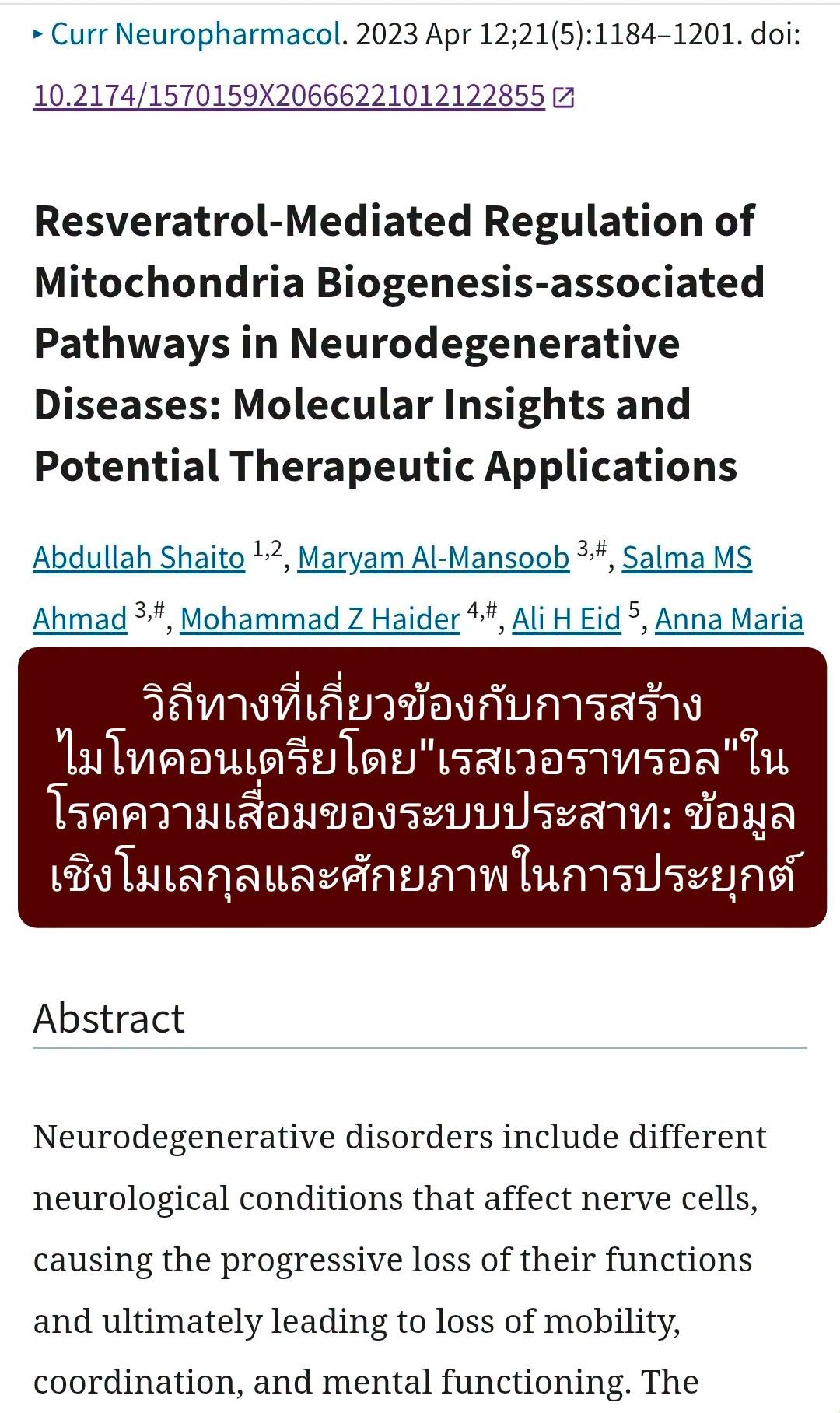
“Resveratrol-Mediated Regulation of Mitochondria Biogenesis-associated Pathways in Neurodegenerative Diseases: Molecu...
Summary of the article “Resveratrol-Mediated Regulation of Mitochondria Biogenesis-associated Pathways in Neurodegenerative Diseases: Molecular Insights and Potential Therapeutic Applications” is a review of research describing the role of Resveratrol in promoting the formation of new mitochondria. (Mitochondrial Biogenesis) and protecting nerve cells in neurodegenerative diseases such as Alzheimer's, Parkinson's, Huntington's and ALS.
The main points of the article
1. Mitochondria play an important role in the brain.
Neurons are cells that require very high energy. Therefore, they rely on mitochondria to create ATP for use in nerve signaling, learning, memory, and brain function. If the mitochondria are deteriorated Oxidative stress, inflammation, and nerve cell death occur. This is a key characteristic of many types of dementia.
2. Resveratrol stimulates the creation of new mitochondria.
Resveratrol is a natural polyphenol found in red grapes, mulberries, and some plants. It can stimulate the process of creating new mitochondria. Makes cells have enough energy and have a better ability to repair themselves.
Important mechanisms that are stimulated include:
- SIRT1
- AMPK
-PGC-1α
-NRF-1
-NRF-2
- TFAM
-ERRα
-TERT
All of which are key regulators of the formation and function of mitochondria in nerve cells.
3. SIRT1 is the key target of Resveratrol.
Many studies have found that resveratrol stimulates the SIRT1 protein, which is involved in longevity and cell protection. When SIRT1 is stimulated, it helps
● Reduce the accumulation of free radicals.
● Protects nerve cells from dying.
● Increases mitochondrial function.
● Promote new mitochondria through PGC-1α.
4. Stimulates AMPK, increasing energy for cells.
AMPK is a cell energy sensor. When stimulated by Resveratrol it helps
■ Increase ATP production.
■ Increase the efficiency of energy metabolism.
■ PGC-1α stimulated.
■ Promotes the elimination of damaged mitochondria and replacement of new ones.
5. Reduce inflammation of the brain
Resveratrol helps change the function of microglia, which are immune cells in the brain. From an inflammatory state to a tissue repair state As a result, inflammation in the nervous system is reduced. and helps protect nerve cells in the long term
6. Increase the cell's anti-oxidant defense system.
Resveratrol stimulates NRF-2, which is a regulator of the body's production of antioxidant enzymes. This gives neurons a better ability to cope with oxidative stress.
7. Potential against many types of dementia.
From a collection of research, it has been found that Resveratrol helps.
☆ Slow down the degeneration of nerve cells.
☆ Reduce memory loss.
☆ Improve brain function
☆ Reduce inflammation of the nervous system.
☆ Restores the function of mitochondria.
☆ Promote the survival of nerve cells.
Summary for presentation
Resveratrol is a natural substance that plays an important role in promoting brain health. By stimulating the creation of new mitochondria through the SIRT1–AMPK–PGC-1α–NRF–TFAM It increases the energy production of nerve cells. Reduces oxidative stress, reduces inflammation, and supports brain function in neurodegenerative diseases. Therefore, it has received great attention as an active ingredient with the potential to promote brain health and delay neurodegeneration.