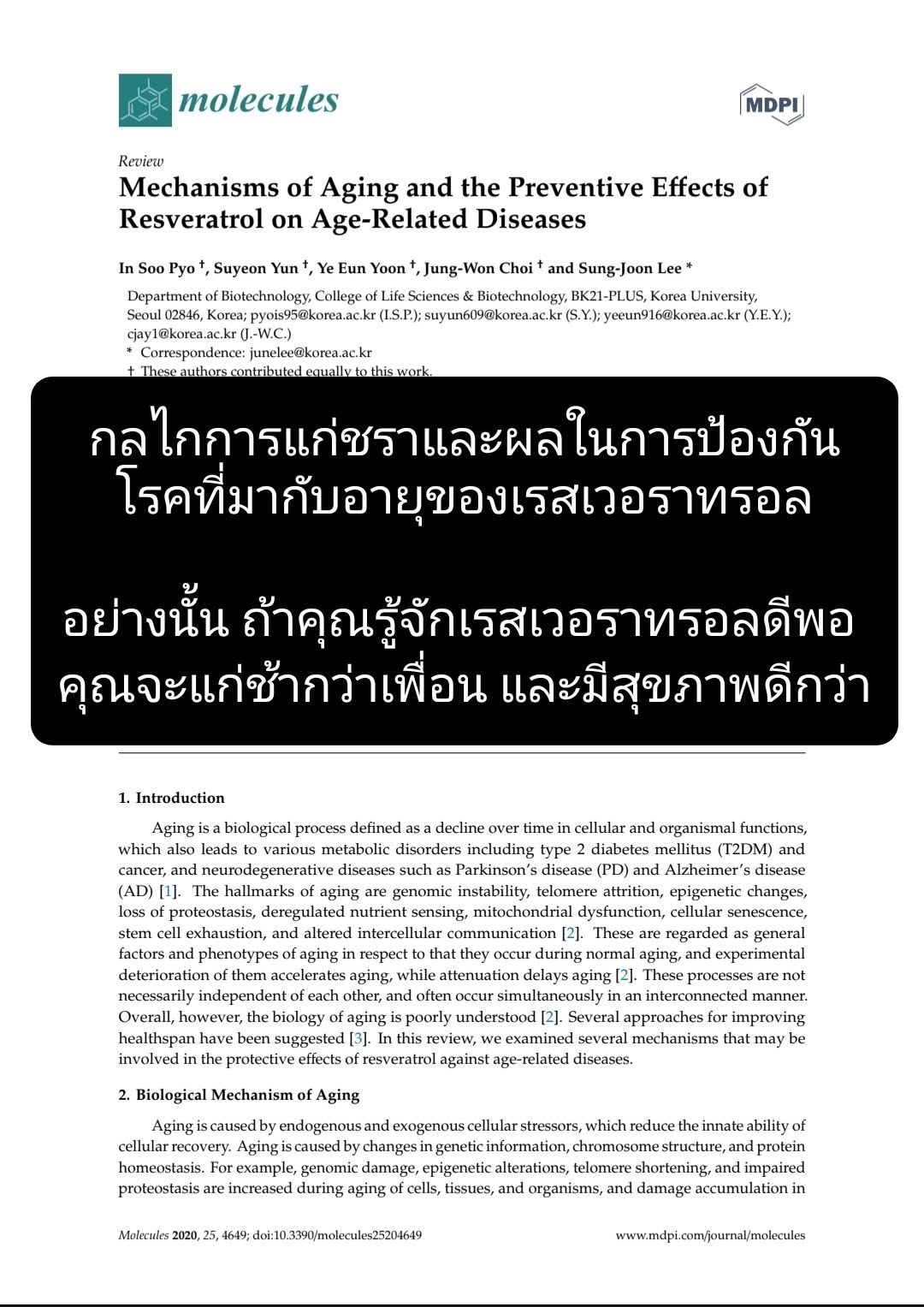
: Mechanisms of Aging and the Preventive Effects of Resveratrol on Age-Related Diseases
Article summary: Mechanisms of Aging and the Preventive Effects of Resveratrol on Age-Related Diseases
Full article from MDPI (Molecules)
This article, published in the journal Molecules by MDPI in 2020, reviews key mechanisms of aging and describes how resveratrol, a polyphenol from red grapes, mulberries and some plants, How can it help slow down the deterioration of the body and reduce the risk of age-related diseases?
How does aging occur?
The article explains that “aging” is not caused by a single cause. Instead, it is caused by the accumulation of damage at the cellular and molecular level, which has 9 main mechanisms (Hallmarks of Aging) including:
1. DNA instability (Genomic instability)
2. Telomere shortening (Telomere attrition)
3. Epigenetic alterations
4. Loss of protein balance (Loss of proteostasis)
5. Deregulated nutrient sensing
6. Mitochondrial disorders (Mitochondrial dysfunction)
7. Cellular senescence
8. Stem cell exhaustion
9. Altered intercellular communication
Resveratrol's role in slowing down aging
Resveratrol affects several mechanisms related to aging. Specifically, activation of the SIRT1 protein, which is often referred to as the “longevity gene,” and activation of AMPK, a cellular energy regulator.
Important mechanism by which Resveratrol can help
- Reduce free radicals (ROS)
- Increases the function of mitochondria.
- Stimulates the elimination of waste in cells (Autophagy)
- Reduces inflammation through inhibiting NF-κB.
- Balancing metabolism
- Reduce the accumulation of degenerative cells (Senescent cells)
☆ When AMPK and SIRT1 are stimulated, they reduce mTOR activity and increase autophagy, which is an important mechanism for delaying aging.
Effects on age-related diseases
1. Type 2 Diabetes
Increase insulin sensitivity, lower blood sugar, adjust fat metabolism.
2. Cardiovascular Disease
Reduces inflammation of blood vessels, prevents oxidation of LDL, and helps the lining of blood vessels to function better.
3. Alzheimer's Disease and Parkinson's Disease
Reduces β-amyloid accumulation, protects neurons, promotes autophagy
4. Cancer
Stimulates apoptosis of abnormal cells, inhibits cancer cell division, and reduces the creation of blood vessels that nourish cancer tumors.
Summary of important points
Resveratrol is a natural substance that has the potential to slow down the process of cell degeneration. Specifically, through stimulating SIRT1 and AMPK, it reduces inflammation, reduces oxidative stress, and promotes autophagy, which reduces the risk of diabetes, heart disease, dementia, and cancer.
Brief summary: “Resveratrol is a natural substance that stimulates cell repair mechanisms, reduces inflammation, and slows down the deterioration of the body. Therefore, it has the potential to promote quality longevity.”