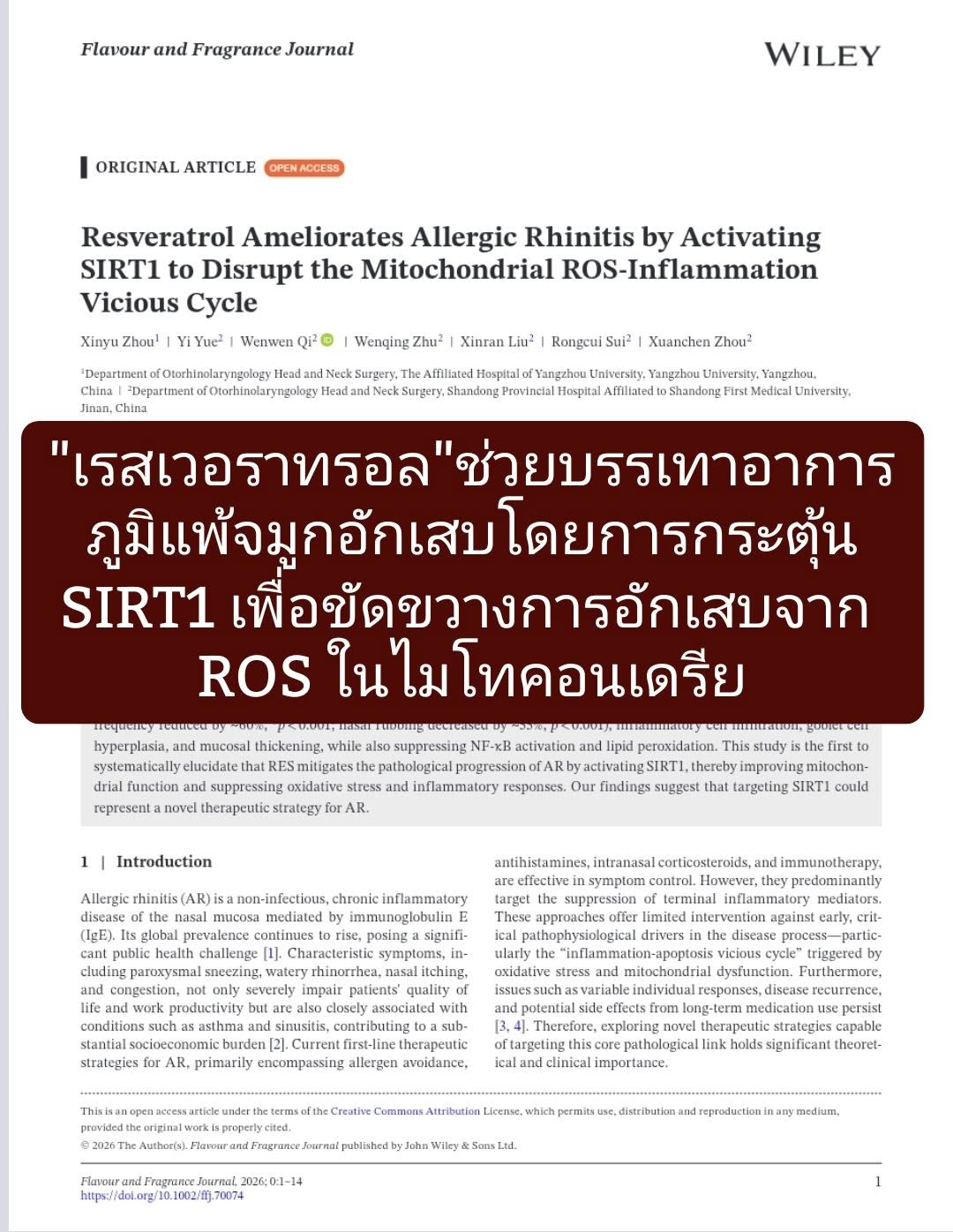
Research on "Resveratrol Ameliorates Allergic Rhinitis by Activating SIRT1 to Disrupt the Mitochondrial ROS‐Inflammat...
Summary of the research article "Resveratrol Ameliorates Allergic Rhinitis by Activating SIRT1 to Disrupt the Mitochondrial ROS‐Inflammation Vicious Cycle" The main points can be summarized as follows:
1. Objectives of the study
The researcher wants to study whether Resveratrol (an extract found in many mulberries) How can red grape skin (and red grape skin) help relieve symptoms of allergic rhinitis (Allergic Rhinitis (AR)? Emphasis is placed on cellular mechanisms related to oxidative stress in the mitochondria. (Mitochondrial ROS) and inflammation
2. The main mechanism discovered (The "Vicious Cycle")
in allergic patients A vicious cycle often occurs between ROS (free radicals) and inflammation:
* When an allergic reaction occurs The body produces too much ROS in the mitochondria.
* These ROS stimulate inflammation.
* Inflammation that occurs in turn causes the mitochondria to malfunction and produce even more ROS.
3. The role of Resveratrol and SIRT1
Experiments have shown that Resveratrol helps break this cycle through an enzyme called SIRT1:
*SIRT1 activation: Resveratrol stimulates the activity of SIRT1, a protein that plays an important role in regulating cell lifespan and response to stress.
* Reduce ROS in Mitochondria: When SIRT1 is activated, it improves the balance of mitochondrial function. Reduce the production of free radicals (mROS)
* Inhibits inflammation: When ROS is reduced, signals that stimulate inflammation in the nasal cavity are also reduced. As a result, it helps relieve sneezing, itchy nose and runny nose.
Summary of important points:
Resveratrol has the potential to be a new treatment option for allergic rhinitis. without just suppressing the symptoms at the root cause but dealing with the root cause at the cellular level is to stop the inflammatory cycle caused by mitochondrial dysfunction through activating the SIRT1 protein.