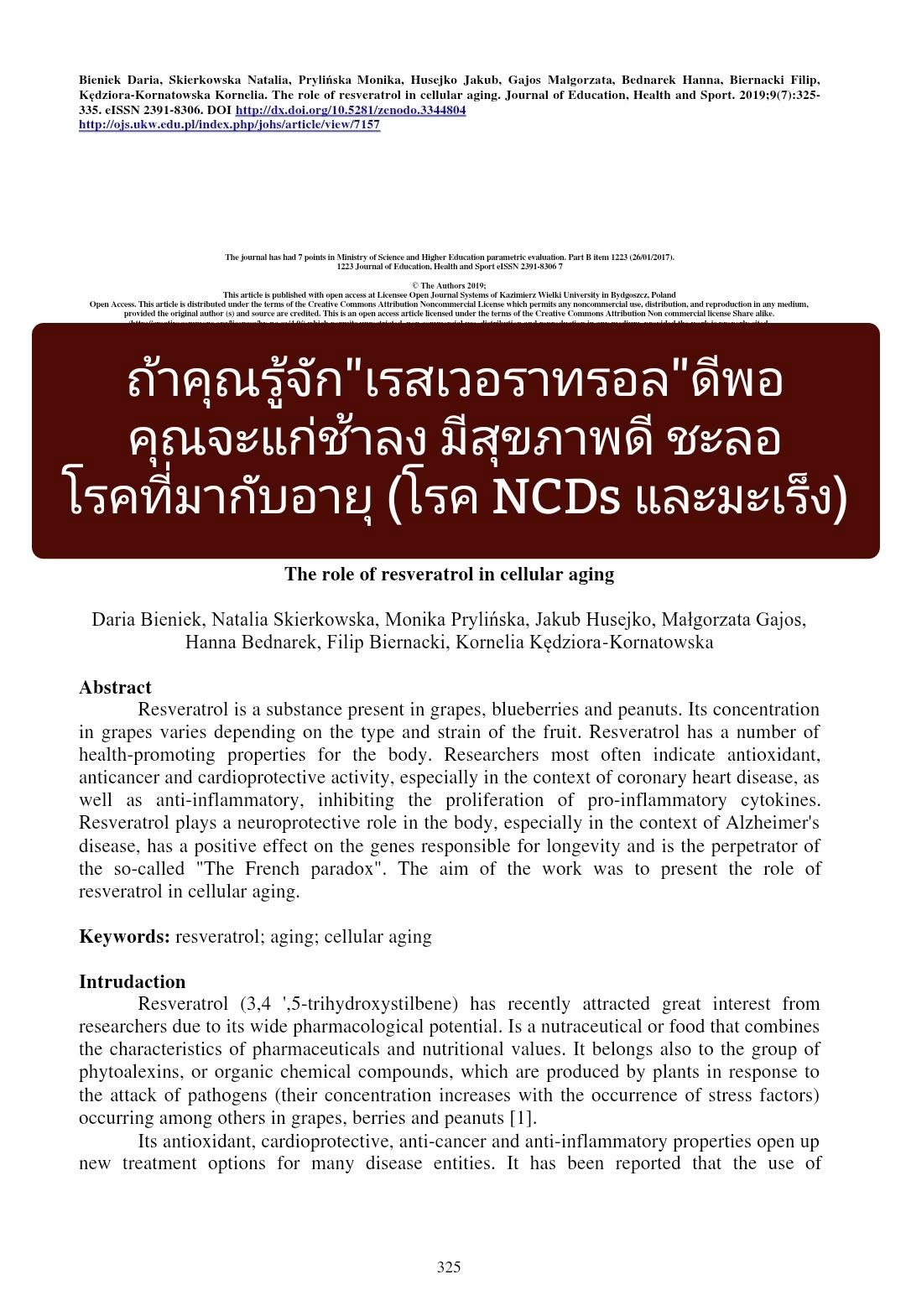
: The Role of Resveratrol in Cellular Aging (The Role of Resveratrol in Cellular Aging)
Article summary: The Role of Resveratrol in Cellular Aging (The Role of Resveratrol in Cellular Aging)
This article is a review article that collects research data on the role of resveratrol in slowing cell degeneration. and prevention of age-related diseases such as heart disease, diabetes, Alzheimer's, and cancer.
What is resveratrol?
Resveratrol is a highly biologically active antioxidant. Helps protect cells from damage caused by free radicals (Reactive Oxygen Species (ROS), which is one of the major causes of aging and chronic disease.
An important mechanism that helps delay aging of resveratrol
1. Reduce oxidative stress (Oxidative Stress)
Resveratrol reduces ROS and increases the activity of antioxidant enzymes such as
Superoxide Dismutase (SOD)
Catalase
Glutathione Peroxidase
The result is that it helps prevent damage to DNA, proteins, and cell membranes.
2. Stimulates the longevity gene Sirtuin 1 (SIRT1).
SIRT1 is a protein involved in DNA repair, inflammation regulation. and extending cell life
Resveratrol stimulates SIRT1 causing:
- Increase cell repair
- Reduce inflammation
- Increase the efficiency of Mitochondrion (Cell Energy Factory)
- Mimics the effects of caloric restriction, a method that has been shown to prolong life.
3. Reduce chronic inflammation
Resveratrol inhibits inflammatory pathways, such as NF-κB, and reduces the production of inflammatory cytokines, such as TNF-α and IL-6, which are associated with rheumatoid arthritis. “inflammaging” or chronic inflammation that increases with age
4. Protect Mitochondria
Resveratrol stimulates PGC-1α, causing new mitochondria to form and increasing energy production. Reduce cell degeneration
5. Slow down cell aging (Cellular Senescence)
Resveratrol reduces the expression of p53, p21 and p16 proteins, which are indicators of cells entering senescence and stopping dividing.
Beneficial for age-related diseases
Coronary heart disease (Cardiovascular Disease)
- Protect blood vessels
- Reduce inflammation of blood vessel walls
- Helps the function of the lining of blood vessels improve.
Alzheimer's Disease and Dementia
- Reduce the accumulation of abnormal proteins.
- Reduce inflammation in the brain
- Protect nerve cells
type 2 diabetes
- Increased sensitivity to insulin
- Helps control blood sugar levels
Cancer
- Inhibits abnormal cell division
- Stimulates the death of cancer cells
Brief summary
Resveratrol is a natural substance that has the potential to delay cellular aging by helping:
● Antioxidants
● Activates the longevity gene SIRT1.
● Reduce inflammation.
● Protects mitochondria.
● Reduce aging cells.
With these mechanisms Therefore, it may help reduce the risk of heart disease, diabetes, dementia, and cancer, as well as support having “Healthy aging” has biological significance.