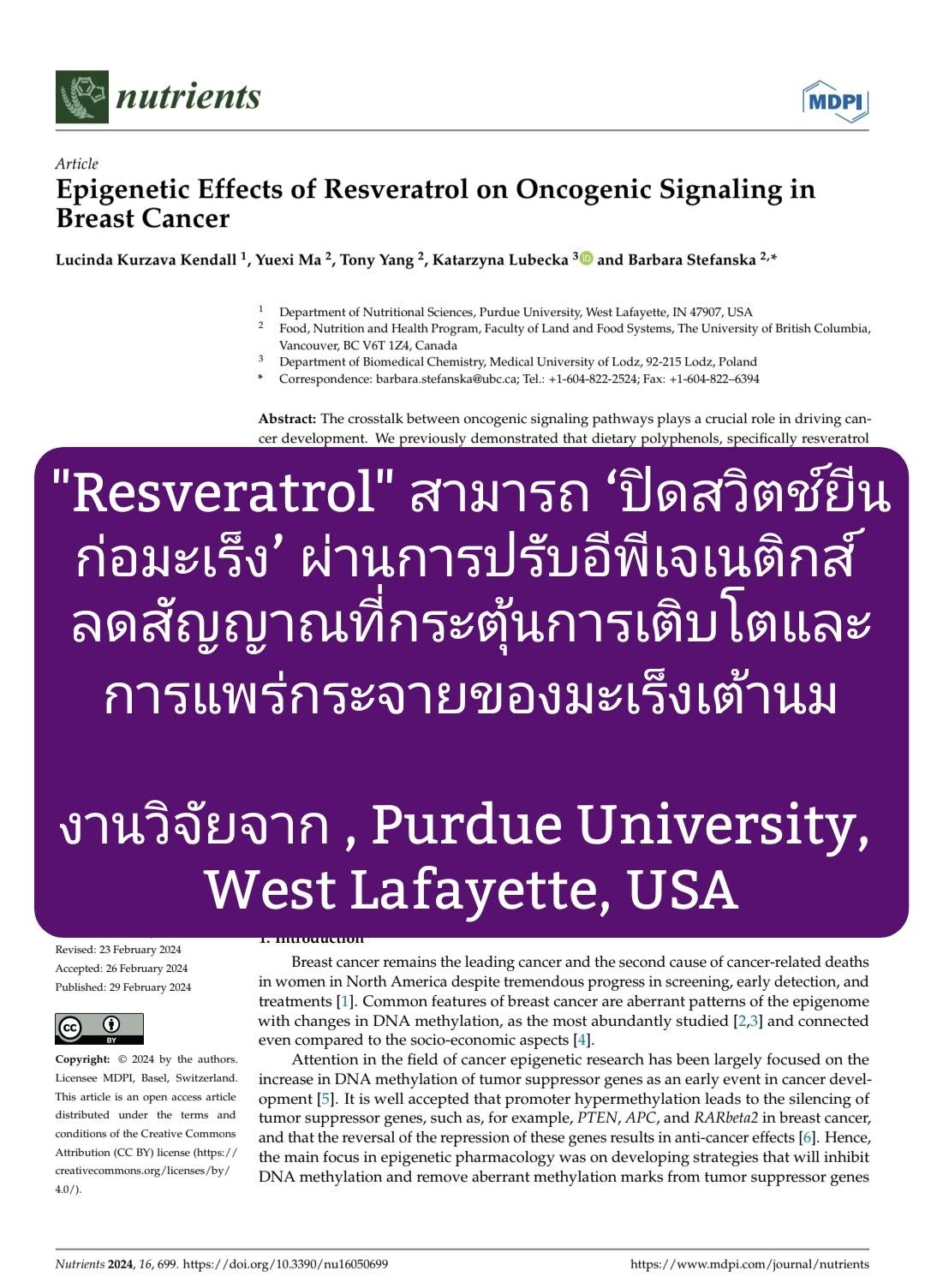
Epigenetic Effects of Resveratrol on Oncogenic Signaling in Breast Cancer
Summary of the article: Epigenetic Effects of Resveratrol on Oncogenic Signaling in Breast Cancer
Published in the journal MDPI in 2024, it studied how resveratrol, a polyphenol from red grapes and mulberries, can “switch off cancer-causing genes” in breast cancer cells. Through the epigenetic mechanism (epigenetics)
Easy to understand summary
Researchers found that resveratrol doesn't just kill cancer cells directly. But it also changes the function of genes. By increasing DNA methylation (DNA methylation) in key genes that stimulate cancer growth. This causes these genes to be “silenced” and results in a marked reduction in the signaling pathways that cancer uses to divide and spread.
Important genes that are suppressed:
1. GLI2 is a key regulator of the Hedgehog signaling pathway.
This system involves:
- Division of cancer cells
- Stabilization of cancer stem cells
- Progression and recurrence
2. WNT4 is an important gene in the Wnt signaling pathway.
Related to:
- tumor growth
- Spread
- resistance to treatment
Mechanism by which Resveratrol works
1. Increased DNA methylation at the enhancer regions of GLI2 and WNT4.
2. Reduced expression of both genes
3. Change the chromatin structure to be tighter (silent chromatin)
4. Reduce the binding of the transcription factor OCT1.
5. Causes Hedgehog and Wnt signals to be inhibited
6. Reduce the activity of downstream genes such as CCND1 (Cyclin D1) and CYR61, which are involved in cancer cell division.
Important results:
- Reduces the growth of breast cancer cells by approximately 50%.
Effective in both cell types
● Estrogen Receptor-Positive Breast Cancer (MCF-7)
● Triple-Negative Breast Cancer (MCF10CA1a)
medical importance
Studies suggest that Resveratrol plays a role in:
■ Substances that help prevent cancer (Cancer Prevention)
■ Adjuvants combined with standard treatment (Adjuvant Therapy)
■ Natural Epigenetic Modulator
This is especially true in aggressive breast cancers such as Triple-Negative Breast Cancer, which have limited treatment options.
Brief summary
Resveratrol can 'switch off cancer-causing genes' through epigenetic modulation. Reduce signals that stimulate the growth and spread of breast cancer. Therefore, it has the potential to help prevent and enhance cancer treatment in the future.