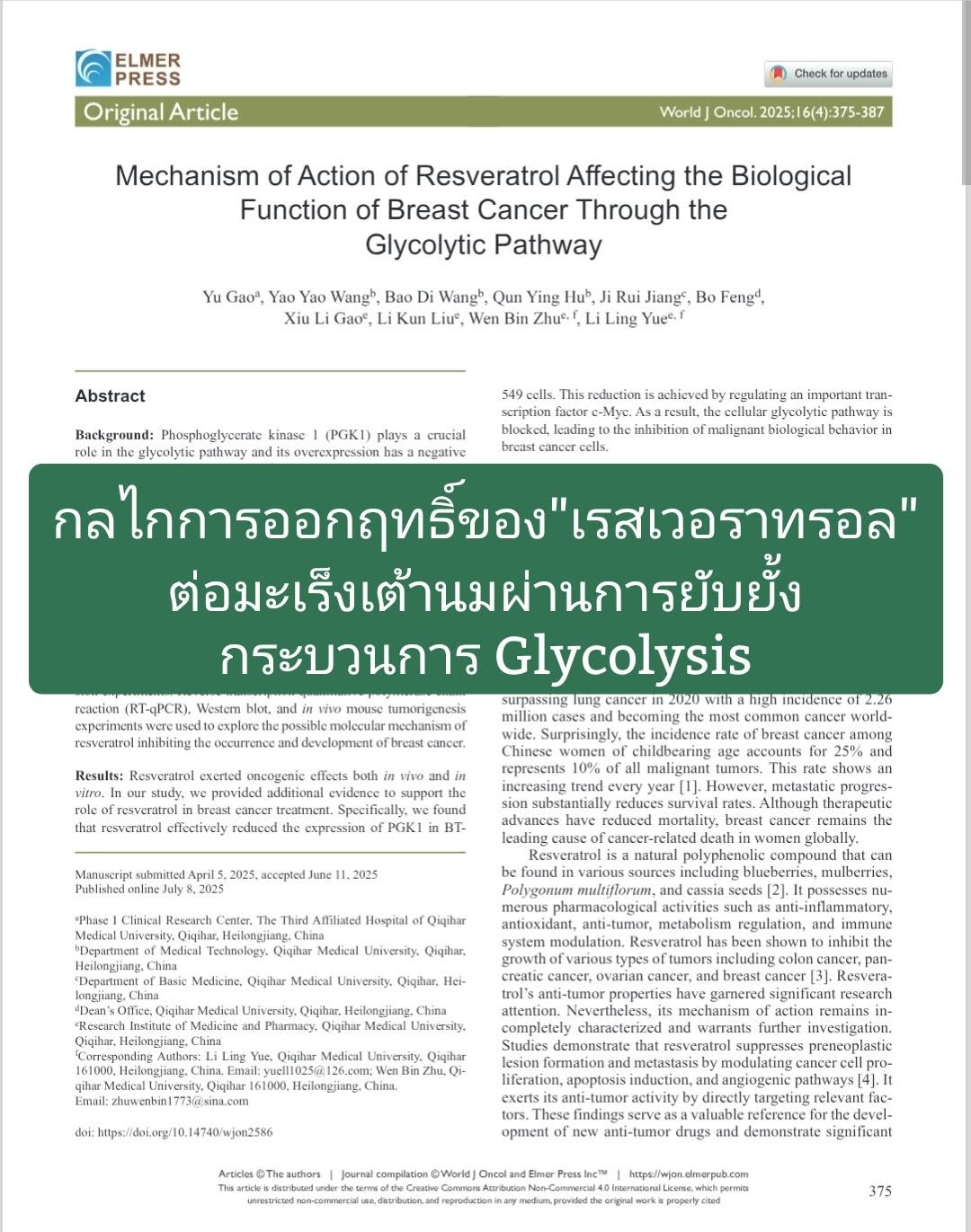
: Mechanism of action of resveratrol on breast cancer through inhibiting the Glycolysis process.
Article summary: Mechanism of action of resveratrol on breast cancer through inhibiting the Glycolysis process.
Article title: Mechanism of Action of Resveratrol Affecting the Biological Function of Breast Cancer Through the Glycolytic Pathway
Journal: World Journal of Oncology
Publication year: 2025
The main idea of the research:
This research looked at whether Resveratrol, a natural polyphenol found in red grapes, and mulberry How can it stop the growth of breast cancer? It focuses on inhibiting the process of glycolysis or the creation of energy from sugar. which is an important source of energy for cancer cells
Why Glycolysis is Important for Cancer:
Cancer cells have a characteristic known as the Warburg effect, which involves using high amounts of glucose and quickly converting it into energy. Even in conditions where there is enough oxygen Causes cancer cells:
- growing fast
- Divided a lot
- spreads well
- resistant to treatment
Important research goals: PGK1
PGK1 is a key enzyme in the glycolysis process and has been found to be highly expressed in breast cancer. Especially in the more severe types, high PGK1 levels are associated with a poor prognosis and lower survival rates.
Resveratrol Mechanism of Action
1. Inhibits c-Myc
c-Myc is a protein that controls the production of PGK1. When Resveratrol reduces c-Myc levels, it causes PGK1 to decrease as well.
2. Reduce the production of PGK1
When PGK1 is reduced, the glycolysis process of cancer cells is slowed.
3. Reduce ATP creation
ATP is the main energy source of the cell. When production decreased Cancer cells lack the energy to grow and spread.
4. Stimulate cell death (Apoptosis)
Resveratrol increases Bax and cleaved caspase-3/7 levels while decreasing Bcl-2, which are important mechanisms of apoptosis.
5. Inhibits movement and intrusion
Cancer cells lose their ability to move and penetrate tissue. which reduces the chance of spread
Brief mechanism diagram
Resveratrol → ↓ c-Myc → ↓ PGK1 → ↓ Glycolysis → ↓ ATP →
↓ Division of cancer cells
↑ Apoptosis
↓ Spread
Experiments used in research
Breast cancer cell types Triple-Negative (BT-549)
RT-qPCR and Western blot examination
Wound healing assay
Transwell migration/invasion assay
Mouse xenograft model
Important research results
● Resveratrol reduces PGK1 expression at both the mRNA and protein levels.
● Reduces the activity of enzymes in glycolysis such as LDH and pyruvate kinase.
● Decreases intracellular ATP levels.
● Inhibits the growth of cancer tumors.
● Significantly increases cancer cell death.
Clinical significance:
Studies suggest that Resveratrol may be a natural substance with the potential to:
Helps prevent breast cancer, especially triple-negative breast cancer.
Reduce the spread of cancer cells
It complements standard treatments such as chemotherapy or targeted therapy.
Brief summary
Resveratrol inhibits breast cancer by reducing c-Myc and PGK1, preventing cancer cells from being able to efficiently use sugar to create energy. This results in reduced growth, invasion, and spread. Ready to stimulate cancer cells to die