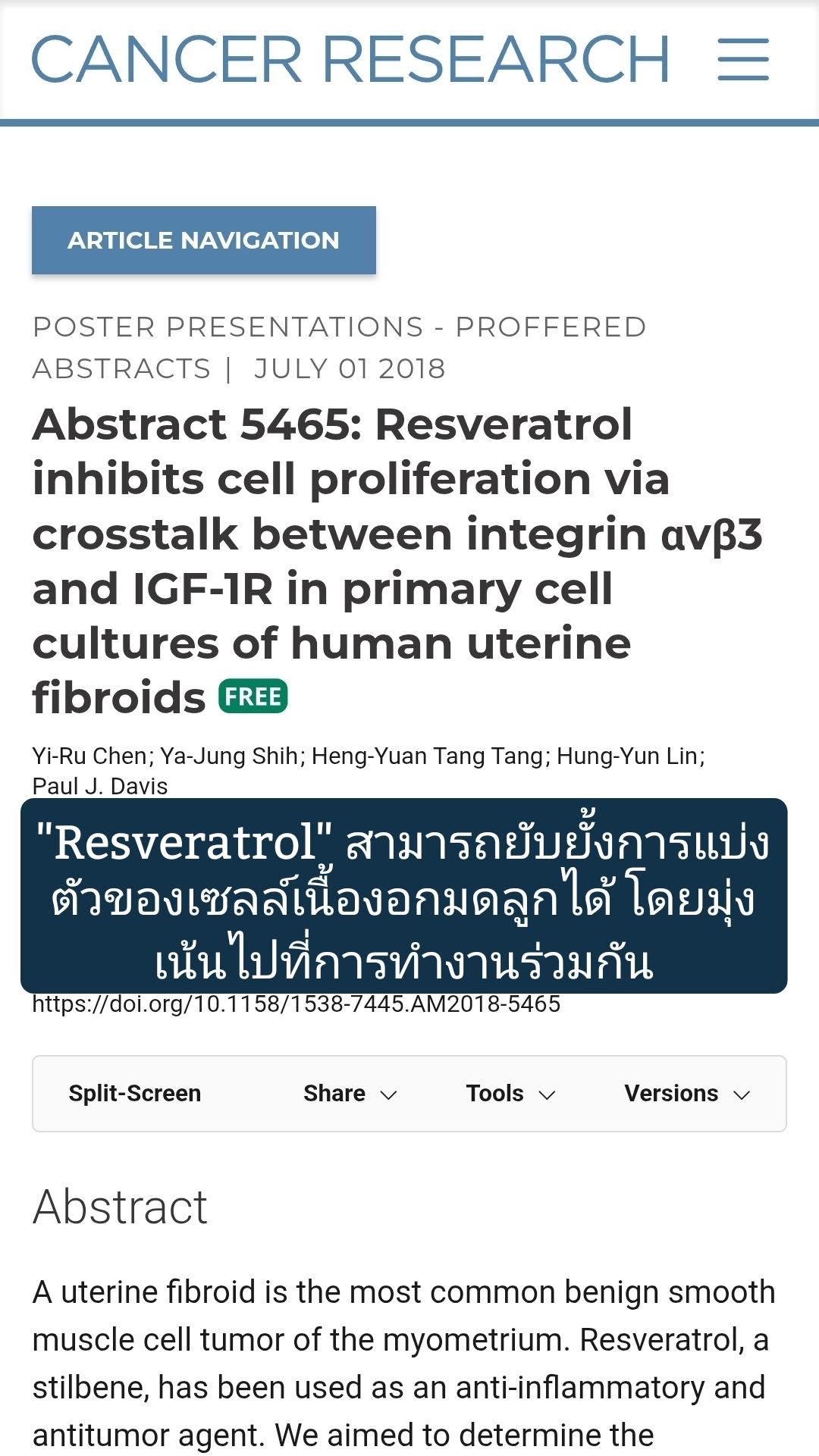
This research studies the mechanism of resveratrol, a phenolic compound found abundantly in red grapes. and berry family plants...
Summary of this research article examines the mechanism of Resveratrol, a phenolic compound found abundantly in red grapes. and berry plants In inhibiting the growth of Uterine Fibroids: The main points can be summarized as follows:
1. Objectives of the study
The researchers wanted to know how resveratrol could inhibit the proliferation of uterine tumor cells. It focuses on the interaction (Crosstalk) between two types of cell surface receptors, Integrin αvβ3 and IGF-1R (Insulin-like Growth Factor-1 Receptor).
2. Important study results
● Growth inhibition: Resveratrol can significantly reduce cell proliferation of uterine tumors. The effect will be stronger according to the concentration used.
● Mechanism of action via Integrin αvβ3:
Resveratrol binds to the Integrin αvβ3 receptor on the surface of tumor cells.
Results in the activation of ERK1/2 enzymes (which are proteins in cell signaling pathways).
This stimulation increases the amount of proteins p53 and p21, which act to inhibit the cell life cycle. Causes tumor cells to stop dividing.
● IGF-1 Cutting Cycle:
IGF-1 is usually the main stimulus that causes uterine tumors to grow.
Resveratrol blocks IGF-1 signaling by inhibiting the activity of the IGF-1R receptor and reducing the activity of the AKT protein (which is involved in cell survival).
3. Working together (Crosstalk)
Research suggests that Resveratrol does not work through a single channel. But it uses a mechanism called "Crosstalk": when it binds to Integrin αvβ3, it sends a signal to block the activity of IGF-1R, causing tumor cells to be unable to respond normally to growth-stimulating factors.
4. Summary of importance
These findings suggest that resveratrol has the potential to be developed as a new, non-surgical treatment option for uterine tumors. This is because it can inhibit tumor growth through specific intracellular signaling mechanisms.