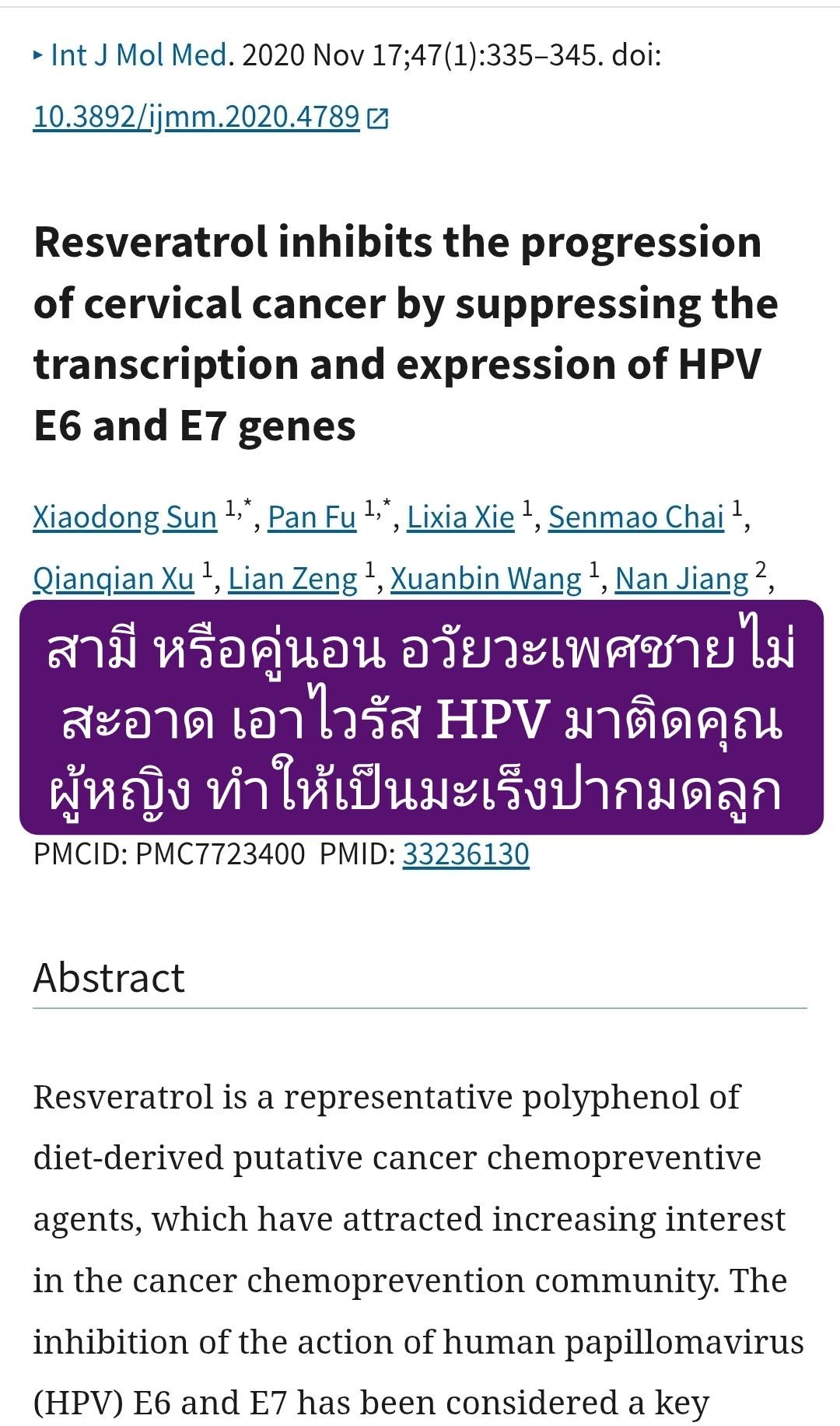
This research article is published in the journal International Journal of Molecular Medicine 2021, studying the effects of Resveratrol, which is...
This research article is published in the journal International Journal of Molecular Medicine 2021, studying the effects of Resveratrol, a polyphenolic substance found in red grapes. Mulberry To inhibit the occurrence of Cervical Cancer associated with Human Papillomavirus Infection, especially high-risk strains such as HPV-16 and HPV-18.
Important mechanisms of cervical cancer
The HPV virus produces two types of cancer-causing proteins:
E6 → Destroys the protein p53, a “genome guardian” that helps eliminate abnormal cells.
E7 → inhibit protein Retinoblastoma Protein, which controls cell division
When E6 and E7 are activated, cervical cells avoid death and keep dividing. Until leading to cancer
Objectives of the study
Researchers want to determine whether Resveratrol can
Reduced HPV E6/E7 gene expression
Stimulates the death of cancer cells (apoptosis)
Stop the cell division cycle
Reduces the growth of cancer tumors in laboratory animals.
Is it possible?
Experimental method
in the laboratory
Two types of cervical cancer cells were used.
HeLa Cells
Ca Ski Cells
HeLa cells were grown in mice and given resveratrol to evaluate the effect on tumor growth.
Important research results
1. Reduce the expression of HPV E6 and E7.
Resveratrol markedly reduced both E6/E7 mRNA and protein levels, causing the virus to lose its ability to induce cancer.
2. Increase p53 levels
When E6 is reduced, the p53 protein returns to action, resulting in better elimination of abnormal cells.
3. Inhibits pRb signal
When E7 is reduced, cell cycle regulation returns to normal. Cancer cells cannot continuously divide.
4. Stimulate the death of cancer cells
It was found that Resveratrol
Reduced anti-apoptotic proteins (BCL-2, BCL-xL)
Increase death-activating protein (BAX)
This results in more cancer cells entering the apoptosis process.
5. Stop the cell cycle at G1/S phase.
Cancer cells are stopped before they enter DNA replication, so they cannot multiply.
6. Reduce the size of cancer tumors in laboratory mice.
In animals, tumors were smaller and E6/E7 levels decreased, similar to the results seen in cultured cells.
Summary of mechanism of action
Resveratrol → Reduces HPV E6/E7 → Restores p53 and Rb function → Stimulates cell death + Stops division → Inhibits cervical cancer growth
The importance of research
This research shows that resveratrol not only inhibits the growth of cancer cells, but also inhibits cancer cell growth. But it also directly targets the main causes of cervical cancer, the E6 and E7 genes of HPV, and has the potential to be developed as an adjuvant for prevention or treatment in the future.
Brief summary for communication
“Resveratrol from grapes and mulberries can inhibit oncogenic genes of the HPV virus (E6 and E7), restore p53 function, and stimulate cell death. and reduce the growth of cervical cancer