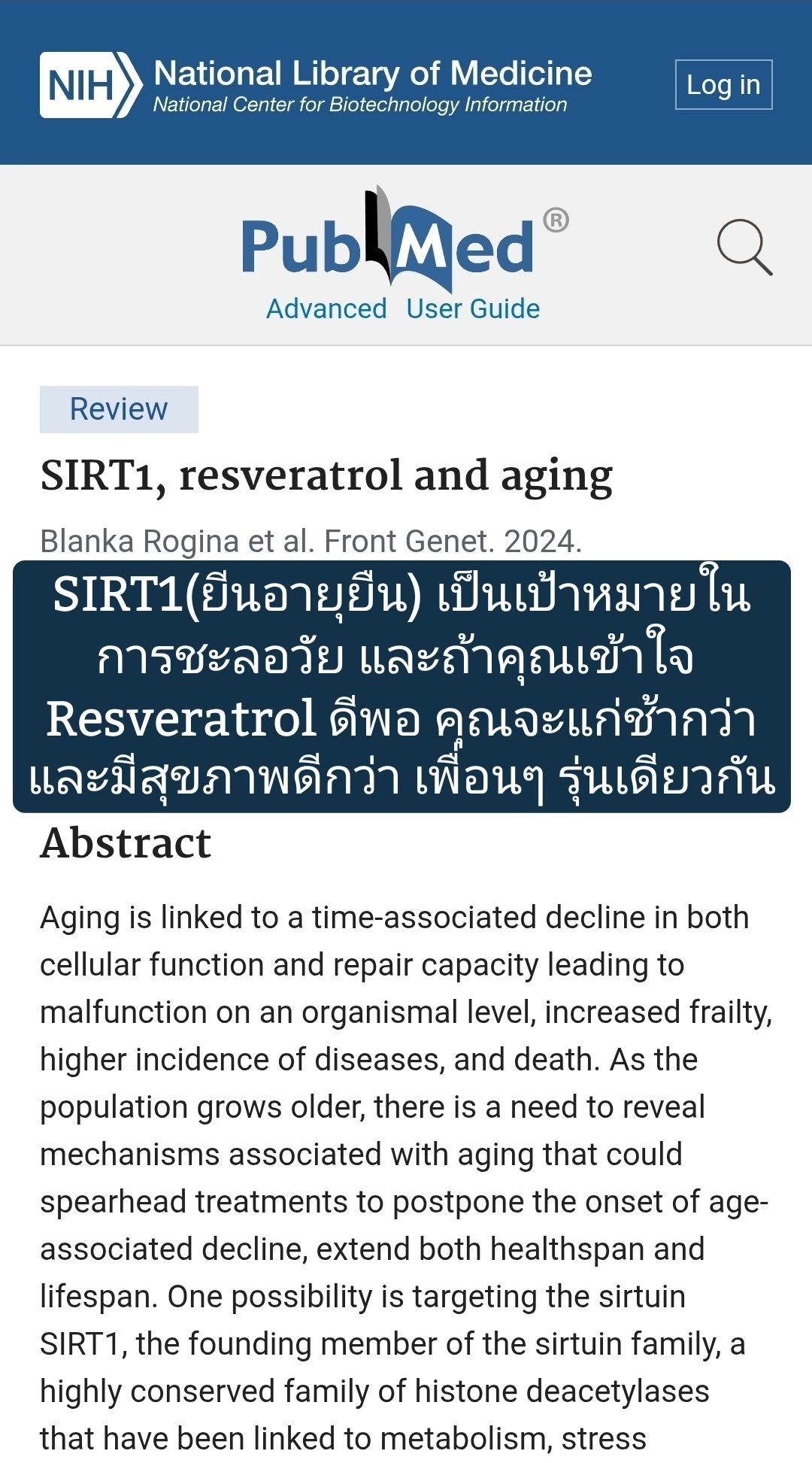
This study, titled "SIRT1, resveratrol and aging," was published in the journal Nature Reviews Molecular Cell Biology (2024).
A summary of this article, titled "SIRT1, resveratrol and aging," was published in the journal Nature Reviews Molecular Cell Biology (2024).
Summary of the main points of the article
This article reviews research on the relationship between the SIRT1 enzyme, Resveratrol and the aging process, with the main points being:
1. The role of SIRT1 (The Longevity Gene):
SIRT1 is a member of the sirtuins family of enzymes that mimics calorie restriction, a method that has been shown to extend lifespan in many organisms.
SIRT1 helps regulate metabolism, DNA repair, and cellular stress responses.
2. Resveratrol as an activator (Sirtuin Activating Compound (STAC):
Resveratrol is a polyphenol that is found in abundance in mulberries. and red grape skin
The article explains that Resveratrol can stimulate SIRT1 directly (Direct Activation), which has beneficial effects on health, such as helping with insulin sensitivity and protecting cells from diseases caused by age-related degeneration.
3. Molecular mechanism of action:
There is some debate in the scientific community about whether Resveratrol stimulates SIRT1 directly or indirectly (such as through AMPK), but this article presents supporting evidence that Resveratrol binds to the SIRT1 protein to increase its effectiveness.
4. Potential for treating disease:
Research suggests that the use of SIRT1 activating agents (STACs), including Resveratrol and newer synthetic compounds, It is likely to be used to treat lifespan-related diseases such as type 2 diabetes, heart disease, and Alzheimer's disease.
The article concludes that SIRT1 is an important target for slowing the aging process and that resveratrol is an important tool in helping us understand the mechanism for extending lifespan. Existing data is an important foundation for the future development of anti-aging drugs.