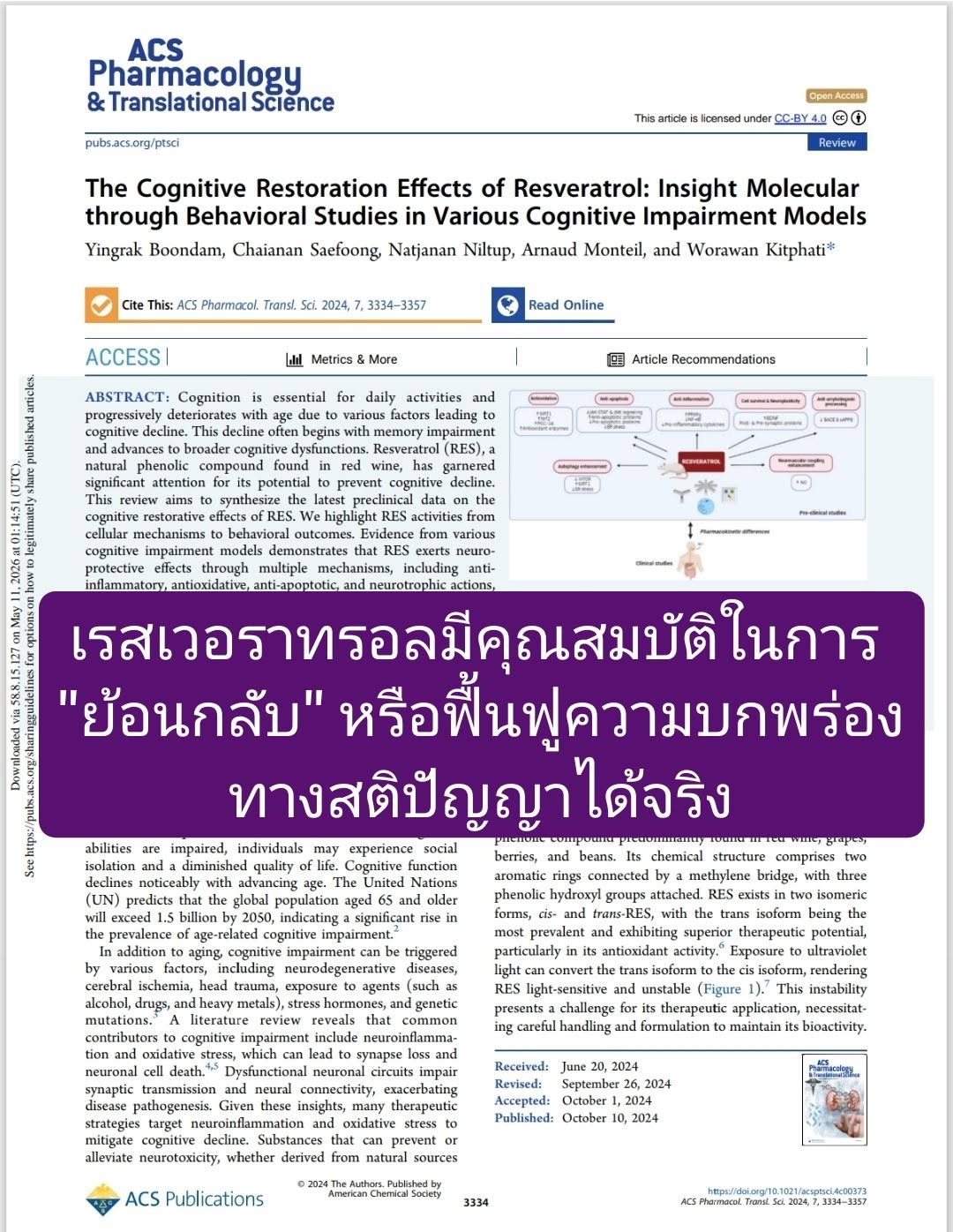
Research from Mahidol University Published in the journal ACS Pharmacology & Translational Science (2024)
Research from Mahidol University Published in the journal ACS Pharmacology & Translational Science (2024)
Summary of the research article "The Cognitive Restoration Effects of Resveratrol: Insight Molecular through Behavioral Studies in Various Cognitive Impairment Models"
The main points can be summarized as follows:
1. Objectives of the study
This research focuses on studying the effects of Resveratrol, a natural phenolic compound. (found mostly in red grapes and Mulberry) on Cognitive Restoration in various models of brain disorders.
2. Mechanisms of action at the molecular level (Molecular Insights)
The article states that resveratrol protects and restores the brain through key mechanisms:
● Anti-inflammatory action in the nervous system. (Anti-neuroinflammation): Reduces the secretion of substances that cause inflammation in the brain. which is the main cause of dementia
● Antioxidant properties: Reduces Oxidative Stress that damages nerve cells.
● Stimulation of SIRT1 protein: which plays an important role in cell survival and mitochondrial function. (cell energy source)
● Regulating neurotransmitter activity: Helps balance the neurotransmitters involved in learning and memory.
3. Results of behavioral studies (Behavioral Studies)
The researchers tested models of cognitive impairment (such as models of Alzheimer's disease, aging, or toxic damage) and found that:
Experimental animals have Better long-term and short-term memory
The ability to learn spatially (Spatial Learning) and recognize objects has significantly increased.
4. Clinical importance and applications (Translational Science)
The article highlights resveratrol's potential to be Therapeutic Agent for diseases related to neurodegeneration
However Research also points to limitations in the bioavailability of resveratrol in the human body. This requires the development of drug delivery technology so that the substances can act in the brain more efficiently.
Summary overview:
This article confirms that resveratrol has the ability to "reverse" or reverse cognitive impairment through multiple mechanisms. both at the molecular and behavioral levels This makes it a very interesting option for developing drugs or dietary supplements to prevent dementia in the future.