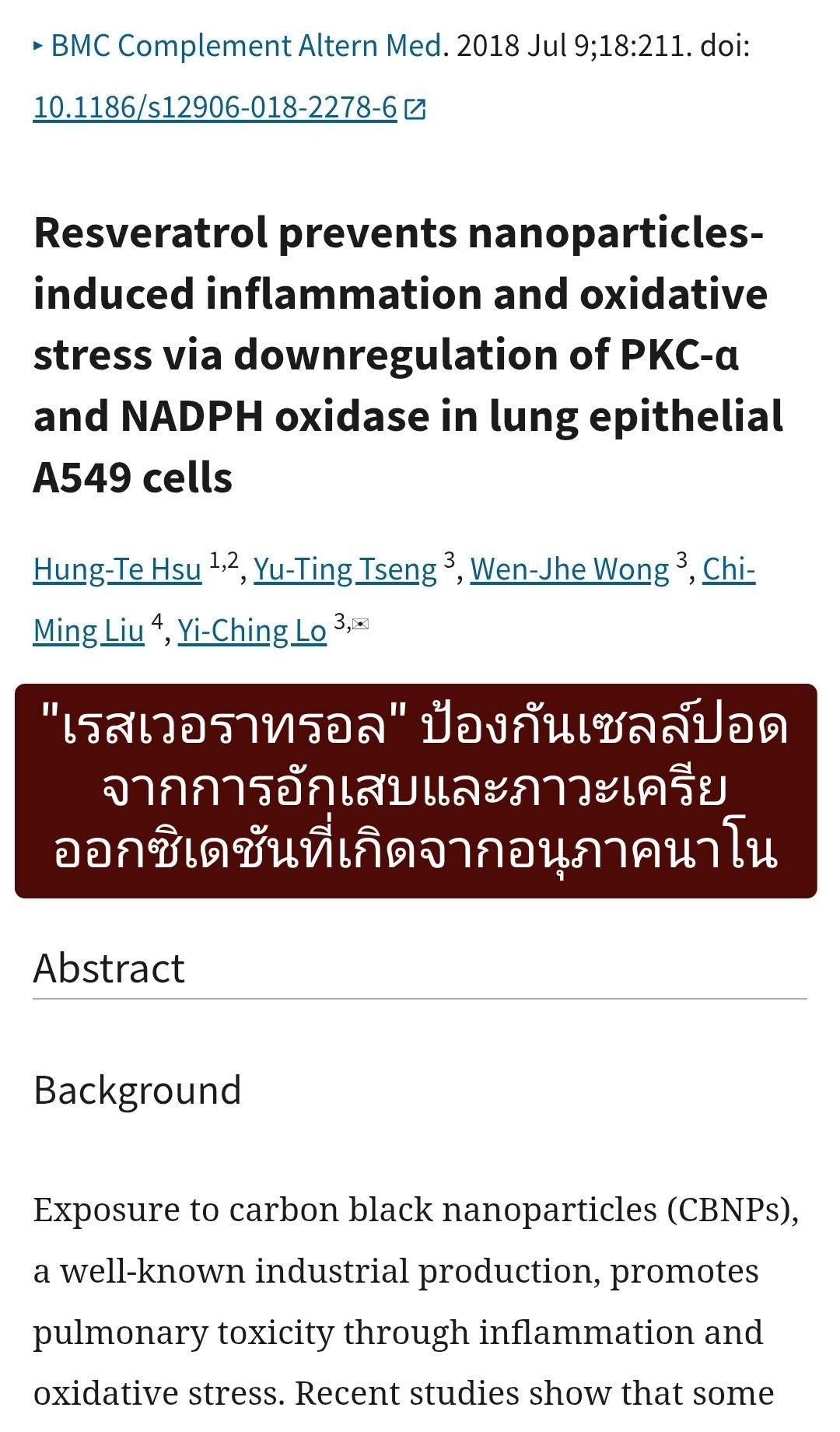
This research studies the mechanism of Resveratrol (Resveratrol), an extract found in the skin of red grapes. and mulberry to protect cells...
Summary of this research article studies the mechanism of Resveratrol (Resveratrol), an extract found mostly in the skin of red grapes. and mulberry in protecting lung cells from inflammation and oxidative stress caused by nanoparticles. (Nanoparticles) using human lung epithelial cells (A549 cells) as a test model.
The main points of the research can be summarized as follows:
1. Problems studied
Currently, exposure to nanoparticles (such as Zinc Oxide or ZnO nanoparticles) can accumulate in the lungs and trigger inflammatory processes. Including the creation of large amounts of free radicals (Reactive Oxygen Species - ROS), which lead to cell damage and respiratory disease.
2. Resveratrol's mechanism of action
Research has shown that Resveratrol can inhibit damage caused by nanoparticles through two main mechanisms:
- Inhibits PKC-α: Resveratrol reduces the activity of Protein Kinase C-alpha (Protein Kinase C-alpha), an important intermediary enzyme that signals cells to become inflammatory.
- Reduced NADPH Oxidase activity: When PKC-α is reduced, it results in the NADPH oxidase enzyme (the main contributor to the production of free radicals in cells) working less. This causes the amount of free radicals in the cells to decrease significantly.
3. Important experimental results
- Reduces inflammation: Resveratrol reduces the secretion of inflammatory substances. (Pro-inflammatory cytokines) such as IL-6 and IL-8
Protect cells: Helps increase the survival rate of lung cells after exposure to toxins from nanoparticles.
- Antioxidants: Helps reduce ROS levels and maintain balance within cells to prevent damage.
4. Conclusion and benefits
This research indicates that Resveratrol has the potential to be developed as a substance for the prevention or treatment of lung disease. Caused by inhaling pollutants or nanoparticles in the environment Emphasis is placed on the regulation of PKC-α and NADPH oxidase signaling pathways.
Health implications: Resveratrol consumption Helps strengthen the protective barrier for lung cells at the molecular level.