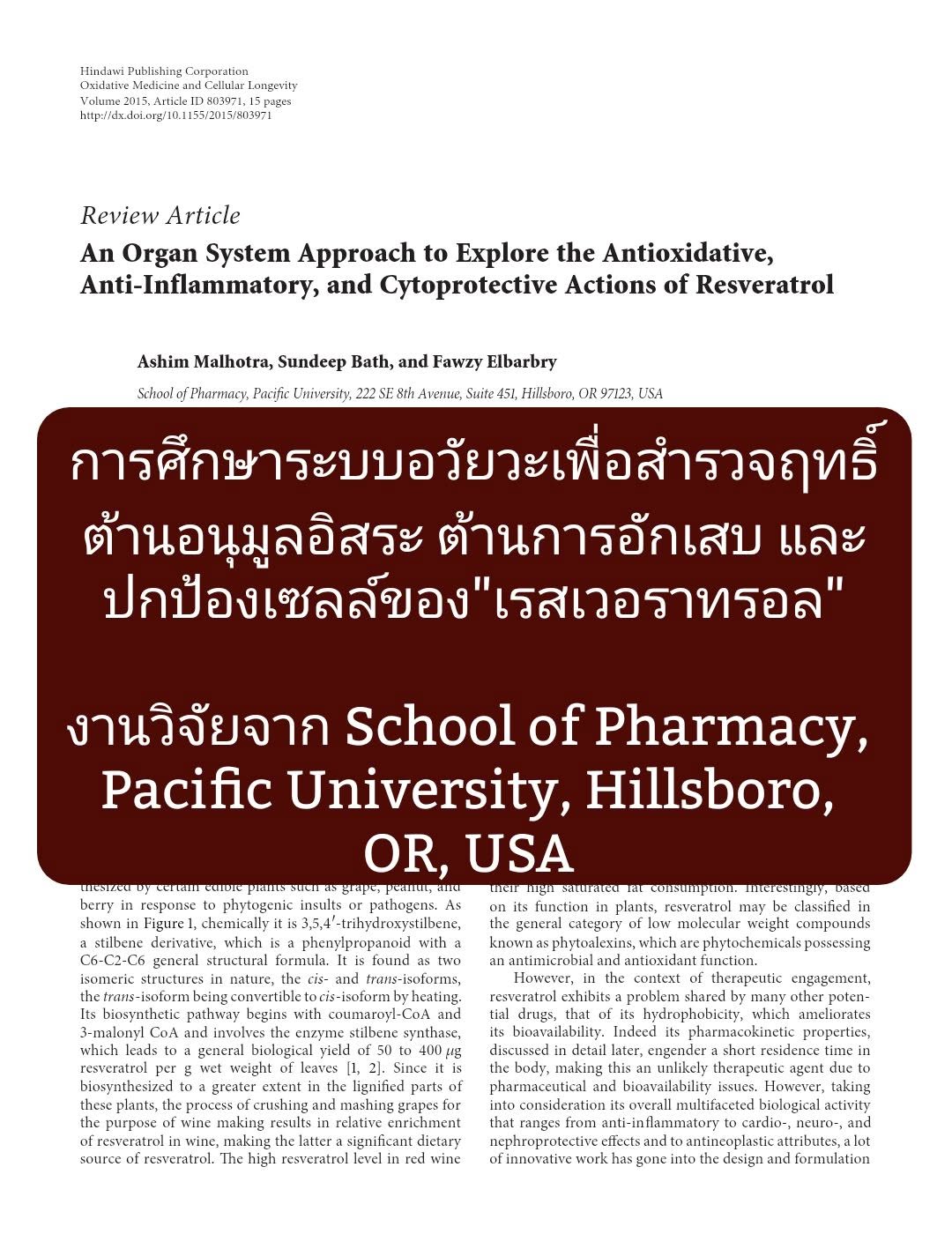
Academic subject: "An Organ System Approach to Explore the Antioxidative, Anti-Inflammatory, and Cytoprotective Actions o...
Summary of the academic article "An Organ System Approach to Explore the Antioxidative, Anti-Inflammatory, and Cytoprotective Actions of Resveratrol"
Research from School of Pharmacy, Pacific University, Hillsboro, OR, USA
This is a review article that collects information about the mechanism of action of Resveratrol in various organ systems of the body. The main points can be summarized as follows:
1. What is resveratrol?
Resveratrol is a phenolic compound in the phytochemical family. (Phytochemical) that is found in many plants such as grapes and mulberries. It acts as a shield to protect plants from environmental stress. and when consumed by humans It has 3 outstanding biological effects:
● Antioxidants (Antioxidative)
● Anti-inflammatory (Anti-inflammatory)
● Protect cells (Cytoprotective)
2. Working at the organ system level (Organ System Approach)
This article analyzes the effectiveness of resveratrol by major organ system:
- Central Nervous System:
Helps protect nerve cells (Neuroprotective)
It has the potential to delay or prevent neurodegenerative diseases such as Parkinson's and Alzheimer's diseases by reducing oxidative damage to the brain.
- Cardiovascular system (Cardiovascular System):
Helps prevent hardening of the arteries (Atherosclerosis)
- Reduce damage from ischemia and then have blood return to feed again. (Ischemia-reperfusion injury)
- Protects the heart muscle from damage.
- Cancer (Neoplastic Responses):
Has anti-cancer effects (Anticarcinogenic), especially in colon cancer (Colon Cancer)
- Helps modify the function of genes related to inflammation and abnormal cell growth.
- Urinary system (Renal System):
Has a protective effect on the kidneys (Nephroprotective), especially reducing inflammation and stress at the cellular level (ER stress) in patients with diabetic kidney disease.
3. Mechanism of operation at the molecular level
The article highlights key mechanisms by which resveratrol acts, such as:
● Stimulation of SIRT1 protein, which helps regulate metabolic balance and anti-inflammatory properties.
● Reducing the production of inflammatory substances. (Pro-inflammatory cytokines) and inhibit signaling pathways that cause inflammation in cells
● Maintaining protein balance in the extracellular structure. (Extracellular matrix)
Brief Summary: This article points out that resveratrol is a substance with great potential to protect organs through anti-inflammatory and anti-oxidant mechanisms.