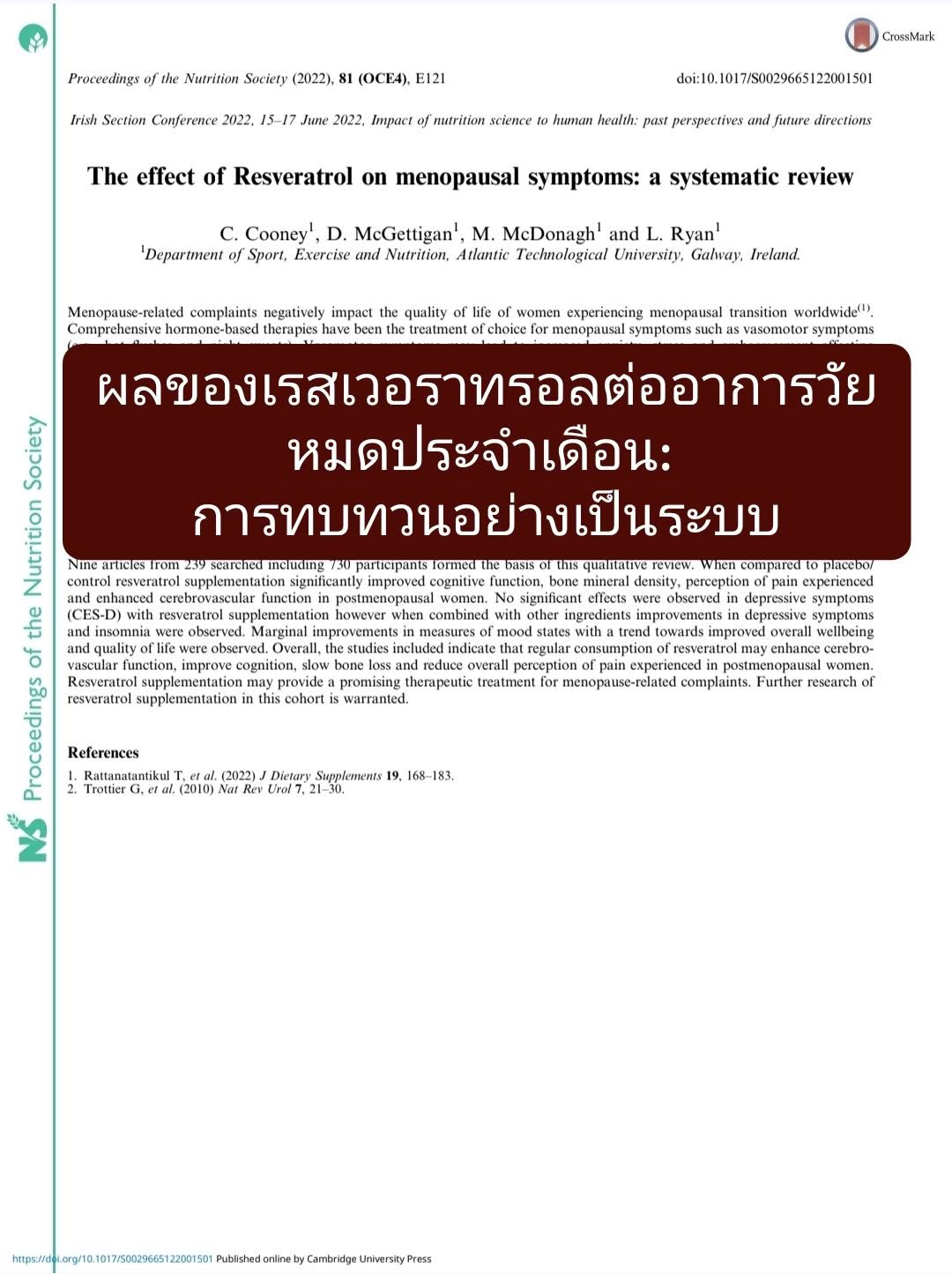
Research on "The effect of Resveratrol on menopausal symptoms: a systematic review" from the journal Proceedings of the Nutr...
Summary of the research article "The effect of Resveratrol on menopausal symptoms: a systematic review" from the journal Proceedings of the Nutrition Society by Cambridge University Press. The main points are as follows:
1. Objectives of the study
This study was a systematic literature review to evaluate the efficacy of resveratrol, a natural polyphenol. (found mostly in red grapes and mulberry) to relieve various symptoms of menopausal women
2. Important working mechanisms
Resveratrol has properties that promote the health of postmenopausal women through 3 main mechanisms:
Phytoestrogen: has a structure similar to estrogen. Can weakly bind to estrogen receptors (ERα and ERβ), helping to compensate for decreased hormone levels.
Antioxidant & Anti-inflammatory: Helps reduce inflammation and free radicals in the body. which usually increases during menopause
Vascular Function: Helps strengthen blood vessel function (Endothelial function) and blood circulation in the brain.
3. Results from the study
From a collection of clinical research studies (RCTs), results were found in the following areas:
Pain Reduction: Reduces overall pain sensation by approximately 10%, especially joint and bone pain associated with menopause.
Blood vessel and brain health: Found to increase blood vessel dilatation (FMD) by 23-35% and improve brain function (Cognitive performance) by up to 33% in the long-term consumption group.
Physical and mental symptoms: Helps reduce the frequency and severity of hot flashes and improves overall quality of life. It also tends to help with mood and bone health. (increase bone density)
Safety: Highly safe and low side effects. Compared to using traditional hormone replacement therapy (HRT).
Conclusion: Resveratrol is a potential supplement option for postmenopausal women. Especially in the area of pain management. Blood vessel health and brain function