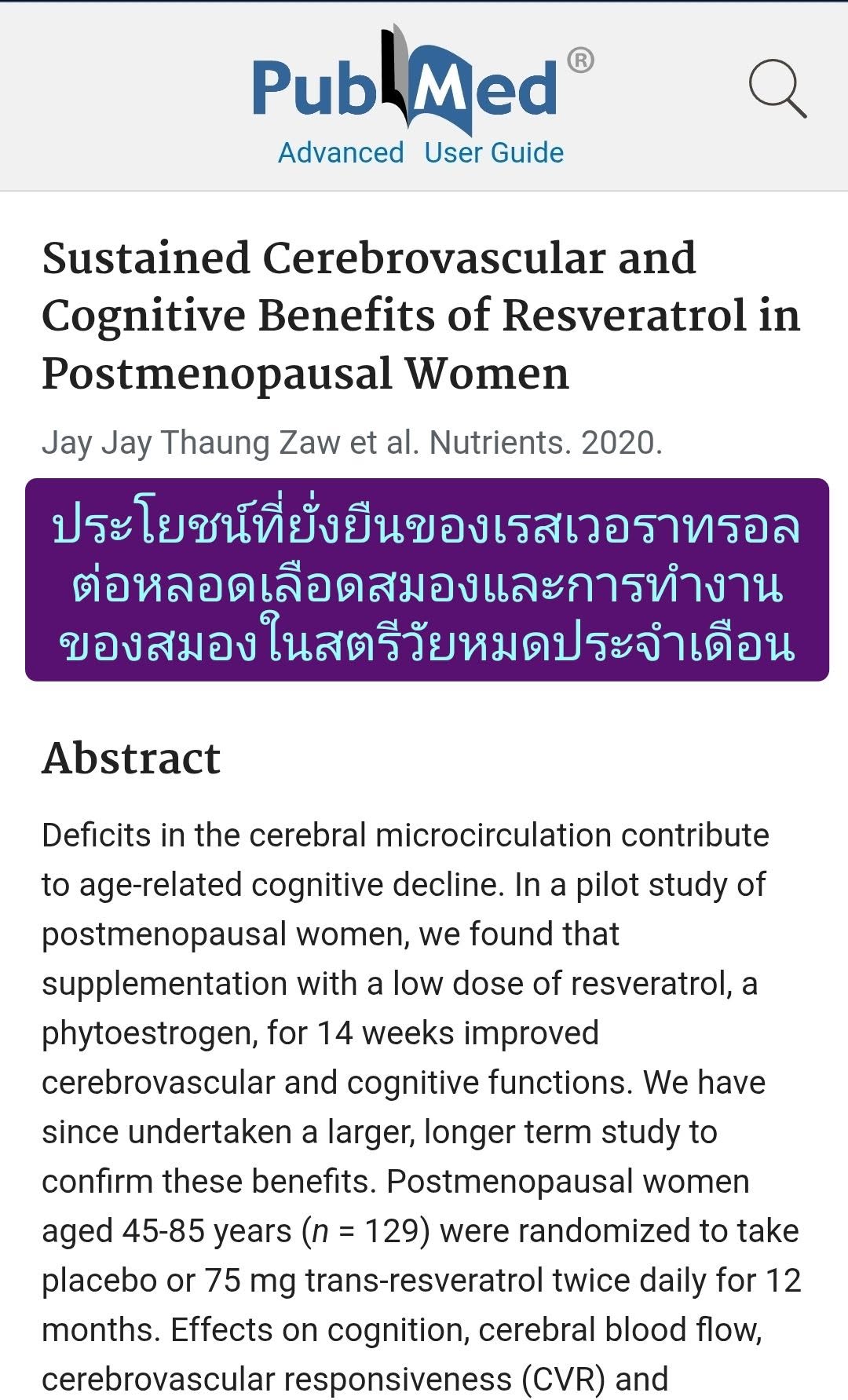
The topic "Sustained Cerebrovascular and Cognitive Benefits of Resveratrol in Postmenopausal Women" published in the journal N...
Summary of the article "Sustained Cerebrovascular and Cognitive Benefits of Resveratrol in Postmenopausal Women" published in the journal Nutrients (2020) is an important clinical study on the effects of resveratrol on brain health in postmenopausal women. The main points are summarized as follows:
1. Objectives of the study
Researchers wanted to determine if resveratrol intake (a phytoestrogen found in mulberries and red grapes) can, in the long term, improve cerebral blood flow and cognitive function in postmenopausal women. Which is a group at risk for dementia due to lack of estrogen?
2. Experimental method
Target group: 125 healthy postmenopausal women (aged 45–85 years)
Study design: Randomized, Double-blind, Placebo-controlled crossover trial.
Dosage: Take 75 mg of resveratrol twice a day (total 150 mg/day) for 12 months, then crossover to take placebo for another 12 months (total study period 24 months).
3. Important study results
Cognitive Performance: The group taking resveratrol had better overall intelligence test scores. significantly improved Compared to the placebo group Especially in the areas of memory and information processing.
Cerebral blood circulation (Cerebrovascular Function): Resveratrol improves the elasticity of brain blood vessels. (Cerebrovascular Responsiveness (CVR)) to intellectual stimuli. This means that the brain can respond and send blood to all parts of the body. Get better when you have to think.
Other indicators: Found to help reduce fasting blood sugar levels (Fasting Blood Glucose), which is associated with better blood vessel function.
4. Summary of the research
Supplementing with the right amount of resveratrol in contact for a long time Helps promote cerebrovascular health and delay cognitive decline. In women during menopause it can actually occur. and is a low-cost and safe option for reducing the risk of dementia in this group of women.