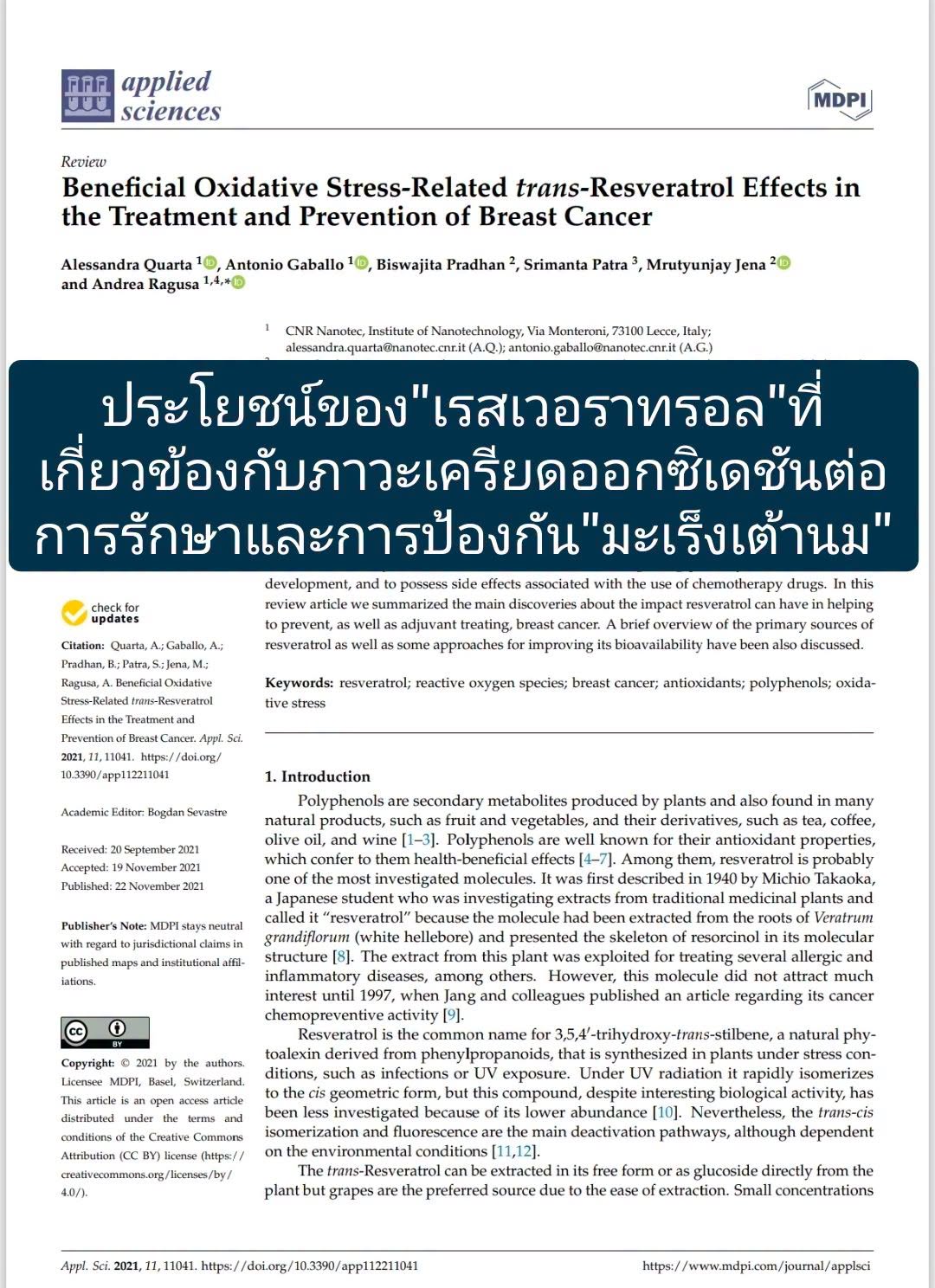
: Beneficial Oxidative Stress-Related trans-Resveratrol Effects in the Treatment and Prevention of Breast Cancer (MDP...
Article summary: Beneficial Oxidative Stress-Related trans-Resveratrol Effects in the Treatment and Prevention of Breast Cancer (MDPI, 2021)
This article is a Review Article that collects research on Resveratrol and its role in Prevent and help treat breast cancer. Emphasis is on mechanisms related to Oxidative Stress (oxidative stress) and Reactive Oxygen Species (ROS) or free radicals within cells.
Important points
1. What is Resveratrol?
Resveratrol is a polyphenol found in red grapes, mulberries, and some plants that produce it in response to environmental stress.
Has outstanding features
- Antioxidants
- anti-inflammatory
- Slow down cell degeneration
- Anti-cancer
2. Relationship between Oxidative Stress and breast cancer
When the body has too much ROS,
- DNA damage
- Gene mutation
- Stimulating the division of cancer cells
- Creation of new blood vessels in the cancer tumor
- Spread of cancer cells
Especially in aggressive breast cancers such as Triple-Negative Breast Cancer (TNBC), ROS play an important role in disease progression.
3. How does Resveratrol help fight breast cancer?
3.1 Reduce free radicals (ROS)
Resveratrol can
- Eliminates Superoxide radicals
- Eliminates Hydroxyl radicals
- Reduce Nitric oxide radicals
- Reduce Peroxynitrite radicals
Thus reducing DNA damage and reducing the risk of cancer.
3.2 Stimulate the body's free radical defense system.
Resveratrol stimulates the production of important enzymes such as
- Superoxide Dismutase (SOD)
- Catalase (CAT)
- Glutathione Peroxidase (GPx)
Makes the body get rid of ROS more efficiently.
3.3 Stimulate the death of cancer cells (Apoptosis)
Resveratrol helps cancer cells
- Stop dividing
- enter the natural death process
through mechanisms related to
- p53
- Caspase-8
-Caspase-9
-Cytochrome c
which is an important mechanism for eliminating abnormal cells
3.4 Inhibits the spread of cancer
Resveratrol can
- Reduce the EMT (Epithelial-Mesenchymal Transition) process.
- Reduce the movement of cancer cells
- Reduce the creation of new blood vessels (Angiogenesis)
As a result, the chance of cancer spreading is reduced.
4. Helps enhance the efficiency of chemotherapy drugs.
Research has shown that Resveratrol helps.
- Increases the sensitivity of cancer cells to chemotherapy drugs.
- Reduce drug resistance
- Reduce side effects from Doxorubicin, especially cardiac toxicity.
Therefore has the potential to be used as Adjuvant Therapy combined with standard treatment
Author's conclusion
The authors conclude that Resveratrol has high potential for preventing and helping treat breast cancer. Through many mechanisms including:
- Reduce Oxidative Stress
- Reduce inflammation
- Stimulates the death of cancer cells
- Inhibit the spread
- Reduce side effects of chemotherapy
For mulberry products containing Resveratrol
This article supports the idea that getting Resveratrol from natural sources, such as mulberries, helps boost the body's antioxidant system and reduce risk factors associated with breast cancer.