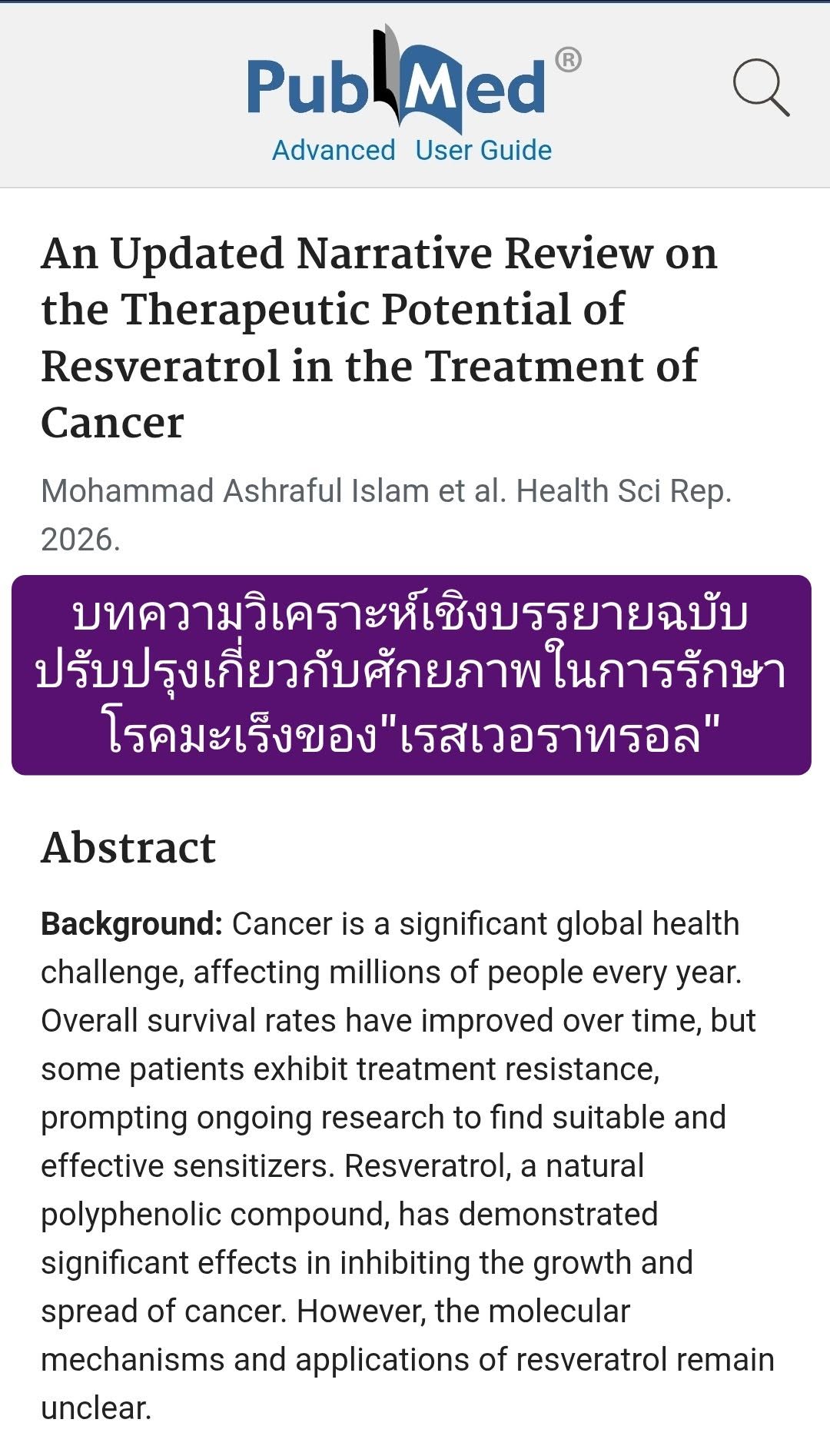
An Updated Narrative Review on the Therapeutic Potential of Resveratrol in the Treatment of Cancer
An Updated Narrative Review on the Therapeutic Potential of Resveratrol in the Treatment of Cancer
An updated narrative analysis article on the cancer treatment potential of resveratrol.
Abstract:
Background: Cancer is a major global health challenge. It affects millions of people every year. Overall survival rates improve over time. But some patients show resistance to treatment. As a result, research is ongoing to find suitable and effective stimulants. Resveratrol is a natural polyphenol compound. It has shown significant effects in inhibiting the growth and spread of cancer.
Purpose: In this revised narrative review article. We aim to discuss the role and relevant molecular mechanisms of resveratrol in various types of cancer. and provides an overview of the potential for treatment and prevention of these cancers.
Methods: We conducted an extensive literature search in four major databases: PubMed, Google Scholar, Web of Science, and ScienceDirect. to identify all relevant articles.
Results: Resveratrol is a naturally occurring polyphenolic compound. Especially Stilbain. Found in large quantities in red grapes, mulberries, and some other plants, resveratrol has been shown to significantly reduce the risk of various types of cancer in humans, including breast, cervical, thyroid, prostate, brain, skin, colon, bone, and ovarian cancer. Resveratrol has been shown to influence cell cycle arrest. stimulate cell death and inhibit the spread of cancer All of this occurs through various signaling mechanisms. Additionally, several experimental studies have shown interesting results. It suggests that it may help reduce tumor development and extend lifespan in laboratory animals with cancer. Including other benefits as well
Conclusions: This review shows that resveratrol can serve as a model for developing more effective and less toxic drugs for the treatment of various types of cancer.