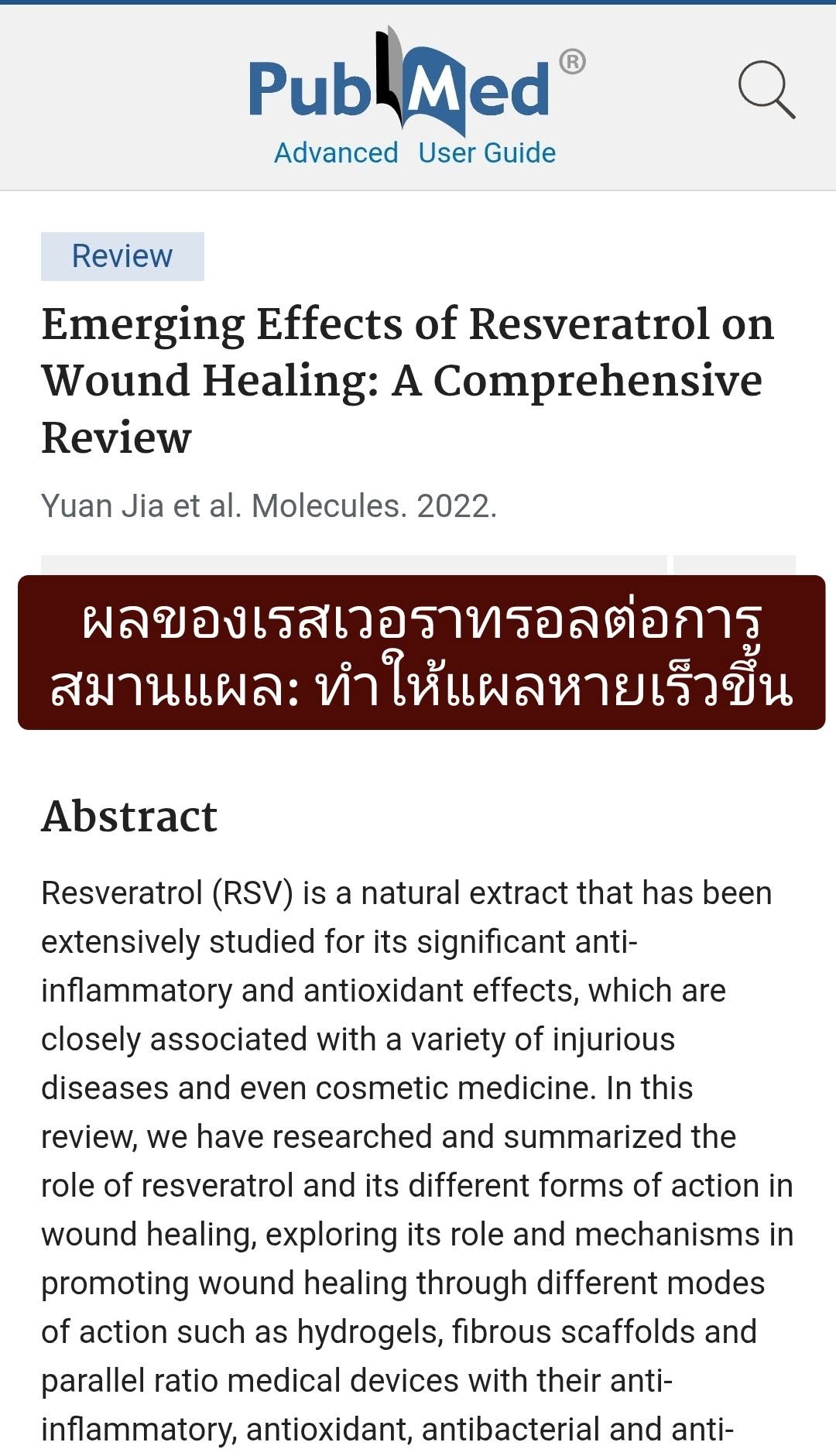
“Emerging Effects of Resveratrol on Wound Healing: A Comprehensive Review” (2022)
Summary of the article “Emerging Effects of Resveratrol on Wound Healing: A Comprehensive Review” (2022)
Overview of the article
This article is a review paper that collects research on Resveratrol, a polyphenol substance from plants (such as red grapes, mulberries), and how it plays a role in helping wound healing.
The highlight is
anti-inflammatory
Antioxidants
antibacterial
Slow down cell degeneration
The main mechanism that helps wounds heal faster
1. Reduce inflammation (Anti-inflammatory)
Resveratrol reduces inflammatory cytokines such as
TNF-α
IL-1β
COX-2
Helps control inflammation from being too much → Wounds heal faster.
2. Antioxidants (Antioxidant)
Reduce oxidative stress that causes wounds to heal slowly.
Protect cells from damage
Very important in diabetic wounds, chronic wounds
3. Stimulate the activity of important cells in the wound.
Fibroblasts (make collagen)
Resveratrol
Reduce excessive scar formation (scar/keloid)
Regulates pathway such as TGF-β/Smad
Helps the creation of new tissue to be more "balanced"
Keratinocytes (skin cells)
Stimulates proliferation and movement
Helps the skin close the wound quickly. (re-epithelialization)
Macrophages (immunity)
Reduce inflammation
Control the immune system to prevent too much tissue damage.
4. Antimicrobial and reduces infection
Has antibacterial effect
Reduces the risk of wound infection
5. Helps create new blood vessels (Angiogenesis)
Supports the delivery of nutrients to the wound
Makes tissues recover better
Format of use in work
Resveratrol isn't just for eating. But it was developed as:
hydrogel (wound dressing gel)
nanofiber scaffold
intelligent wound dressing