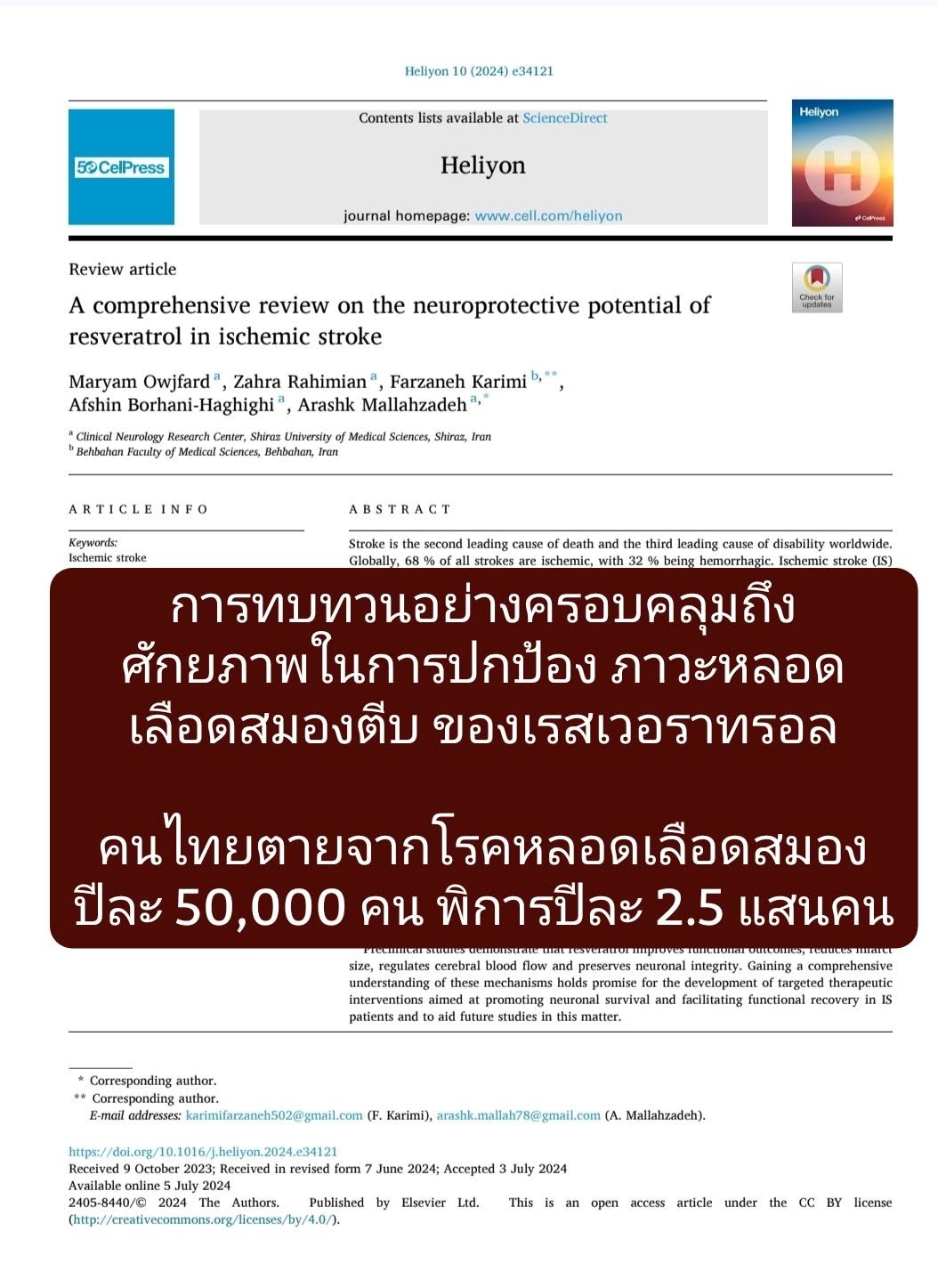
A comprehensive review on the neuroprotective potential of resveratrol in ischemic stroke
A comprehensive review on the neuroprotective potential of resveratrol in ischemic stroke
This academic article reviews the literature on the role of Resveratrol, a polyphenolic compound found abundantly in red grapes and mulberries. To protect and restore nerve cells from ischemic stroke (ischemic stroke/blockage)
In summary, the important points are as follows:
1. Neuroprotective mechanisms (Neuroprotective Mechanisms)
Resveratrol protects the brain through a number of complex mechanisms, including:
● Antioxidants (Antioxidant): Reduce the creation of Reactive Oxygen Species (ROS) and increase antioxidant enzymes in the body. Helps reduce cell damage caused by lack of oxygen.
● Anti-inflammation (Anti-inflammation): Inhibits substances that cause inflammation, such as TNF-α and IL-1β, which are important factors that cause brain tissue death to expand after a stroke.
● Inhibition of cell death. (Anti-apoptosis): Inhibiting the signaling process that causes brain cells to "suicide" after injury.
● Autophagy activation: helps cells get rid of denatured proteins or damaged organelles. To maintain cell balance
2. Working through important molecular channels
The article highlights how Resveratrol stimulates SIRT1 (Sirtuin 1), a protein involved in longevity and cell repair. Stimulating SIRT1 results in:
● Reduce oxidative stress (Oxidative Stress).
● Improve mitochondrial function. (Cell Power Plant) for the better
3. Physiological results
Studies have found that taking Resveratrol helps:
● Reduce the size of dead brain tissue (Infarct Volume): Makes the area damaged by abnormal blood flow smaller.
● Restores the functioning of the nervous system. (Neurological Recovery): Helps control and awareness return better after symptoms occur.