Research on
Summary of research on
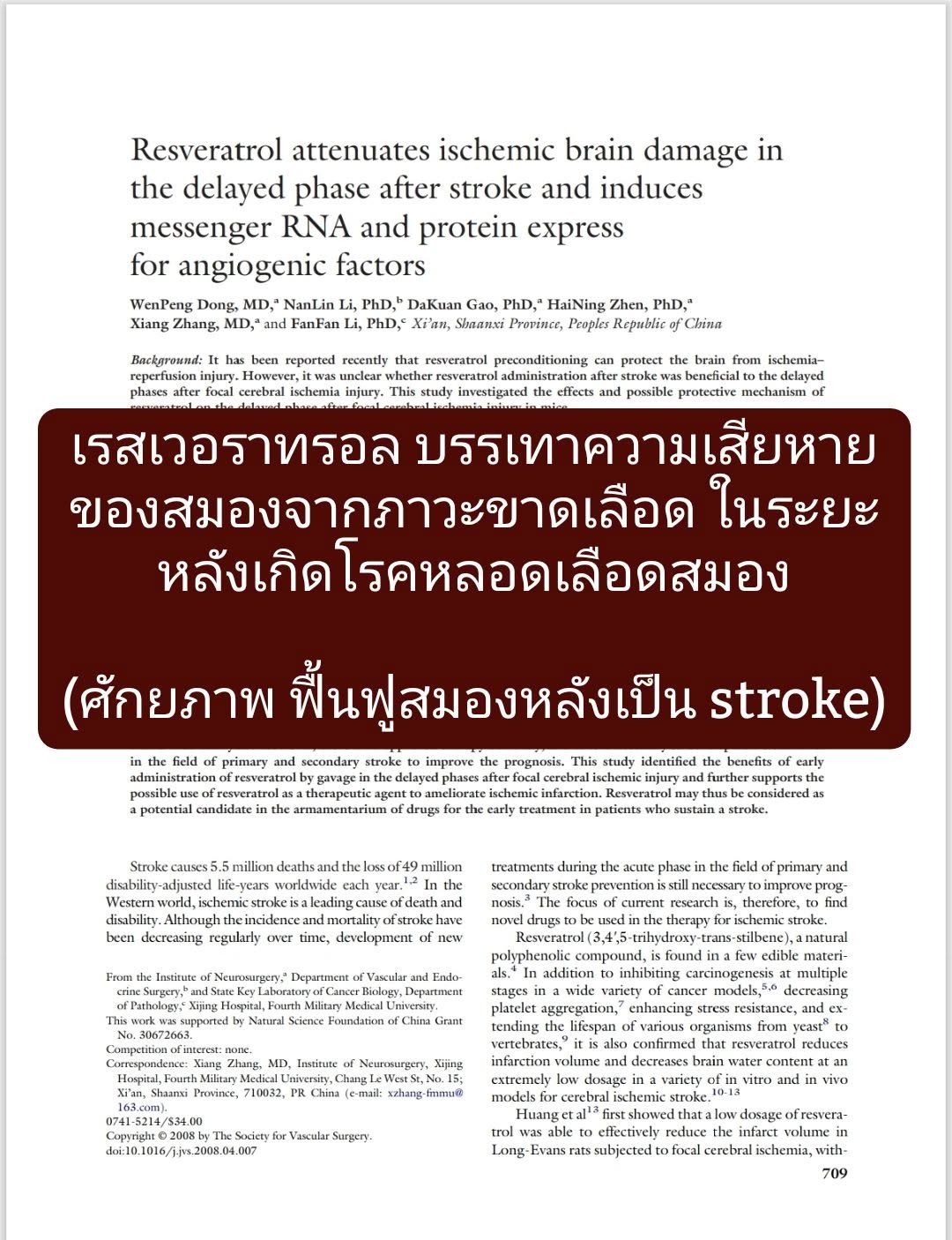
“Resveratrol attenuates ischemic brain damage in the delayed phase after stroke…” (Journal of Vascular Surgery)
The main idea of the research
This work studies whether Resveratrol (a plant-based antioxidant)
Can it help reduce brain damage after a stroke (stroke) or not, especially in the "delayed phase"?
Method of study
Ischemic stroke: Resveratrol is given at various times (before/after the stroke):
The size of the damaged brain tissue (infarct volume)
neurological symptoms
Number of blood vessels in the brain
Expression of genes/proteins related to angiogenesis (MMP-2, VEGF)
Important research results
Reduce brain damage
Groups that received Resveratrol
There is less damage to the brain. and neurological symptoms improved
Helps maintain blood vessels in the brain
Number of blood vessels (microvessels) decreased less than the control group
Stimulate the creation of new blood vessels (angiogenesis)
Add an expression of:
VEGF (vascular endothelial growth factor)
MMP-2
which is an important factor in creating new blood vessels
Very important moment
It works best when given early (before or immediately after reperfusion).
Mechanism of action (Summary is easy to understand)
Resveratrol helps brain recovery after stroke through:
● Stimulates “creation of new blood vessels” → increases blood flow to the brain.
● Increase important proteins (VEGF, MMP-2).
● Reduce brain cell damage.
Conclusion of the research
Resveratrol has brain-protective effects. (neuroprotective)
Helps reduce the size of the damaged brain + restore nervous system function.
The main mechanism is to stimulate the creation of new blood vessels. (angiogenesis)
Summary
● Resveratrol reduces brain damage after stroke.
● The sooner you give it, the more effective it will be.
● Main mechanism = Stimulates the formation of new blood vessels (VEGF, MMP-2).