From ScienceDirect on
Summary of articles from ScienceDirect stories
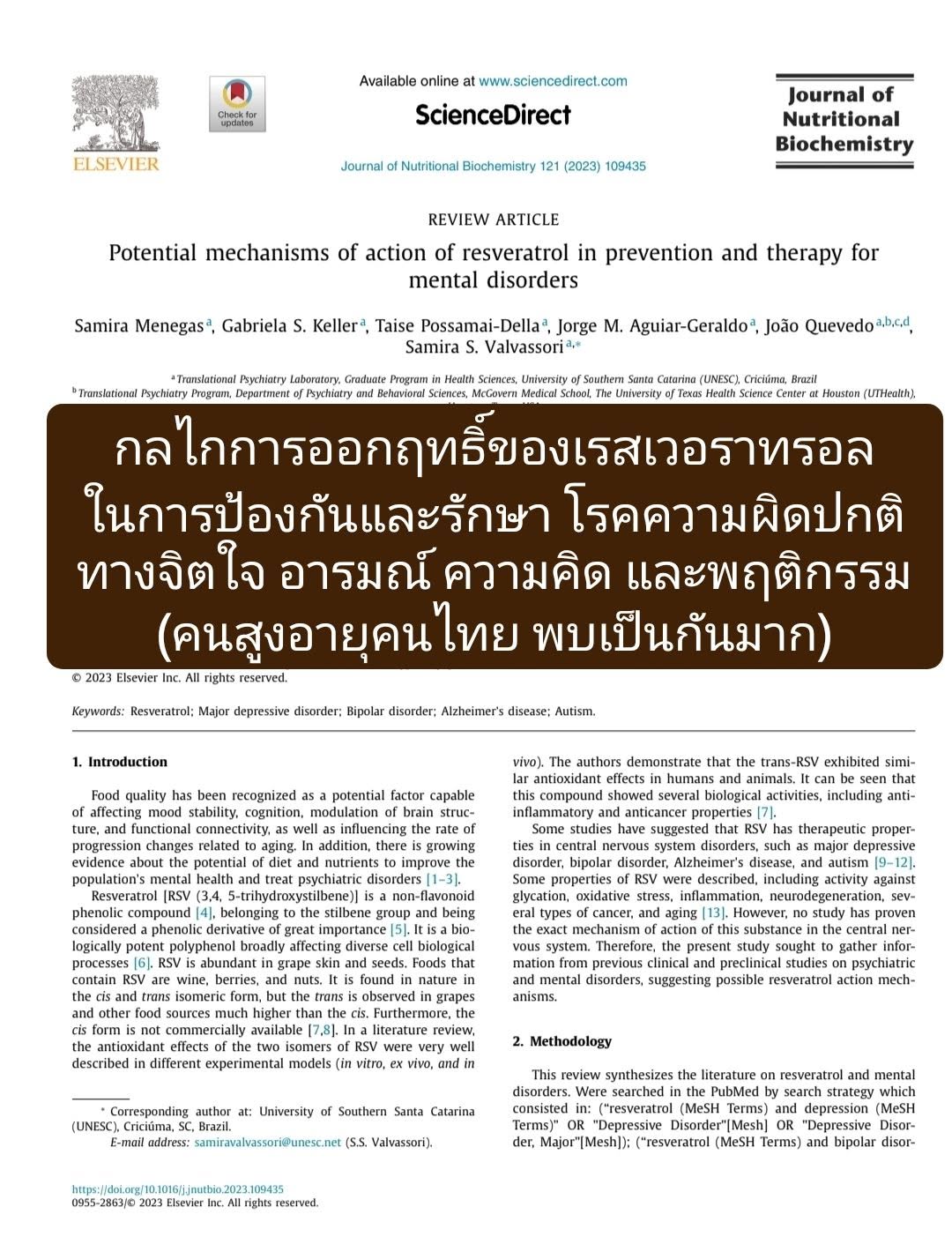
“Potential mechanisms of action of resveratrol in prevention and therapy for mental disorders”
Overview of the article
This article is a review of research (2016–2023) that included data from both laboratory animals and humans. About the role of Resveratrol in preventing and helping treat psychiatric diseases such as
- Depression
- Bipolar
- Schizophrenia
- Alzheimer's
- Autism
Main mechanism of action (Mechanisms)
1. Reduce oxidative stress (Antioxidant)
Resveratrol reduces Reactive Oxygen Species (ROS) and increases antioxidant enzymes.
Reduce brain cell damage
- is an important mechanism Because many psychiatric diseases are related to “oxidative stress”
2. Anti-inflammatory of the brain (Anti-inflammatory)
Reduce inflammatory cytokines such as
TNF-α
IL-1β
IL-6
Reduces inflammation in the hippocampus and other parts of the brain.
- Helps reduce brain deterioration and emotional symptoms.
3. Balance neurotransmitters (Neurotransmitters)
Affects serotonin, dopamine
In bipolar disorder → helps reduce excessive dopamine levels
- Affects mood, happiness, and behavior
4. Stimulate the creation of brain cells (Neurogenesis & Neuroplasticity)
Increase BDNF (Brain-Derived Neurotrophic Factor)
Stimulates the creation of new nerve cells
- Helps restore the brain in depression and Alzheimer's.
5. Stimulate SIRT1 pathway
Resveratrol stimulates the SIRT1 protein.
Help:
Protect brain cells
Reduce apoptosis (cell death)
Increase cognitive function
- It is one of the very important molecular mechanisms.
6. Control cell death (Anti-apoptosis)
Reduce protein that induces apoptosis (BAX)
Increase cell protection protein (Bcl-2)
- Helps slow down brain degeneration
7. Adjust signaling pathways in the brain
such as
AMPK
PI3K/Akt
mTOR
NF-κB
- Involved with cell survival, inflammation and cellular energy.
Effects on important diseases:
Depression
Reduce anhedonia behavior
Reduces immobility (in laboratory animals)
Reduce stress hormone (cortisol)
Bipolar (Bipolar)
Reduce oxidative stress
Adjust dopamine signaling
Helps control mood swings
Schizophrenia
Helps reduce negative symptoms
Increase memory and learning
Safe when used together with medicine
Alzheimer's
Reduce amyloid-beta
Reduce neuroinflammation
Slow down cognitive decline
Brief summary
- Resveratrol helps the brain through 3 main functions.
Reduce inflammation
Reduce free radicals
revitalize brain cells
- Has the potential to help with many types of psychiatric disorders