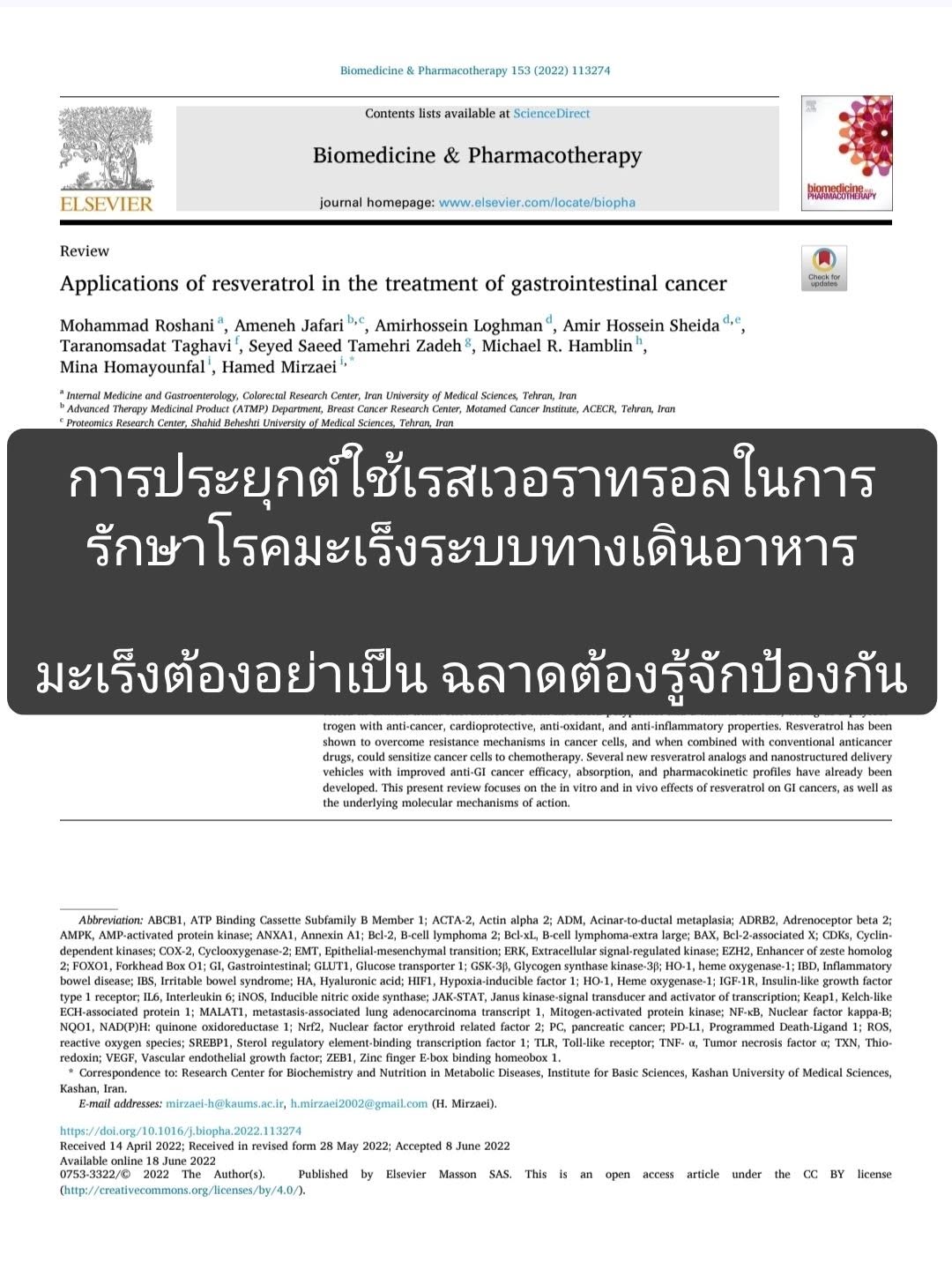
From ScienceDirect, “Applications of resveratrol in the treatment of gastrointestinal cancer”:
Summary of articles from ScienceDirect on “Applications of resveratrol in the treatment of gastrointestinal cancer”:
Overview of the article
Gastrointestinal cancers (GI cancers), such as colon, stomach, and pancreatic cancers, are often detected late and difficult to treat.
Natural polyphenols (such as resveratrol) have received attention. Because it has anti-cancer effects and reduces inflammation.
What is Resveratrol?
It is a polyphenol substance found in red grapes, mulberries, etc.
Features:
Antioxidants
anti-inflammatory
Anti-cancer
Can inhibit the growth of cancer cells and induce cancer cell death (apoptosis).
Important mechanism for fighting cancer
Resveratrol works in many ways. (multi-target) including:
1. Inhibits the growth of cancer cells
Stop cell cycle
Reduce cell division
2. Stimulate the death of cancer cells
Stimulates apoptosis (via p53, caspase)
Increases oxidative stress in cancer cells
3. Resists metastasis
Inhibits EMT and angiogenesis
Reduce invasion and migration of cells
4. Reduce inflammation
Inhibits NF-κB, IL-6, TNF-α
Reduce factors that stimulate cancer
5. Balance the microbiome
Increase good bacteria
Reduce pathogens such as H. pylori (associated with stomach cancer)
Role in gastrointestinal cancer
It affects many types such as:
Colon cancer (colorectal cancer)
→ Reduce inflammation + stimulate apoptosis
stomach cancer
→ Inhibits Wnt/β-catenin → Reduces proliferation
Pancreatic cancer
→ Increased sensitivity to chemotherapy drugs.
medical use
Resveratrol is available in several forms:
Prevent cancer (chemoprevention)
Use with chemotherapy (optimizes drug performance)
Reduce side effects from treatment
Use before/after surgery to reduce spread.
Summary
Resveratrol is a natural substance with high potential to Prevent and treat gastrointestinal cancer
It works by several mechanisms, such as reducing inflammation and killing cancer cells. and inhibit the spread