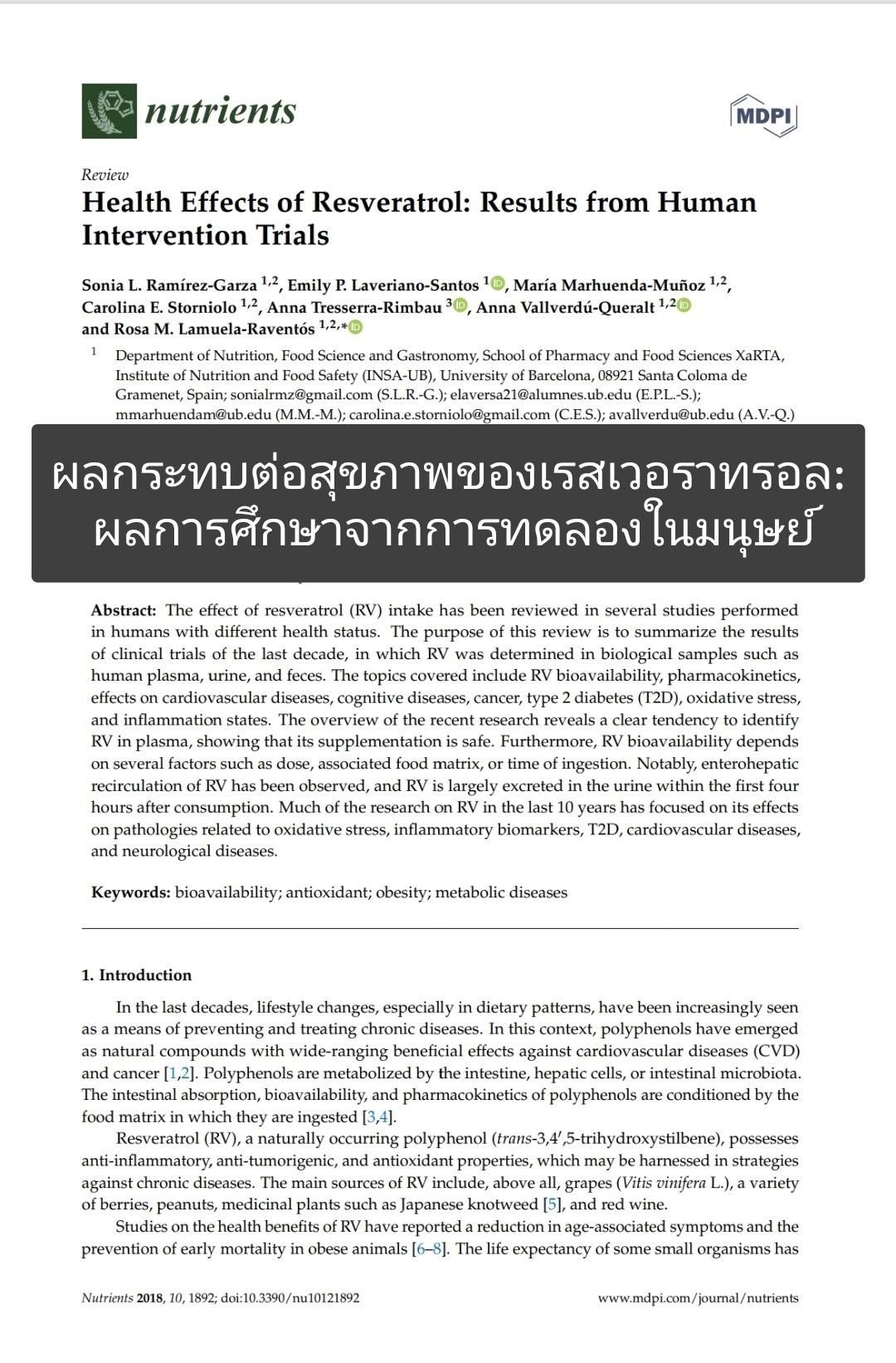
Article titled "Health Effects of Resveratrol: Results from Human Intervention Trials" from the PMC research archive (PubMe...
The article "Health Effects of Resveratrol: Results from Human Intervention Trials" from the PMC research archive (PubMed Central) summarizes key points about the effects of resveratrol on human health from clinical trials as follows:
1. What is resveratrol?
It is a polyphenol group of stilbene that is found in the skins of red grapes, mulberries, and some plants. Has outstanding properties in being an antioxidant. (Antioxidant) and anti-inflammatory (Anti-inflammatory)
2. Results from human studies (Human Trials)
The article summarizes the effects of resveratrol on various systems. of the body as follows:
Cardiovascular health:
Helps reduce blood pressure Especially the upper blood pressure (Systolic Blood Pressure) when given in a high enough dose.
Helps improve the function of blood vessel walls (Endothelial function) and helps reduce total cholesterol levels in people who are overweight.
Diabetes and metabolism:
There is evidence that it improves insulin sensitivity and helps reduce blood sugar levels in people with type 2 diabetes.
Helps reduce inflammation at the cellular level which is the cause of various chronic diseases
Weight control:
Helps reduce waist circumference in people who are obese or overweight.
Brain health and anti-aging:
It has the effect of stimulating the enzyme SIRT1, which is involved in slowing cell degeneration (Anti-aging) and imitating the effects of caloric restriction (Caloric restriction).
Helps promote memory and brain function in the elderly.
3. Issues regarding absorption and safety
Bioavailability: Resveratrol is well absorbed by the body. But it is quickly metabolized and excreted. This causes the amount of substance remaining in the bloodstream to actually be used (free form) to be quite small.
Safety: Generally considered safe and well tolerated by the body. (Well-tolerated)