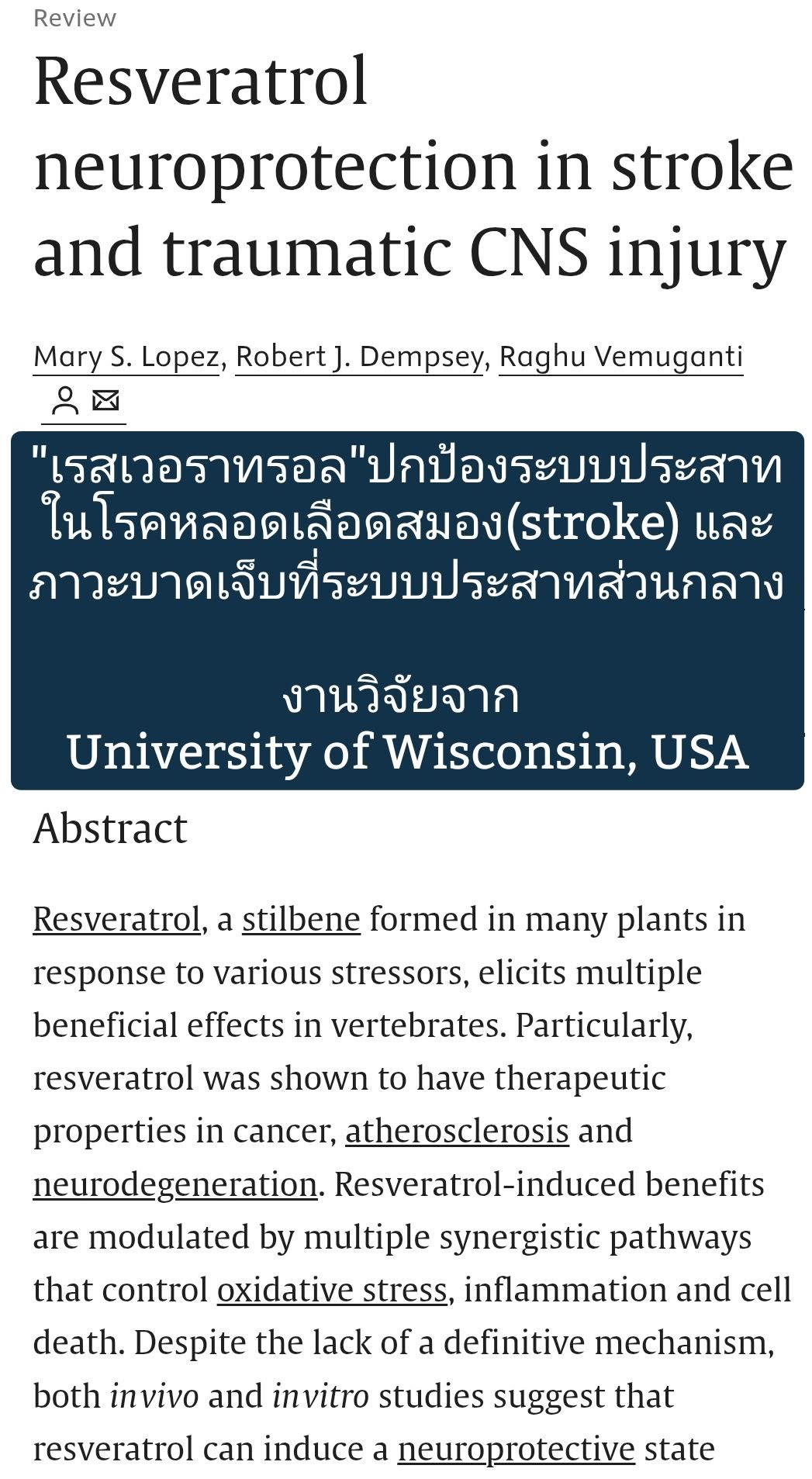
The article “Resveratrol Neuroprotection in Stroke and Traumatic CNS Injury” is a research review article (Review Article) that...
The article “Resveratrol Neuroprotection in Stroke and Traumatic CNS Injury” is a review article that compiles evidence on the role of Resveratrol in preventing damage to the brain and central nervous system from stroke (Stroke) and brain/spinal cord injury (Traumatic Brain Injury and Spinal Cord Injury).
The essence of the article
1. What is Resveratrol?
Resveratrol is a polyphenol found in many plants such as red grapes and mulberries. It has outstanding antioxidant and anti-inflammatory properties.
2. Why does Resveratrol help protect the brain?
After a stroke or brain injury There will be a continuous process of destroying nerve cells, including:
- Free radicals (Oxidative Stress)
- Inflammation
- Cell death (Apoptosis)
- Excitotoxicity from glutamate
- Mitochondrial disorders
Resveratrol can inhibit or alleviate these mechanisms in several ways simultaneously. Therefore it is called a powerful substance. "Neuroprotective" or protecting nerve cells
3. Important mechanism for protecting the brain
1. Antioxidants (Antioxidant)
Resveratrol stimulates important proteins and genes such as
- SIRT1
- AMPK
-Nrf2
- HO-1
The result is
- Increase antioxidant enzymes
- Reduce the occurrence of Reactive Oxygen Species (ROS).
- Protects the mitochondria
- Reduces the destruction of nerve cell membranes.
Therefore, it can help reduce the size of brain damage after a stroke.
2. Reduce inflammation (Anti-inflammatory)
Resveratrol
- Reduces the activity of Microglia that stimulate inflammation.
- Reduce TNF-α
- Reduce IL-1β
- Reduce IL-6
- Inhibits NF-κB, which is an important regulator of inflammation.
The result is
- Reduce swelling of the brain
- Reduces continuous destruction of nerve tissue.
3. Reduce the death of nerve cells. (Anti-apoptotic)
Resveratrol helps
- Increase Bcl-2 (a protein that prevents cell death)
- Reduce Bax
- Reduce Caspase-3
Therefore, it increases the survival of nerve cells after ischemia or injury.
4. Reduce toxic effects from glutamate (Anti-excitotoxicity)
After a stroke or TBI, there is an excessive release of glutamate. Causes nerve cells to receive too much calcium and die.
Resveratrol can
- Reduces NMDA receptor stimulation.
- Reduce the toxicity of glutamate
- Prevents damage to nerve cells.
4. Results of the study in the experiment
Research has shown that Resveratrol can
Reduce the size of the ischemic brain (Infarct Volume)
Reduce swelling of the brain
Reduce spinal cord damage
Increase movement recovery
Increases the activity of nerve cells after injury.
Both in Ischemic Stroke, Traumatic Brain Injury (TBI), Spinal Cord Injury (SCI), Subarachnoid Hemorrhage (SAH).
5. Resveratrol and "Preconditioning"
One interesting point is that Resveratrol acts similarly to Ischemic Preconditioning.
It means stimulating the brain to create a defense mechanism in advance. Makes it more resistant to future ischemic events. Through SIRT1 activation and modulation of mitochondrial function.
Researcher's conclusion
The authors conclude that Resveratrol is a natural substance with high potential to protect the nervous system. Because it acts simultaneously by several mechanisms, including:
● Antioxidants
● Anti-inflammatory.
● Reduces the death of nerve cells.
● Protects mitochondria.
● Reduce glutamate toxicity.
● Promote brain recovery.