Research on
Summary of research on
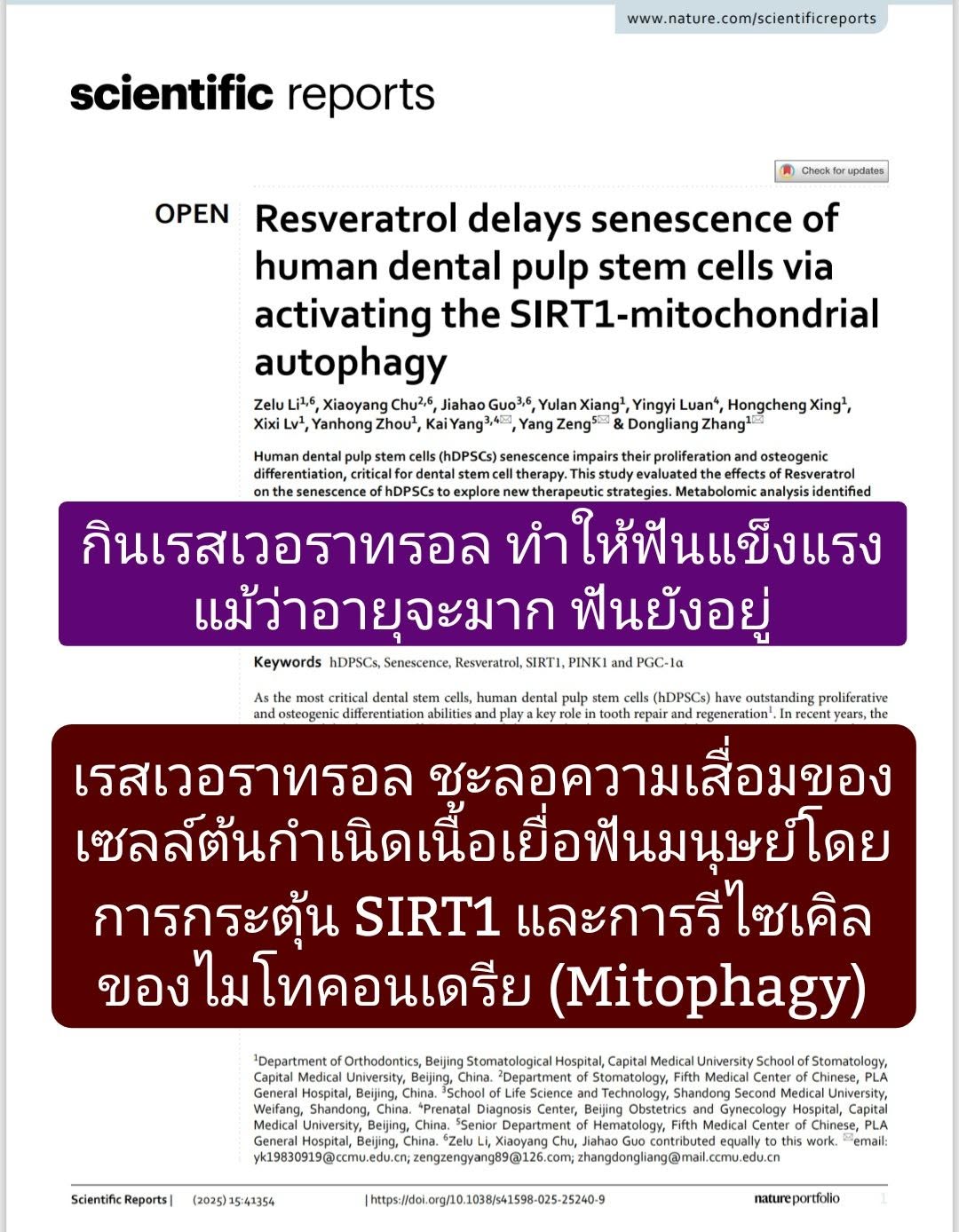
“Resveratrol delays senescence of human dental pulp stem cells via activating the SIRT1-mitochondrial autophagy” (Scientific Reports)
The main idea of the research
This work studies whether Resveratrol (an antioxidant from plants such as red grapes/mulberries) can
Can it “slow down the aging of dental pulp stem cells” (Dental pulp stem cells (hDPSCs))?
Problems that need to be solved
Dental stem cells (hDPSCs) play an important role in tooth repair, but as they “age” they:
Can divide less
Builds less bone/dentin
It is an obstacle to treatment in regenerative dentistry.
Important results of the research
1. Resveratrol slows down cell aging.
Reduce markers of aging (P16, P21, P53)
Reduce the number of senescent cells
Makes cells "look younger"
2. Increase growth and repair
increase division (proliferation)
increase cell movement
Helps build better tooth/bone (osteogenic differentiation)
3. Restore “mitochondria” (the energy source of the cell)
Resveratrol helps:
Reduces mitochondrial damage.
Reduce ROS (free radicals)
Increase ATP (energy)
Increases the creation of new mitochondria
4. Stimulates “mitophagy” (removal of damaged mitochondria).
Makes the cells get rid of the deteriorated parts better.
Resulting in better cell quality.
5. Important mechanism: SIRT1 pathway
Resveratrol works through:
SIRT1 (anti-aging protein)
Stimulates PINK1 and PGC-1α
Resulting in:
increased mitophagy
Increases mitochondrial biogenesis
Reduce cell degeneration
Summary
Resveratrol --->
“Reset the cell's energy system + eliminate waste in the cell”
Results:
cells become younger
work better
Better tooth repair
medical importance
This research indicates:
Resveratrol helps in
rehabilitation medicine (regenerative medicine)
Dentistry (tooth/tissue repair)
Has anti-aging potential at the cellular level