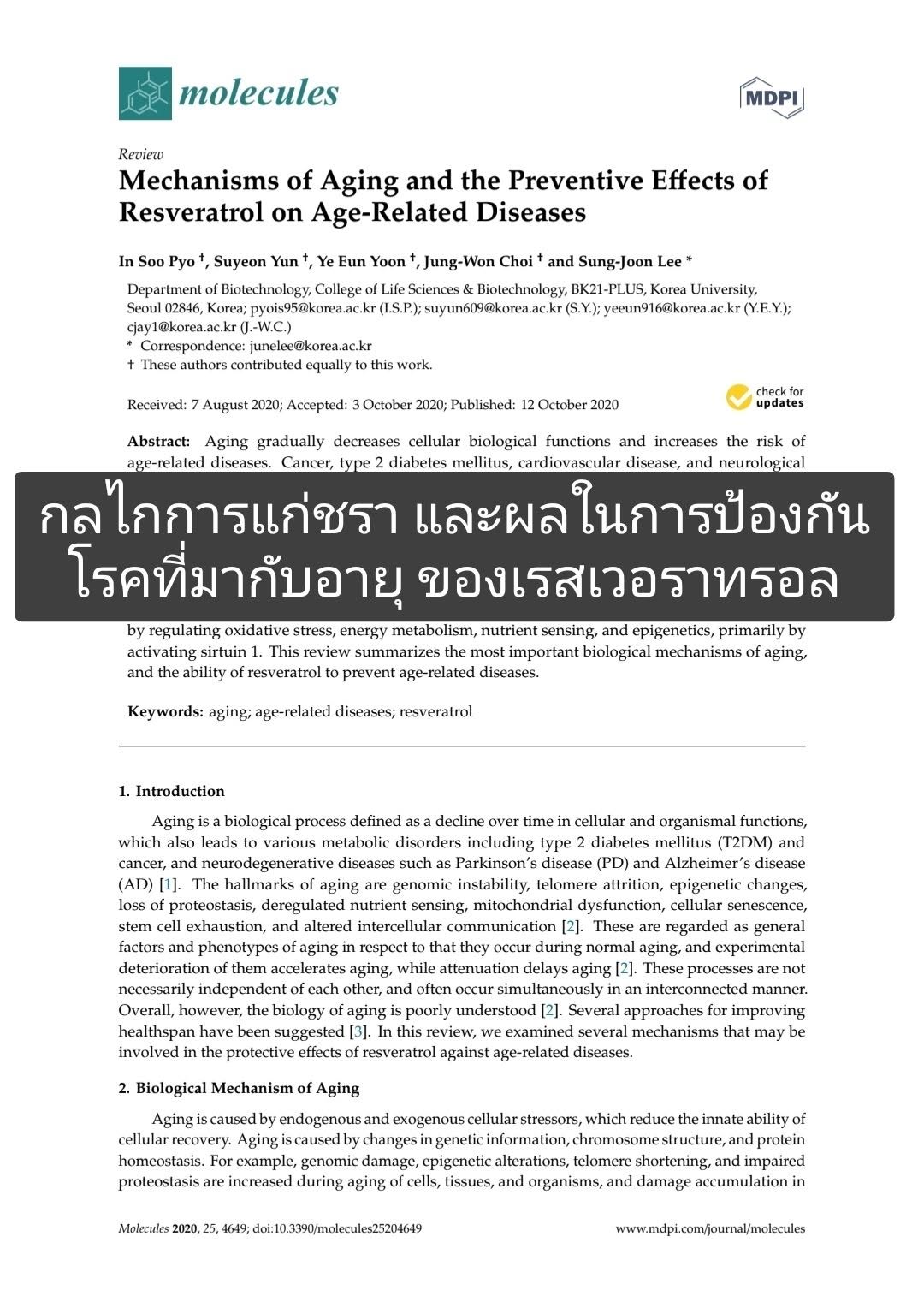
This is a summary of the research article.
This is a summary of the research article.
“Mechanisms of Aging and the Preventive Effects of Resveratrol on Age-Related Diseases (MDPI)”
Summary
“Aging” is the deterioration of cell and body function over time.
Puts you at risk for chronic diseases such as
cancer
type 2 diabetes
cardiovascular disease
Dementia
The main reason is “Damage accumulates in cells” including DNA, proteins, and mitochondria.
Important mechanisms of aging (Hallmarks of Aging)
The article summarizes many aspects of “highlights of aging” including:
1. DNA and genetic damage
Genomic instability occurs
Accumulated DNA damage → Cells malfunction.
2. Telomere shortening (Telomere attrition)
Makes cells divide less → Aging faster
3. Epigenetics changes
abnormal gene regulation
4. Loss of proteostasis
Misfolded/accumulated proteins → Dementia such as Alzheimer's
5. Mitochondrial degeneration
Energy production decreases
Increase oxidative stress
6. Energy Imbalance (nutrient sensing)
The insulin/mTOR system is abnormal.
7. Cells stop dividing (Cellular senescence)
“Old but not dead” cells → accumulate → inflammation
8. Free radicals (ROS)
Too much → damages DNA and cells
All of this is “connected together as a network” and does not occur in isolation.
The role of Resveratrol
Resveratrol = plant polyphenols
Found in red grapes, mulberries, etc.
It is a substance that has been studied a lot in terms of “anti-aging”.
Resveratrol's anti-aging mechanism
1. Reduce oxidative stress
Antioxidants
Increase antioxidant enzymes such as SOD, catalase
2. Stimulate SIRT1 (very important)
It is a "longevity gene"
Help control:
Metabolism
cell repair
Inflammation
It is considered the main mechanism of anti-aging.
3. Stimulates AMPK and inhibits mTOR.
Increase energy metabolism
Stimulates “autophagy” (the elimination of waste products in cells)
Reduce the accumulation of degenerated cells
4. Adjust epigenetics
Controls the expression of age-related genes
5. Reduce inflammation
Inhibits NF-κB
Reduce cytokines and ROS
6. Protect Mitochondria
Increases mitochondrial biogenesis
Improves cell energy
Effects on age-related diseases
Resveratrol has the potential to help reduce the risk of:
Heart disease
Adjust blood vessel function
Reduce oxidative stress
Dementia
Reduce beta-amyloid (related to Alzheimer's)
Protect nerve cells
Diabetes/Obesity
Adjust insulin signaling
cancer
Reduce inflammation
Stimulate apoptosis of cancer cells
Brief summary
Aging is caused by “Cumulative damage to multiple cell systems”
Resveratrol helps slow down through:
Reduce free radicals
SIRT1/AMPK activation
Increase autophagy
Reduce inflammation
Therefore, it has the potential to “reduce diseases of aging” and extend healthspan.