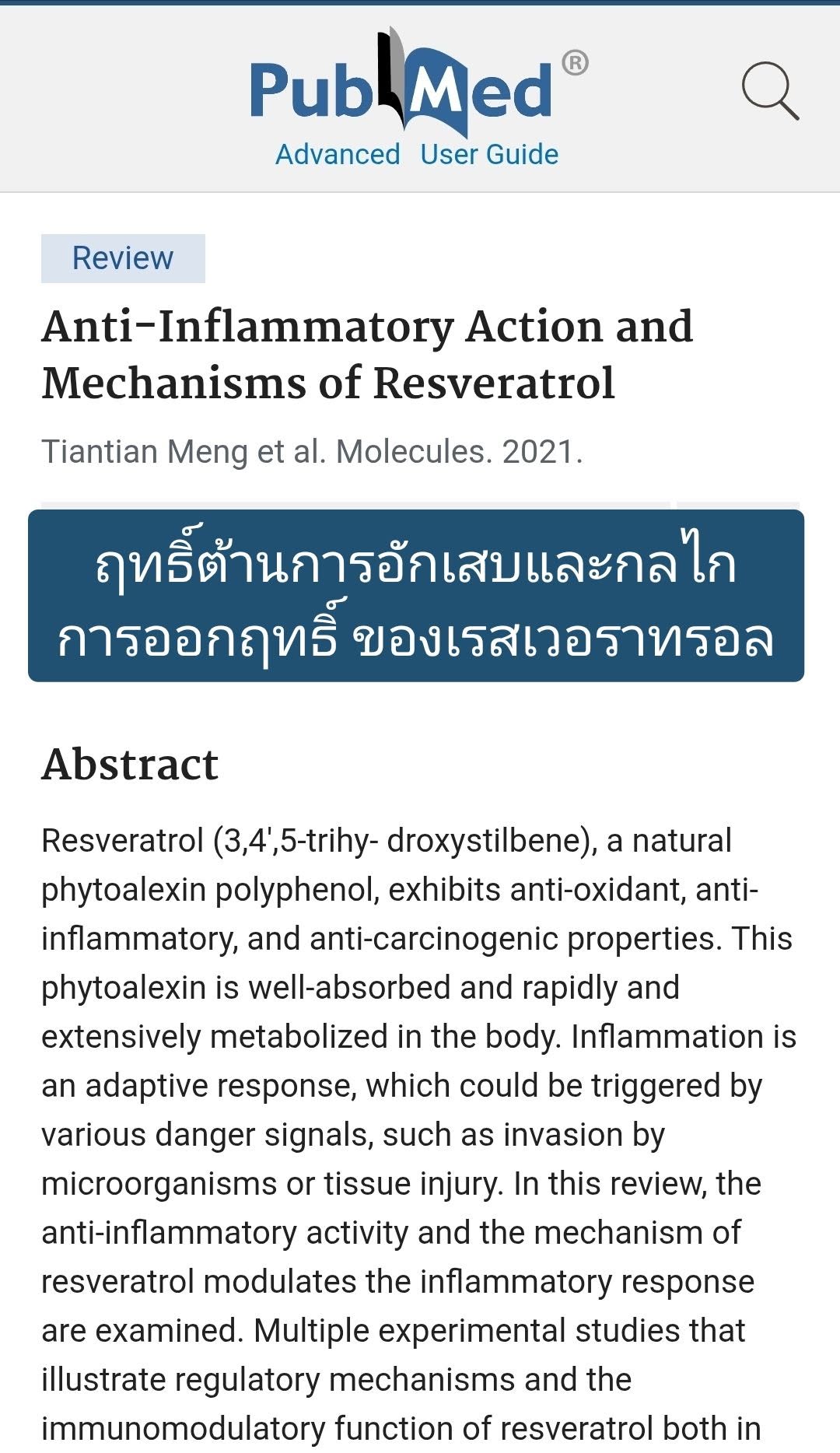
: Anti-Inflammatory Action and Mechanisms of Resveratrol
Article summary: Anti-Inflammatory Action and Mechanisms of Resveratrol
This article is an academic review explaining the role of Resveratrol, a natural polyphenol found in red grapes, mulberries, and some other plants. By emphasizing the important effects of anti-inflammatory (Anti-inflammatory) and cellular mechanisms that help reduce inflammation in the body
1. What is Resveratrol?
Resveratrol is a phytoalexin substance that plants produce in response to environmental stress such as pathogens, UV light, or injury.
In addition to anti-inflammatory effects also has features
Antioxidants
Anti-cancer
Protect the heart and blood vessels
Delay aging
2. Major Problems with Resveratrol
Even though the body can absorb it well But there is a problem.
Metabolized very quickly
The ability to actually act in the body is low. (low bioavailability)
Slightly soluble in water
3. Anti-inflammatory effects of Resveratrol
Resveratrol reduces the production of inflammatory substances such as
TNF-α
IL-1β
IL-6
IL-17
IFN-γ
PGE2
COX-2
NO (Nitric Oxide)
ROS (Reactive Oxygen Species)
and help
Reduce inflammation of the intestines
Reduce inflammation of the brain
Reduce inflammation in asthma
Reduce inflammation of the kidneys
Reduce neuroinflammation
Prevent damage from oxidative stress
4. Important mechanism that helps fight inflammation
4.1 Arachidonic Acid (AA) Pathway
Resveratrol inhibits the enzyme
COX-1
COX-2
reduce the creation
Prostaglandins (PGE2)
Thromboxane
which is an important stimulant of inflammation
4.2 NF-κB Pathway
NF-κB is the “master switch” of inflammation.
Resveratrol inhibits NF-κB activation, reducing the production of various inflammatory cytokines such as TNF-α and IL-6.
This is considered the most important mechanism of its anti-inflammatory effect.
4.3 MAPK Pathway
Resveratrol inhibits the
p38 MAPK
JNK
ERK
which relates to
Inflammation
cell stress
Response to toxins
Thus greatly reducing inflammatory signaling.
4.4 AP-1 Pathway
Helps reduce the expression of genes that stimulate inflammation. and reduce the work of Transcription factors involved in chronic disease
5. Conclusion of the research
The researchers concluded that Resveratrol has great potential to help prevent and treat chronic diseases related to inflammation, such as:
Heart disease
cancer
brain disease
autoimmune disease
various chronic inflammatory diseases
Brief summary
Resveratrol = cellular anti-inflammatory substance that helps reduce:
NF-κB
COX-2
TNF-α
IL-6
ROS
Oxidative Stress
Thus reducing the risk of
Cancer • Diabetes • Cardiovascular disease • Dementia • Chronic inflammatory diseases, etc.
“Prevent before you get sick. It's better than treating your back.”