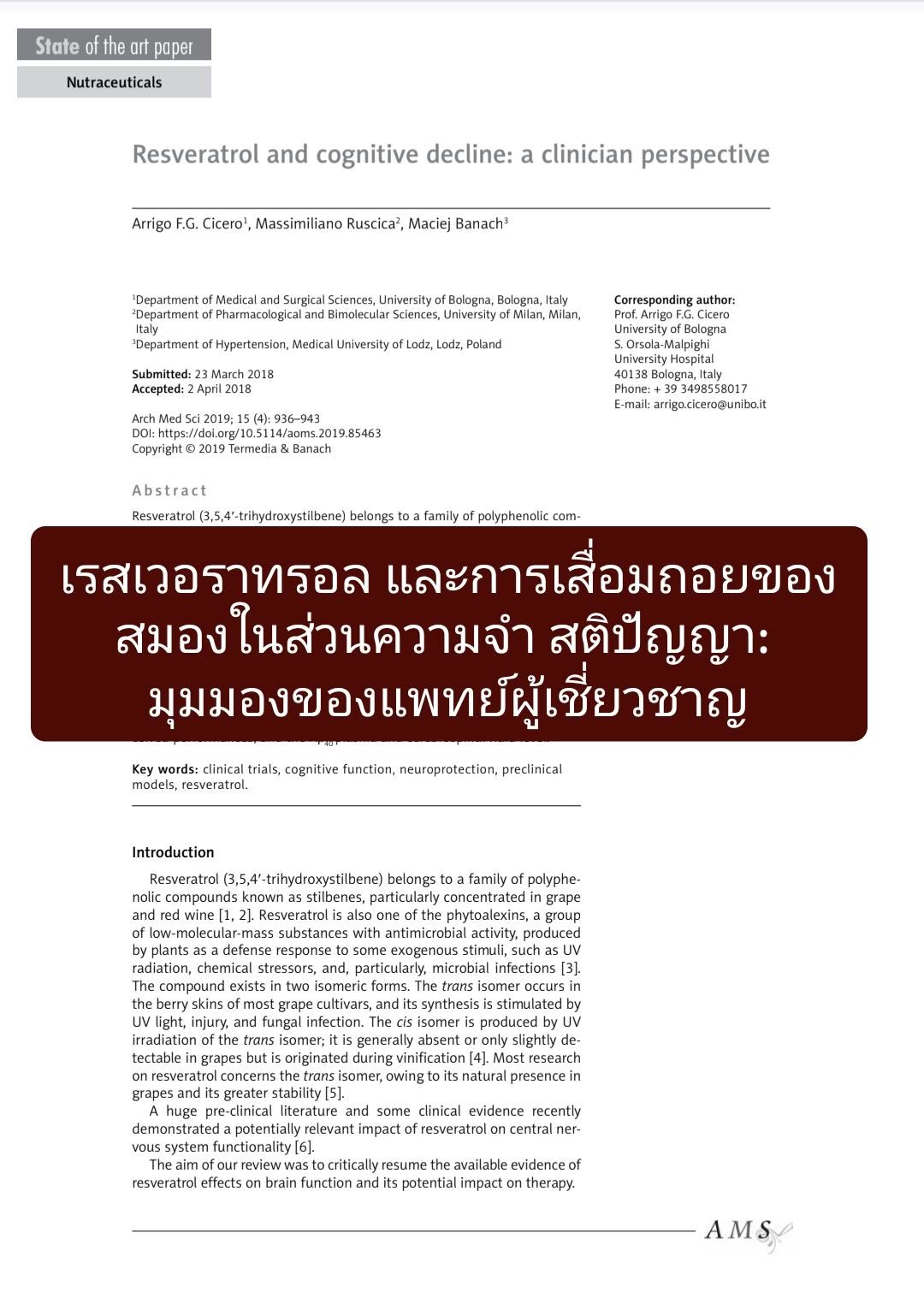
: Resveratrol and Cognitive Decline: a Clinician Perspective
Article summary: Resveratrol and Cognitive Decline: a Clinician Perspective
This article, published in the journal Archives of Medical Science in 2019, reviews research on resveratrol in brain degeneration and cognitive decline such as dementia and Alzheimer's disease.
What is Resveratrol?
Resveratrol is a substance in the polyphenol group (polyphenol) type stilbene found in abundance in
Red grapes and mulberries
Has outstanding features
Antioxidants (Antioxidant)
anti-inflammatory (Anti-inflammatory)
Protect nerve cells (Neuroprotection)
Mechanisms that help slow down dementia
1. Reduce oxidative stress (Oxidative Stress)
Resveratrol helps eliminate free radicals. Reduce brain cell damage and increases the body's natural defense enzymes, such as glutathione peroxidase.
2. Reduce inflammation of the brain
Helps reduce NF-κB activation and reduce the production of inflammatory substances such as
TNF-α
Nitric oxide (NO)
COX-2
Cytokines
which is related to Alzheimer's disease
3. Reduce the accumulation of Amyloid-beta (Aβ).
Aβ is a protein that accumulates abnormally in Alzheimer's patients.
Resveratrol helps
Reduce Aβ production
Increases Aβ elimination
Reduces the toxic effect of Aβ on brain cells.
Including affecting the levels of Aβ40 in the blood and cerebrospinal fluid.
4. Stimulate Sirtuins and Cell Survival
It is involved in slowing cell aging, DNA repair, and nerve cell survival. Makes the brain more resistant to deterioration
Evidence in humans
Randomized clinical trials have found that Resveratrol helps.
Increase blood flow to the brain
Increases the expansion of cerebral blood vessels
Helps improve memory test scores.
Increase the feeling of thinking better (perceived performance)
For example, resveratrol doses of 75–300 mg have been shown to increase cerebral vasodilator responsiveness. And in women who were 14 weeks postmenopausal, it was associated with better cognitive function scores.
Author's main conclusions
Long-term use of Resveratrol at appropriate dosages and has improved absorption It has a significant protective effect against dementia in humans.
Brief summary
“Resveratrol is not a cure for Alzheimer's. But it is a natural substance with high potential to slow down dementia.”
especially through
Reduce inflammation
Reduce free radicals
Reduce Amyloid-beta
Increase blood supply to the brain
Therefore, it is very suitable for the Preventive Medicine + Healthy Aging approach.