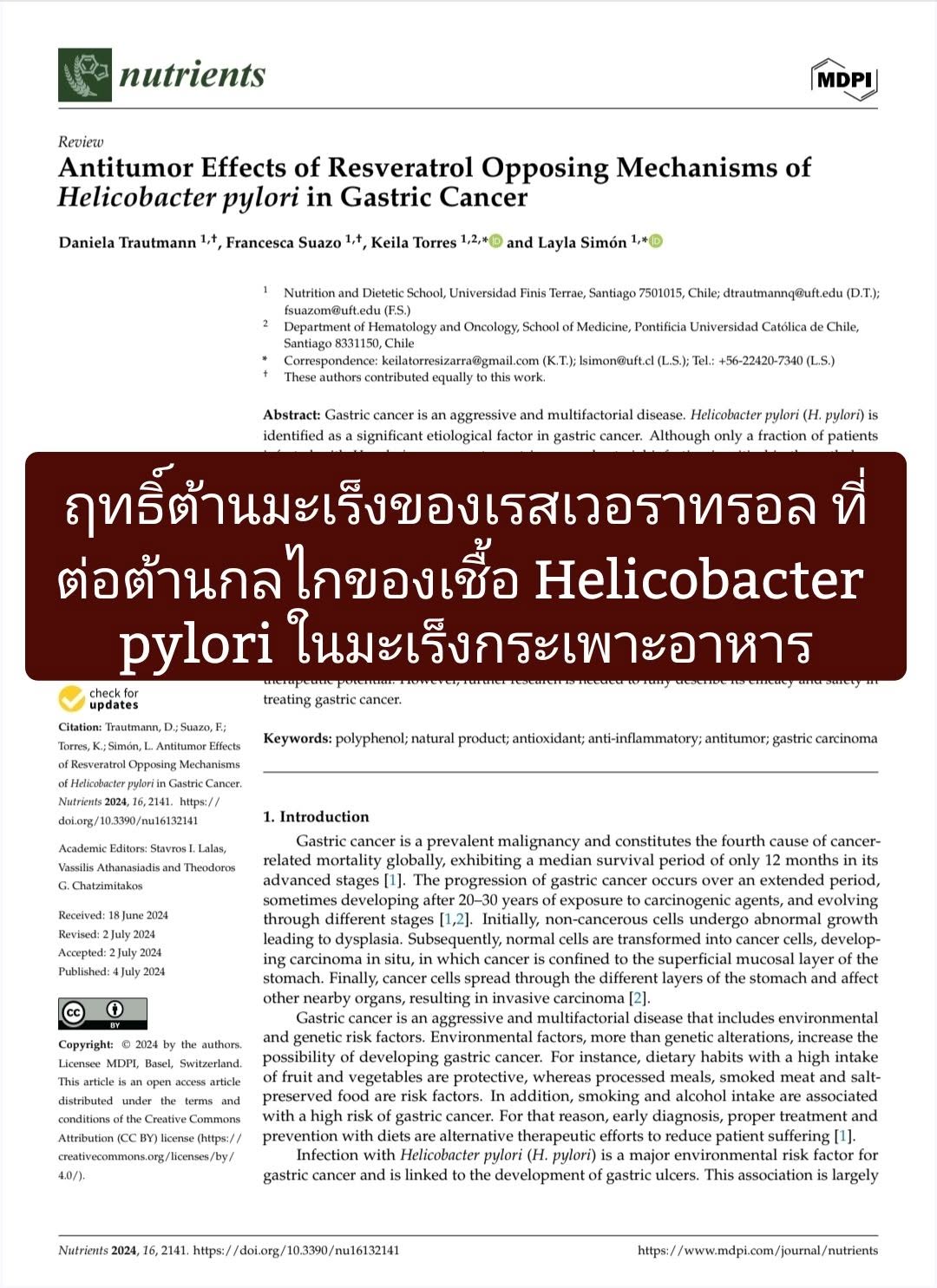
: Antitumor Effects of Resveratrol Opposing Mechanisms of Helicobacter pylori in Gastric Cancer
Article summary: Antitumor Effects of Resveratrol Opposing Mechanisms of Helicobacter pylori in Gastric Cancer
(Anticancer effects of resveratrol against Helicobacter pylori in gastric cancer)
This article is a 2024 review in the journal Nutrients, explaining that Helicobacter pylori (H. pylori) is an important factor that causes stomach cancer and suggested that Resveratrol, a natural polyphenol It potently helps combat this carcinogenic process.
1. H. pylori and gastric cancer.
H. pylori is a Gram-negative bacterium that lives in the stomach. It was found that there were many infected people around the world. and is an important risk factor for stomach cancer. Although not everyone who is infected will develop cancer. But chronic infection clearly increases the risk.
Mechanisms by which H. pylori causes cancer
Infection causes:
destruction of the stomach lining
chronic inflammation
Oxidative stress
creation of new blood vessels (Angiogenesis)
Spread of cancer cells (Metastasis)
With important factors such as
CagA
VacA
Urease
Adhesion proteins such as BabA, SabA
which stimulates the secretion of inflammatory substances such as TNF-α, IL-6, IL-8 and increases ROS (Reactive Oxygen Species), resulting in abnormal cells and eventually cancer.
2. What is Resveratrol?
Resveratrol is a natural antioxidant. It is found in large amounts in:
Mulberry, red grape skin, etc.
There are outstanding features:
anti-inflammatory
Antioxidants
antimicrobial
Resists the growth of cancer cells
3. How does Resveratrol fight H. pylori?
Resveratrol works “oppositely” to the mechanism of H. pylori by
Reduce inflammation
inhibit
NF-κB
COX-2
TNF-α
IL-1β
IL-6
IL-8
Helps reduce chronic inflammation in the stomach.
Reduce oxidative stress
Eliminate free radicals
Reduce ROS
Stimulates the cell defense system through the Nrf2 pathway
It helps prevent DNA damage and reduces the chance of cancer.
Against H. pylori infection
Reduce biofilm formation
Reduce the survival of germs
Reduce infections in stomach cells
It has been reported that the use of 100 µM resveratrol can reduce ROS and IL-8 in infected gastric cells.
4. Resveratrol fights stomach cancer.
Resveratrol helps:
Inhibits the division of cancer cells
By reducing the work of
Cyclin D1
CDK4
Make cells stop dividing
Stimulates the death of cancer cells (Apoptosis)
Helps destroy cancer cells directly
Inhibits the creation of new blood vessels
This causes the tumor to lack nutrients and oxygen.
Reduce the spread of cancer
Reduces metastasis and disease progression.
Conclusion of the article
Resveratrol is a natural substance with high potential to
Reduces H. pylori infection
Reduce inflammation
Reduce oxidative stress
Inhibits the occurrence and progression of stomach cancer.
Therefore, it is an "add-on option" in preventing and treating stomach cancer. Especially in people at risk from H. pylori.
Short summary, easy to remember
H. pylori → Chronic inflammation → Oxidative stress → Stomach cancer
Resveratrol → Anti-inflammatory + Antioxidant + Disinfectant → Reduces the chance of cancer.