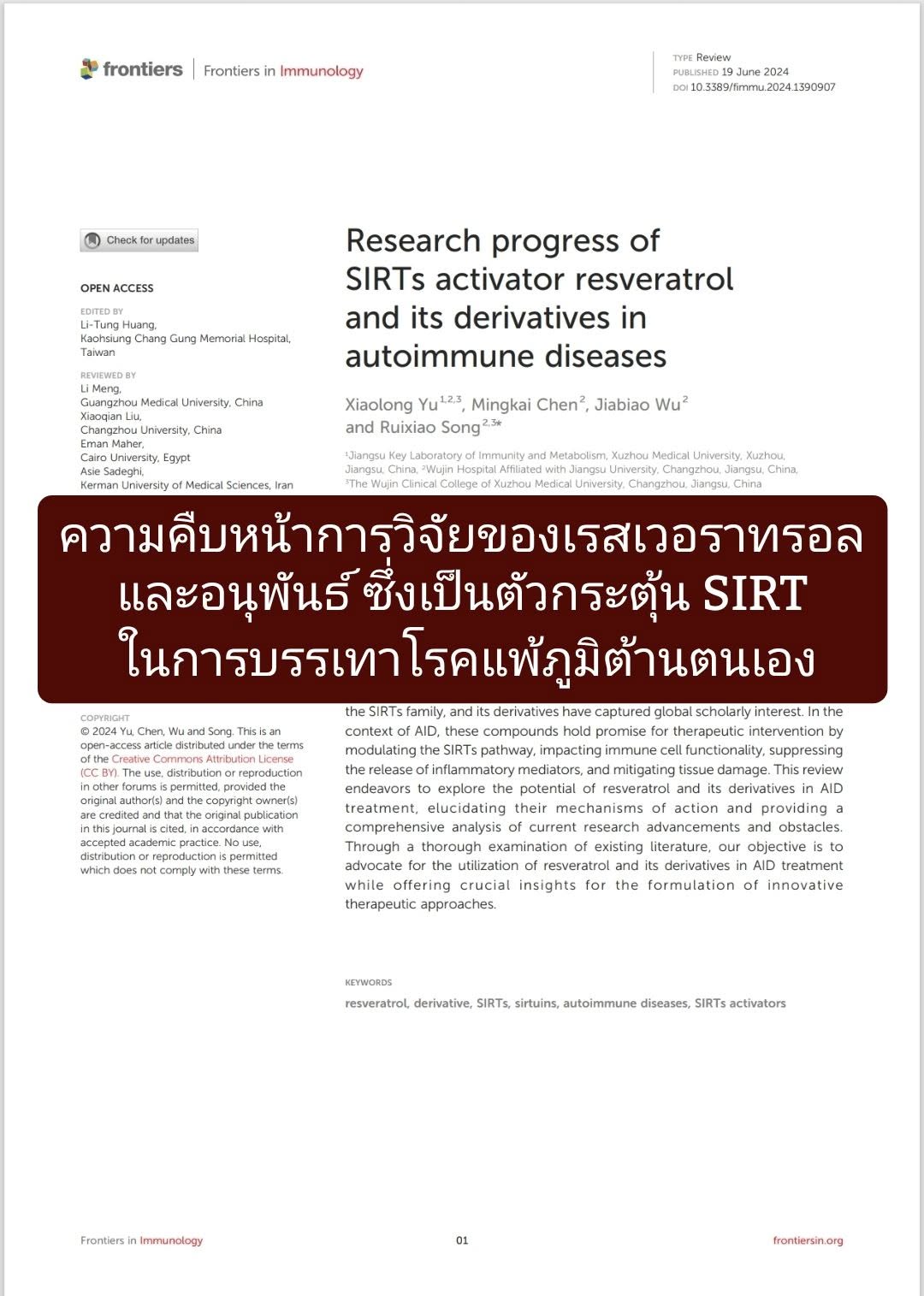
Research article from the journal Frontiers in Immunology (2024) titled "Research progress of SIRTs activator resveratrol and i...
Research article from the journal Frontiers in Immunology (2024) titled "Research progress of SIRTs activator resveratrol and its derivatives in autoimmune diseases"
The main points can be summarized as follows:
1. The role of Sirtuins (SIRTs) and Resveratrol
SIRTs: are histone deacetylases that require NAD+ to work. They play an important role in regulating cell metabolism, oxidative stress response, apoptosis, and most importantly, immune system regulation
Resveratrol (RSV): is a natural phenolic compound found in plants (e.g. red grapes, mulberries) and is the most famous activator of the SIRTs family.
2. Mechanism of action on autoimmune diseases (AID)
Resveratrol and its derivatives help relieve AID through the following main mechanisms:
● Modulation of immune cell function: Helps regulate the activity of T cells and B cells and increases the efficiency of Regulatory T cells (Tregs), which act to suppress excessive immune responses.
● Reduces inflammatory substances: inhibits the secretion of inflammatory cytokines such as TNF-α, IL-6 and inhibits inflammation-related signaling pathways such as NF-κB.
● Antioxidants: Reduce tissue damage caused by oxidative stress by stimulating antioxidant enzymes through the SIRT1-Nrf2 pathway.
● Epigenetic modifications: Control the expression of genes related to inflammation.
3. Examples of diseases studied
The article outlines Resveratrol's potential to treat conditions such as:
- Rheumatoid Arthritis: Reduces joint inflammation and inhibits the creation of new blood vessels in inflamed tissues.
- Leukemia (SLE): Helps reduce the production of autoantibodies
- Multiple Sclerosis (Multiple Sclerosis)
- Type 1 diabetes and inflammatory bowel disease (IBD)
4. Resveratrol Derivatives
Because Resveratrol has limitations in being absorbed in the body (low bioavailability), research has focused on developing "derivatives" that have stronger and more stable effects, such as substances that inhibit cell division tens of times better than the original Resveratrol.
Overview summary
Resveratrol and its derivatives are promising new options for the treatment of autoimmune diseases. Because of their ability to balance the immune system through stimulating SIRTs, they reduce both inflammation and tissue damage with lower side effects than chemotherapy.