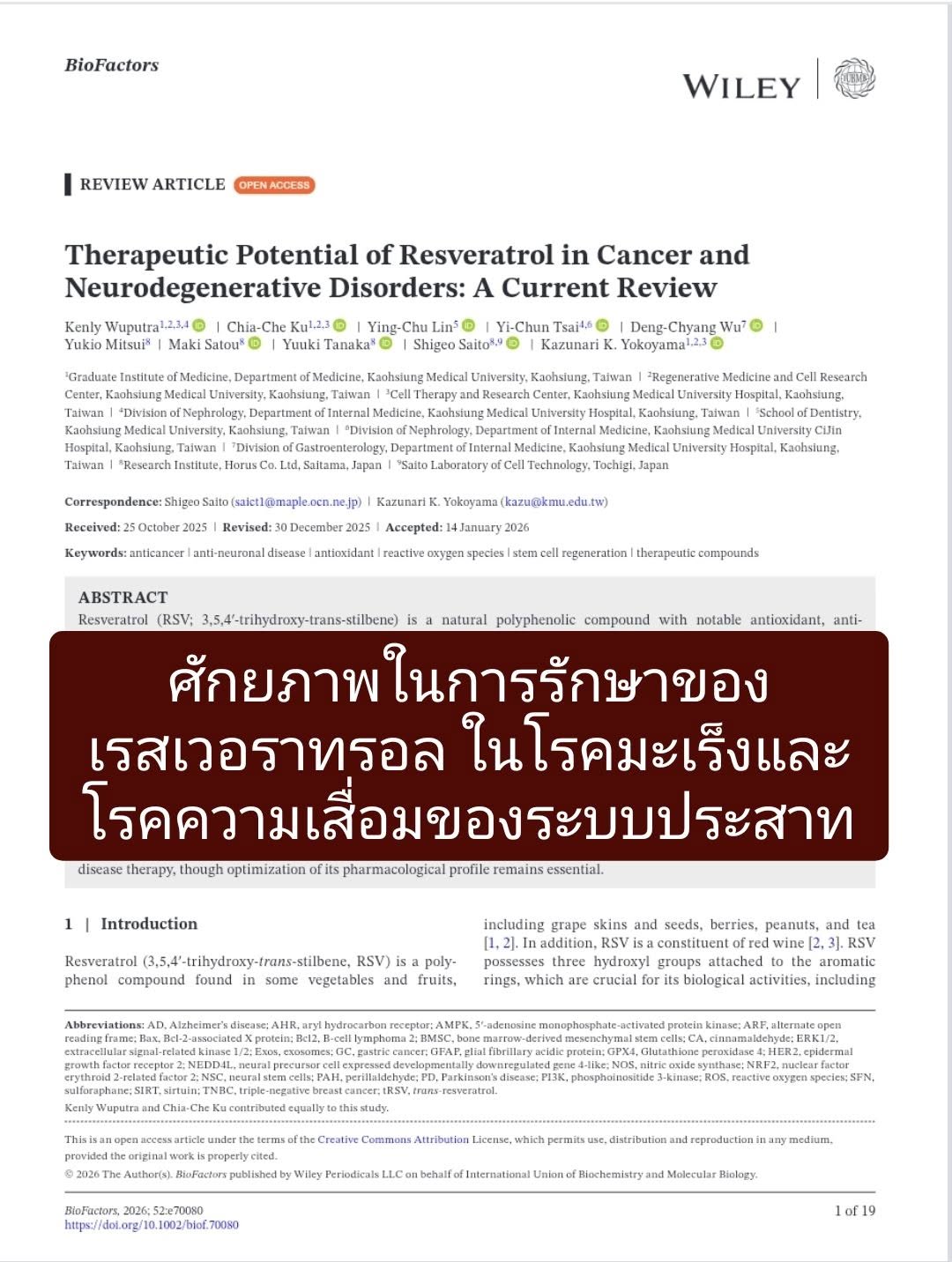
: Therapeutic Potential of Resveratrol in Cancer and Neurodegenerative Disorders: A Current Review published in 2026
Article summary: Therapeutic Potential of Resveratrol in Cancer and Neurodegenerative Disorders: A Current Review published 2026
This article reviews the potential of Resveratrol, a natural polyphenol found in the skin of red grapes and mulberries, emphasizing its role in treating cancer and neurodegenerative diseases such as Alzheimer's disease, Parkinson's disease, and Huntington's disease.
1. What is Resveratrol?
Resveratrol is a substance in the stilbene group that has outstanding properties including:
Antioxidants (Antioxidant)
anti-inflammatory (Anti-inflammatory)
Adjust immunity (Immunomodulatory)
Anticancer (Anticancer)
Protect nerve cells (Neuroprotective)
However, there are important limitations.
Slightly soluble in water
Low absorption
Metabolized quickly
low stability
2. Role in fighting cancer (Anticancer Effects)
Resveratrol can inhibit many types of cancer such as
● Breast cancer
● Colon cancer
● Lung cancer
● Prostate cancer
● Ovarian cancer
● Brain cancer (Glioblastoma)
● Pancreatic cancer
● Thyroid cancer
● Cervical cancer
Important mechanism
1. Stimulate the death of cancer cells (Apoptosis)
Stimulates p53, Bax, Caspase-3/7/9 and reduces Bcl-2, causing cancer cells to enter the process of dying themselves.
2. Stop the cell division cycle (Cell Cycle Arrest)
Inhibits Cyclin D1 and AKT signaling, causing cancer cells to stop dividing.
3. Reduce the spread of cancer (Anti-metastasis)
Inhibits MMP-2 and MMP-9, which are involved in cancer cell progression.
4. Adjust signaling pathways in many systems
such as
PI3K/AKT/mTOR
MAPK/ERK
NF-κB
STAT3
SIRT1-p53
Therefore, it has the effect of multi-target therapy.
3. Role in dementia (Neurodegenerative Disorders)
Resveratrol has the potential to
- Alzheimer's disease (AD)
- Parkinson's disease (PD)
- Amyotrophic Lateral Sclerosis (ALS)
- Huntington's disease (HD)
Important mechanism
1. Reduce the accumulation of Amyloid-beta
Helps inhibit the formation and aggregation of Aβ fibrils, which is a major cause of Alzheimer's disease.
2. Stimulates SIRT1
Helps increase the survival of nerve cells, reduce neuron death, and slow down brain degeneration.
3. Reduce inflammation of the nervous system
Reduces COX-2, TNF-α, and NF-κB, reducing neuroinflammation.
4. Adjust the function of mitochondria.
Through PGC-1α, PPAR-γ and AMPK, it increases energy and reduces oxidative stress in neurons.
Important conclusions
Resveratrol is a natural substance with high potential to
“Prevention is more than cure”
Especially in the field
Reducing cancer risk
Slowing down brain degeneration
Reducing chronic inflammation
Antioxidants at the cellular level
In the future, it will become a prototype for more effective and safer cancer and dementia medicines.