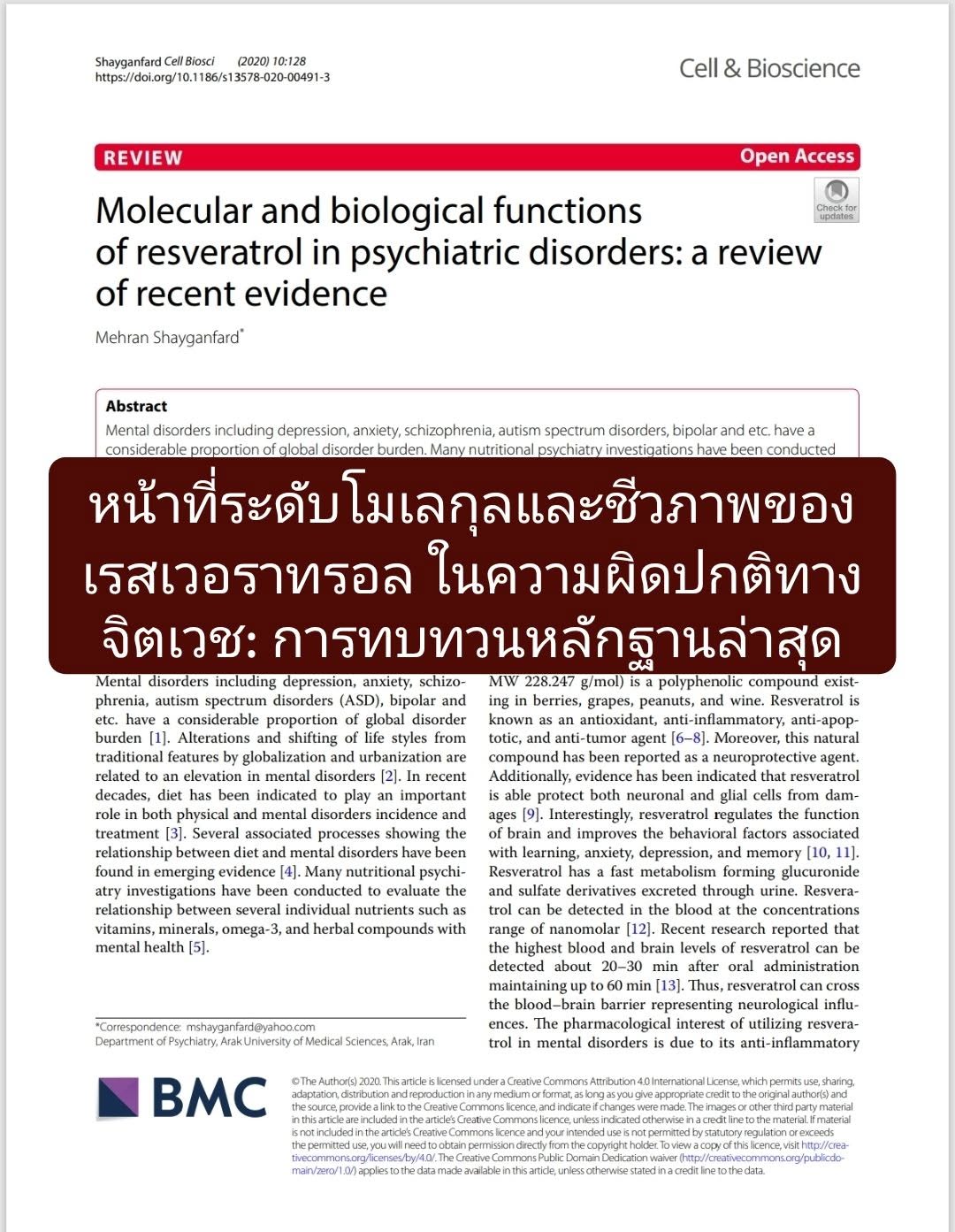
Summary of the article
“Molecular and biological functions of resveratrol in psychiatric disorders: a review of recent evidence”
Published in the journal Cell & Bioscience in 2020.
This article reviews research on Resveratrol and its role in psychiatric disorders such as depression, anxiety, autism spectrum disorder (ASD), and schizophrenia.
1. What is Resveratrol?
Resveratrol is a natural polyphenol. Found mostly in the skin of red grapes, mulberries, etc.
There are outstanding features:
● Antioxidants (Antioxidant)
● Anti-inflammatory. (Anti-inflammatory)
● Resists cell death. (Anti-apoptotic)
● Protects nerve cells. (Neuroprotective)
● Can cross the Blood-Brain Barrier (BBB) into the brain. Therefore, it has the potential to treat brain and psychiatric diseases.
2. Important mechanisms that help with psychiatric diseases
2.1 Reduce Oxidative Stress
Patients with psychiatric disorders often have
High free radicals (high ROS)
destruction of nerve cells
Mitochondrial damage
Resveratrol helps
Eliminate free radicals
Increase antioxidant enzymes such as Glutathione peroxidase.
Protecting the Mitochondria
Reduce brain cell damage
2.2 Reduce inflammation of the brain
Depression, anxiety, and schizophrenia are associated with
IL-1
IL-6
TNF-α
NF-kB
which is an inflammatory substance
Resveratrol helps
Inhibits NF-kB
Decrease TNF-α
Reduce NO
Reduce prostaglandins
Reduced microglial activation
Thus helping to reduce neuroinflammation.
2.3 Increase BDNF and brain function
BDNF is an important substance for
memory
learning
Emotion
nerve cell repair
Resveratrol helps increase
BDNF
SIRT1
AMPK
Wnt/β-catenin pathway
Makes the brain recover better and reduce symptoms of depression
3. Effects on various diseases
Depression
Resveratrol has been found to help
Reduce depressive behavior
Reduce inflammation in the hippocampus
Reduce apoptosis
Increase BDNF
Balancing serotonin/dopamine
Reduce stress hormone
Therefore it has similar effects. natural antidepressant
Anxiety
Help control
HPA axis
Cortisol
CRH
NF-kB pathway
Reduce chronic stress and reduce anxiety-like behavior
Autism Spectrum Disorder (ASD)
Found that
Reduce neuroinflammation
Adjust immune dysregulation
Reduce TLR/NF-kB pathway
increase social behavior
Some research has found that
Helps reduce hyperactivity
But it doesn't help.
irritability
social withdrawal
clearly
Schizophrenia (schizophrenia)
Resveratrol helps
Reduce oxidative stress
Increase BDNF
Prevent side effects from psychiatric drugs
Helps metabolic profile
Reduce movement disorders
The most important conclusion
Resveratrol = “Natural Neuroprotective Molecule”
Help through 4 main pillars
▪︎ Anti-inflammatory
▪︎ Antioxidants
▪︎ Protect brain cells
▪︎ Adjust the balance of neurotransmitters.
therefore has high potential to help
- Depressed
- Anxiety
- Autism
- Schizophrenia
“Resveratrol doesn't just take care of the heart.
But it also helps take care of your brain, mood, and mental health.”