Summary of the article
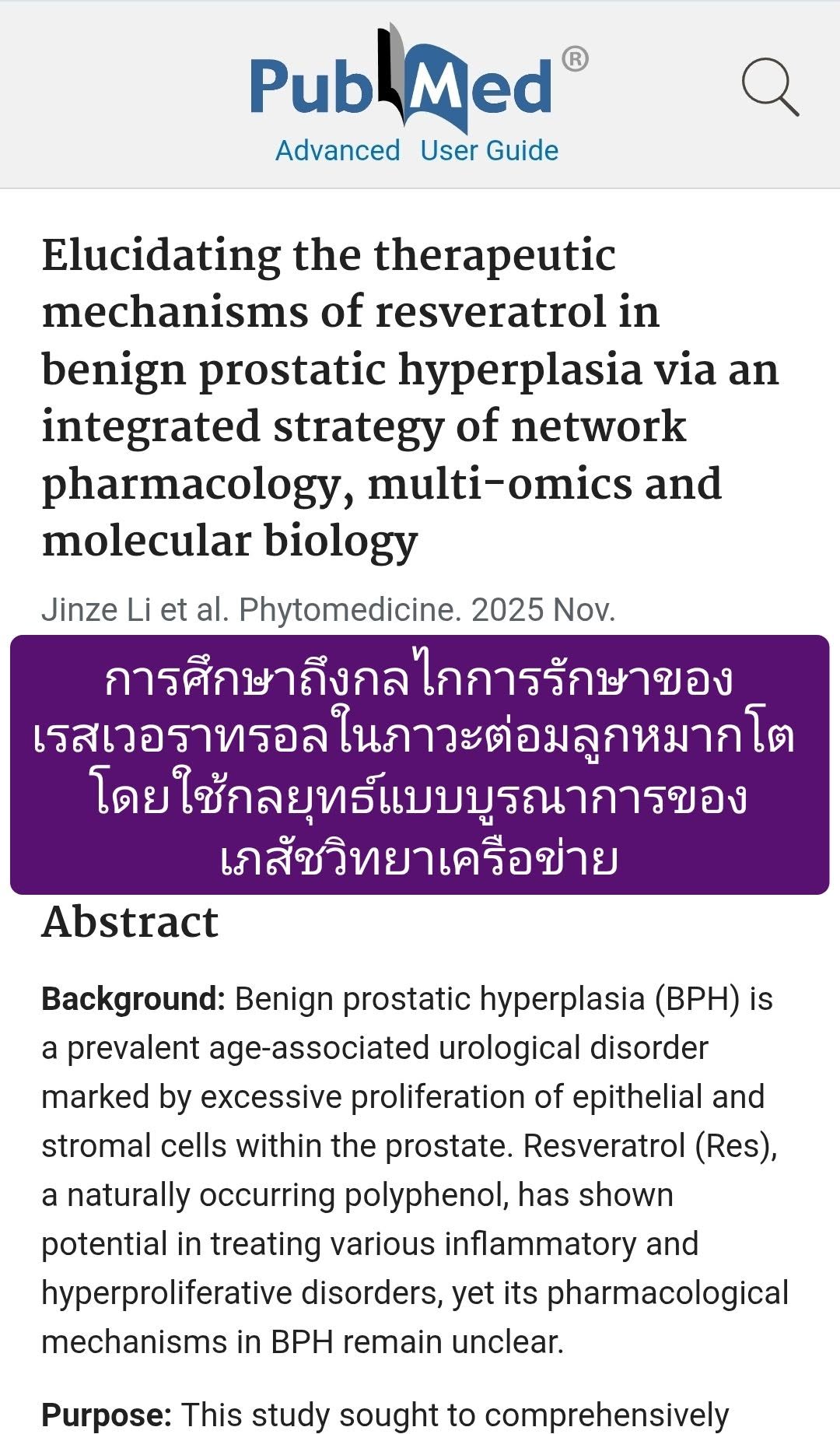
“Elucidating the therapeutic mechanisms of resveratrol in benign prostatic hyperplasia via an integrated strategy of network pharmacology, multi-omics and molecular biology.”
Published in the journal Phytomedicine year 2025
This article studies the mechanism of action of Resveratrol in the treatment of Benign Prostatic Hyperplasia (BPH), which is a common disease in men over 50 years of age that causes difficulty urinating, frequent urination, and decreased quality of life.
Objectives of the study
Researchers wanted to find out how resveratrol reduced BPH symptoms at the molecular level. Using integrated analysis including
Network Pharmacology
Single-cell transcriptomics
Bulk transcriptomics
Molecular docking
Molecular dynamics simulation
Biological experiments in real cells
To identify “key targets” and “signaling pathways” involved in the treatment of BPH.
Important research results
1. Found 228 common goals.
The analysis found that Resveratrol has targets related to 228 BPH genes.
and found the 3 most important genes:
TGF-β1
IGF1
ITGA4
These genes are highly expressed in prostatic hyperplasia tissue.
2. PI3K/AKT pathway is the main mechanism.
The analysis revealed that the most important signaling pathway is
PI3K/AKT signaling pathway
This route involves
cell division
cell survival
Inflammation
Oxidative stress
Birth of BPH
Resveratrol can clearly “inhibit” this pathway.
3. Results of experiments in cells
When tested on prostate cells, it was found that Resveratrol can
Reduce the number of cells (Anti-proliferative)
Helps slow down the growth of the prostate.
stimulates abnormal cell death (Pro-apoptotic)
Cause cells that grow excessively to enter the apoptosis process.
Reduce oxidative stress
Helps reduce cell damage from free radicals.
Reduce inflammation
Reduce the production of cytokines that stimulate inflammation.
Decreased phosphorylation of PI3K and AKT
confirmed that the main mechanism is inhibition of the PI3K/AKT pathway.
Conclusion of the research
Resveratrol has the potential to help treat BPH through multiple mechanisms, including:
anti-inflammatory
Antioxidants
Reduce cell division
stimulate apoptosis
Inhibits PI3K/AKT pathway
Upregulates TGF-β1, IGF1 and ITGA4
Therefore, it is a phytotherapeutic candidate or “a natural substance that has the potential to treat enlarged prostate.”
Simple summary
“Resveratrol helps prevent the prostate from continuing to enlarge.”
by
Reduce inflammation
Reduce free radicals
Reduces the division of prostate cells.
causing abnormal cells to die
Turn off the PI3K/AKT switch that is a BPH accelerator.
Resveratrol isn't just good for anti-aging.
But there is also potential in
Men's health
Prostate
BPH prevention
Reducing chronic inflammation
Healthy aging for elderly men
which is very suitable for expanding health products in the Premium Wellness group