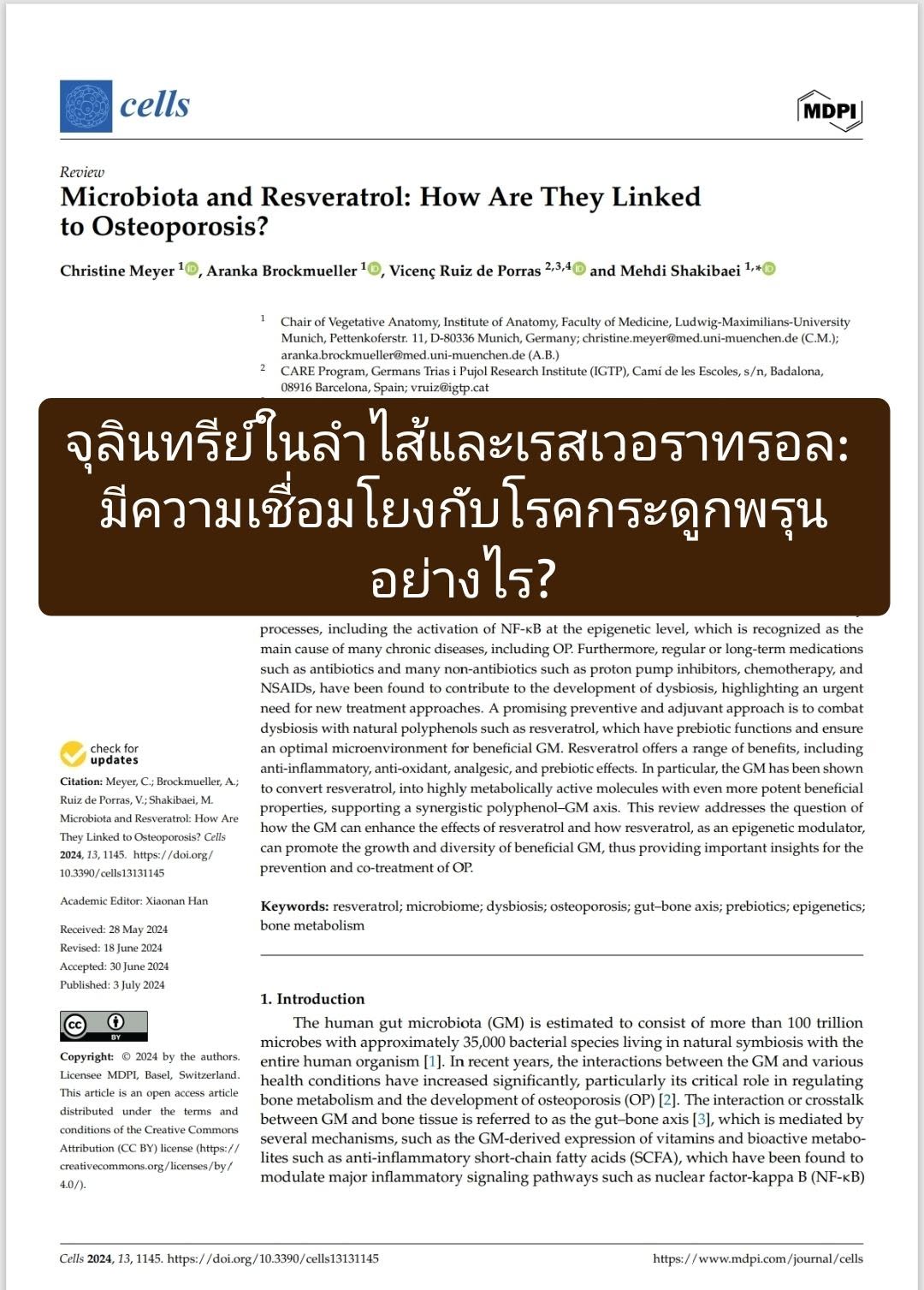
: Microbiota and Resveratrol: How Are They Linked to Osteoporosis?
Article summary: Microbiota and Resveratrol: How Are They Linked to Osteoporosis?
From the MDPI journal (Cells, 2024)
This article explains the relationship between Gut Microbiota, Resveratrol and Osteoporosis (Osteoporosis) by emphasizing an important concept called the Gut–Bone Axis or “gut–bone axis” which is the communication between the gut and bones through various biological substances such as SCFA (Short-chain fatty acids) and the immune system.
1. How does Gut Microbiota affect bones?
Good microorganisms in the intestines help create important substances such as
Butyrate
Acetate
Propionate
These substances help:
Reduce chronic inflammation
Reduces the activity of NF-κB (a stimulant of inflammation).
stimulate bone formation (osteogenesis)
Reduces bone resorption (osteoclast activity)
Strengthens the immune system and strengthens the intestinal mucosa
When Dysbiosis occurs (disorder of microbial balance) it will cause:
SCFA decreased
born leaky gut
increased inflammation
Osteoclast works more
Higher risk of osteoporosis
2. Factors that cause Dysbiosis and Osteoporosis
Including:
age increases
Decreased estrogen (menopause)
chronic stress
Sleeping at the wrong time
Highly processed food
Prolonged use of drugs such as
Antibiotics
NSAIDs
Proton Pump Inhibitors (PPI)
Chemotherapy
These throw the microbiota out of balance and accelerate osteoporosis.
3. What does Resveratrol help with?
Resveratrol is a natural polyphenol found in abundance.
Red grapes and mulberries
Powerful
anti-inflammatory
Antioxidants
Reduce pain
Delay aging
It has an effect similar to estrogen. (phytoestrogen)
It is a prebiotic that helps good bacteria in the intestines grow.
Thus helping both the "intestines" and "bones" at the same time.
4. Resveratrol directly helps bones.
Resveratrol helps:
Stimulates Osteoblast (bone-forming cells)
add creation
Runx2
BMP-2
BMP-7
Osteocalcin
ALP
Collagen
Calcium deposition
Inhibits Osteoclast (bone-breaking cells)
reduce
RANKL
NF-κB activation
bone inflammation
Thus increasing bone mass and reducing bone loss.
5. Microbiota helps convert Resveratrol to be stronger.
Microorganisms in the gut can convert Resveratrol into more potent metabolites.
such as
Dihydroresveratrol
Lunularin
4-Hydroxydibenzyl
Thus, "Synergy" was born.
Resveratrol helps the microbiota
and
Microbiota enhances the effects of Resveratrol.
It's a very supportive cycle.
Brief summary
“Good intestines = good bones”
and
“Resveratrol is the bridge between the microbiota and osteoporosis prevention.”
especially in
working age
Elderly people
Menopausal woman
People who use drugs continuously
People with chronic inflammation
It is considered a very important way to prevent long-term health.