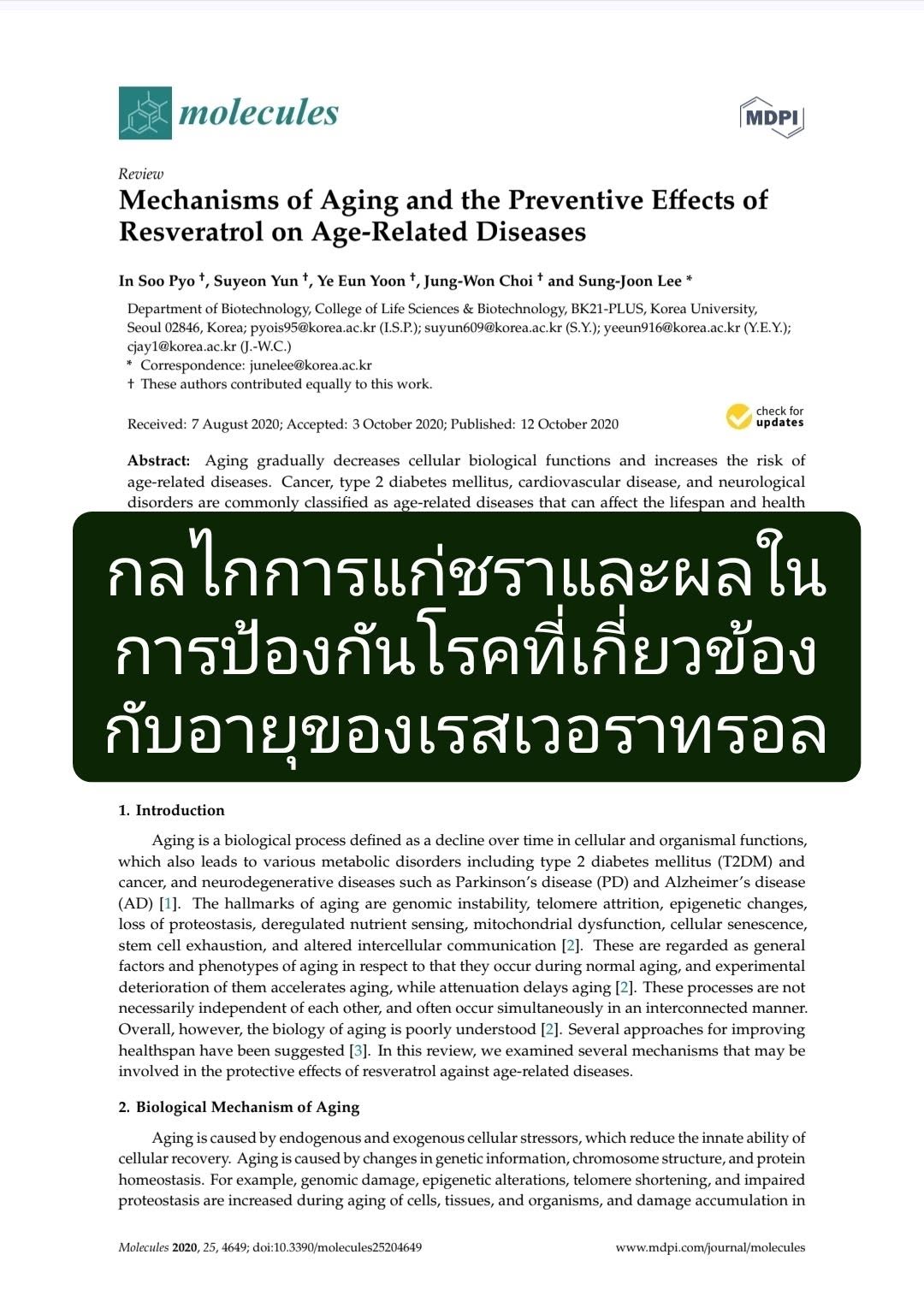
: Mechanisms of Aging and the Preventive Effects of Resveratrol on Age-Related Diseases
Article summary: Mechanisms of Aging and the Preventive Effects of Resveratrol on Age-Related Diseases
Journal: Molecules by MDPI (2020)
This article explains that “aging” (Aging) is a biological process that causes the function of cells and organs to decline. This results in a higher risk of chronic diseases such as cancer, type 2 diabetes, heart disease, and neurological diseases such as Alzheimer's and Parkinson's. The researchers emphasized that Resveratrol, which is a natural polyphenol substance such as red grapes and mulberries. It has the potential to slow down degeneration and reduce the risk of these diseases. through SIRT1 activation and regulation of multiple mechanisms of aging
1. Important mechanisms of aging (Mechanisms of Aging)
1.1 DNA damage and telomere shortening
As we age, DNA damage accumulates. Repair systems work less, including telomeres (chromosome ends) shortening, causing cells to divide less and enter a state of degeneration (senescence).
1.2 Accumulation of abnormal proteins
Proteins damaged by oxidative stress or ER stress are less able to be eliminated because the autophagy and proteasome systems are degraded, resulting in dementias such as Alzheimer's and Parkinson's.
1.3 Mitochondrial abnormalities and high ROS
Deteriorated mitochondria cause decreased energy and create excessive Reactive Oxygen Species (ROS), resulting in cell inflammation, damage, and accelerated aging.
1.4 Cellular Senescence
Cells permanently stop dividing and secrete inflammatory substances (SASP), causing chronic inflammation. which accelerates tissue degeneration and increases the risk of chronic disease.
2. How does Resveratrol help delay aging?
The main mechanism is SIRT1 activation.
SIRT1 is an important protein involved in cell repair. power control And anti-inflammatory, Resveratrol stimulates SIRT1 causing the following effects:
2.1 Reduce Oxidative Stress
Helps reduce ROS and increases the functioning of the antioxidant system, resulting in less cell damage.
2.2 Stimulate AMPK and Autophagy
Helps increase the elimination of waste in cells Reduces the accumulation of abnormal proteins and inhibits mTOR, which is related to aging.
2.3 Reduce inflammation
Inhibits NF-kB and cytokines that cause chronic inflammation. Reduces the risk of heart disease, diabetes, and cancer.
2.4 Protect the nervous system
Reduce brain cell degeneration Helps reduce the risk of Alzheimer's and Parkinson's disease.
2.5 Helps control sugar levels
Helps prevent and support the treatment of type 2 diabetes.
Brief summary
“Resveratrol is not just an antioxidant. But it is a substance that helps slow down the aging mechanism at the cellular level” by helping through 4 main principles:
Reduce inflammation
Reduce damage from free radicals
stimulate cell repair
Slow down the deterioration of important organs.
Therefore, it is one of the natural substances with high potential to promote Healthspan (healthy life span) rather than just extending Lifespan (longevity).