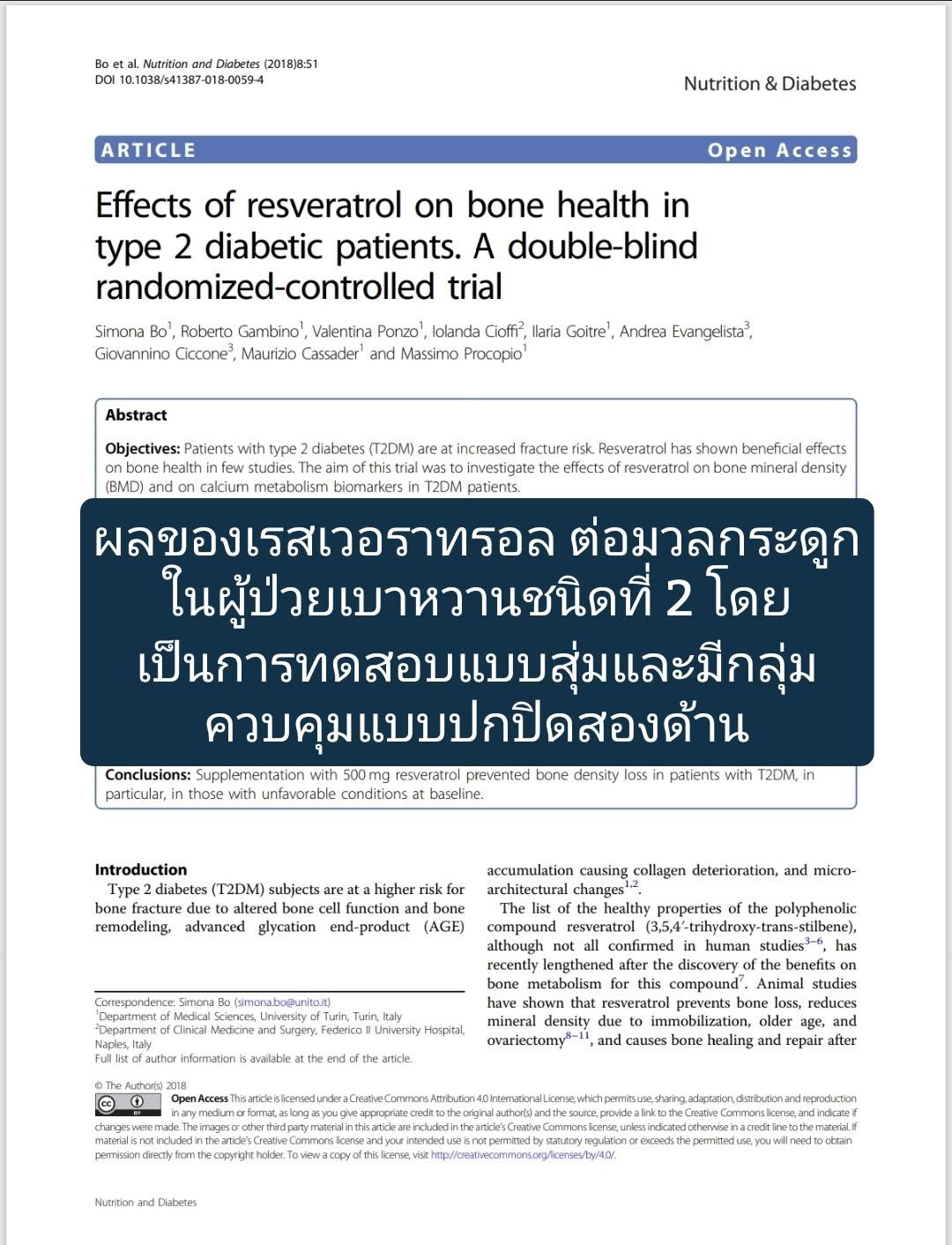
Effects of resveratrol on bone health in type 2 diabetic patients. A double-blind randomized-controlled trial
Summary of the article: Effects of resveratrol on bone health in type 2 diabetic patients. A double-blind randomized-controlled trial
This research article studies about "Effects of resveratrol (Resveratrol) on bone health in patients with type 2 diabetes," published in the journal Nutrition & Diabetes, was a randomized, double-blind controlled trial. (Double-blind Randomized-controlled Trial)
The main points can be summarized as follows:
1. Objectives of the study
To check whether supplementing with Resveratrol (Resveratrol), which is a phytochemical in the polyphenol group (found mostly in red grape peels and mulberry) can help improve bone mineral density (BMD) and bone formation/resorption markers in people with type 2 diabetes, as these patients are at higher risk of osteoporosis and bone fractures than normal people.
2. Experimental method
Sample group: 66 patients with type 2 diabetes.
Duration: 12 weeks
Grouping:
Control group: received placebo (Placebo)
Experimental group: received high dose of Resveratrol (500 mg per day)
3. Important study results
At the end of 12 weeks, the Resveratrol group had improved compared to the control group as follows:
Increased bone mineral density (BMD): A significant increase in bone mass was observed. Especially in the lumbar spine.
Bone formation indicators: there is an increase in the level Bone-specific alkaline phosphatase (BAP), an enzyme that indicates the process of new bone formation
No Serious Side Effects: Taking Resveratrol In these doses it is safe and well tolerated by patients.
4. Summary of the researcher
Resveratrol supplementation It is an effective alternative to "Prevent and treat osteoporosis" in patients with type 2 diabetes by stimulating bone formation and increasing bone density. This reduces the risk of future fractures.