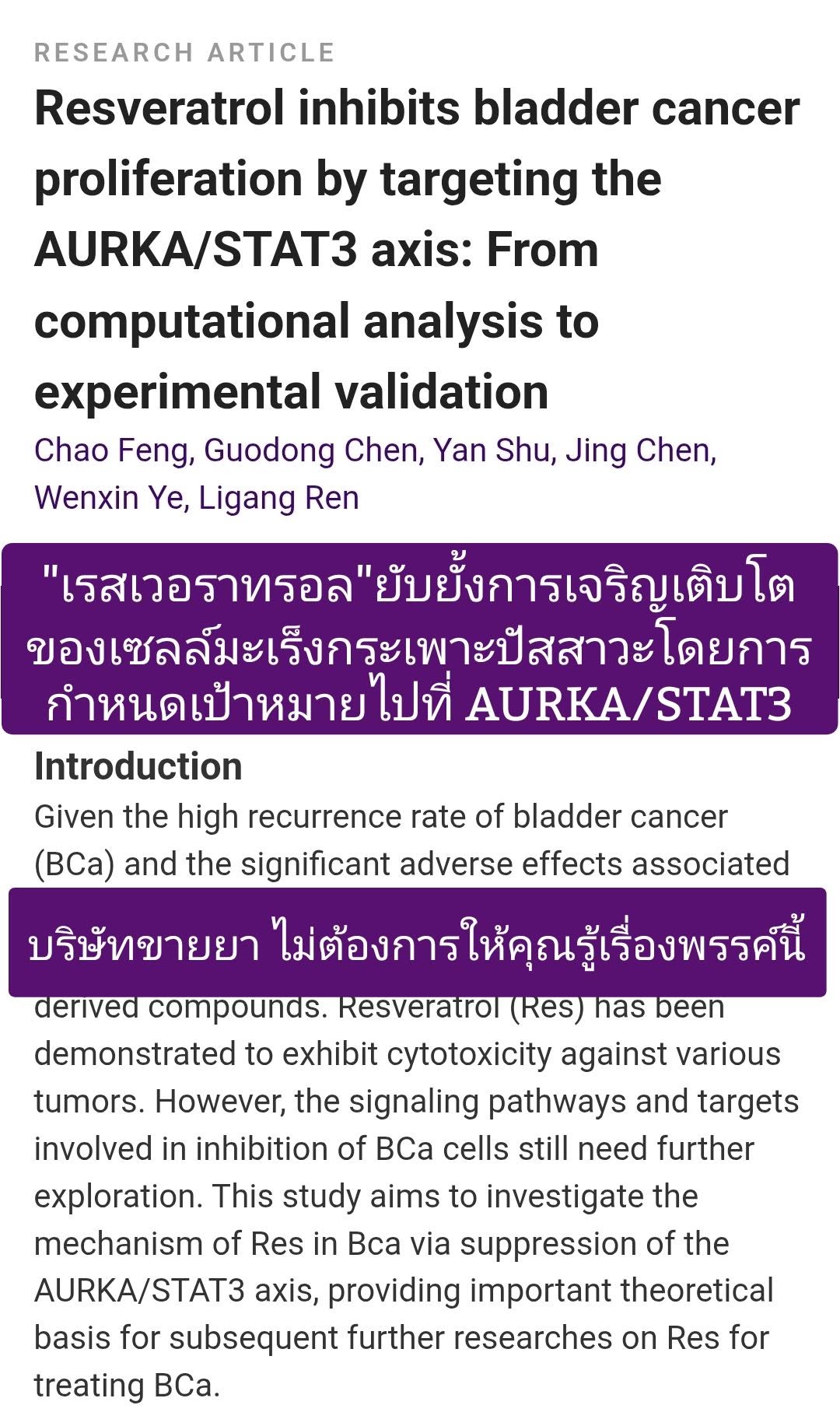
“Resveratrol inhibits bladder cancer proliferation by targeting the AURKA/STAT3 axis: From computational analysis to ...
Summary of the article “Resveratrol inhibits bladder cancer proliferation by targeting the AURKA/STAT3 axis: From computational analysis to experimental validation” published in the journal PLOS One (2026) studies the mechanism by which Resveratrol can inhibit the growth of bladder cancer cells. Emphasis is placed on the AURKA/STAT3 signaling pathway, which is involved in the division, survival, and progression of cancer cells.
Objective: Researchers want to find the molecular target of Resveratrol in bladder cancer. and prove such results both from bioinformatics data analysis (bioinformatics) and laboratory experiments
Method of study
1. Analyze the gene database of bladder cancer patients to find important genes.
2. Use a simulation of molecular docking between Resveratrol and the target protein.
3. Tested in bladder cancer cell line UMUC-3.
4. Check cell division. Cell death (apoptosis) and expression of cancer-related proteins
Important study results
1. AURKA was found to be an important target of Resveratrol.
From computer analysis and experiments, it was found that Resveratrol can bind to and inhibit the protein AURKA (Aurora Kinase A), a protein that is often highly expressed in cancer and stimulates cancer cell division.
2. Resveratrol inhibits the growth of cancer cells.
When the concentration of Resveratrol was increased, cancer cells had a decreased survival rate. and cell cycle arrest depends on the dose and duration of treatment.
3. Stimulate the death of cancer cells
Resveratrol increases apoptosis, causing more cancer cells to die compared to the control group.
4. Inhibits STAT3 pathway
Both Resveratrol and the drug MLN8237 (an AURKA inhibitor) can reduce the activity of STAT3, a key signaling protein that helps cancer cells grow, develop and become resistant to treatment.
5. Reduce the expression of cancer-promoting genes
Resveratrol reduces the expression of genes and proteins involved in cancer development, including:
VEGF → stimulates the creation of new blood vessels
Bcl-2 → inhibits cell death
Cyclin D1 → stimulates cell division
Reducing these proteins helps slow cancer growth.
Researcher's conclusion
Resveratrol inhibits bladder cancer through blocking the signaling axis.
When AURKA and STAT3 are inhibited, it results in:
- The division of cancer cells is reduced.
- The creation of blood vessels to supply the tumor is reduced.
- Increased cancer cell death
- Cancer growth slows
Health meaning and Resveratrol products
This research supports the idea that resveratrol has potential as an adjuvant therapy in the treatment of bladder cancer. specifically through inhibition of the AURKA/STAT3 pathway.