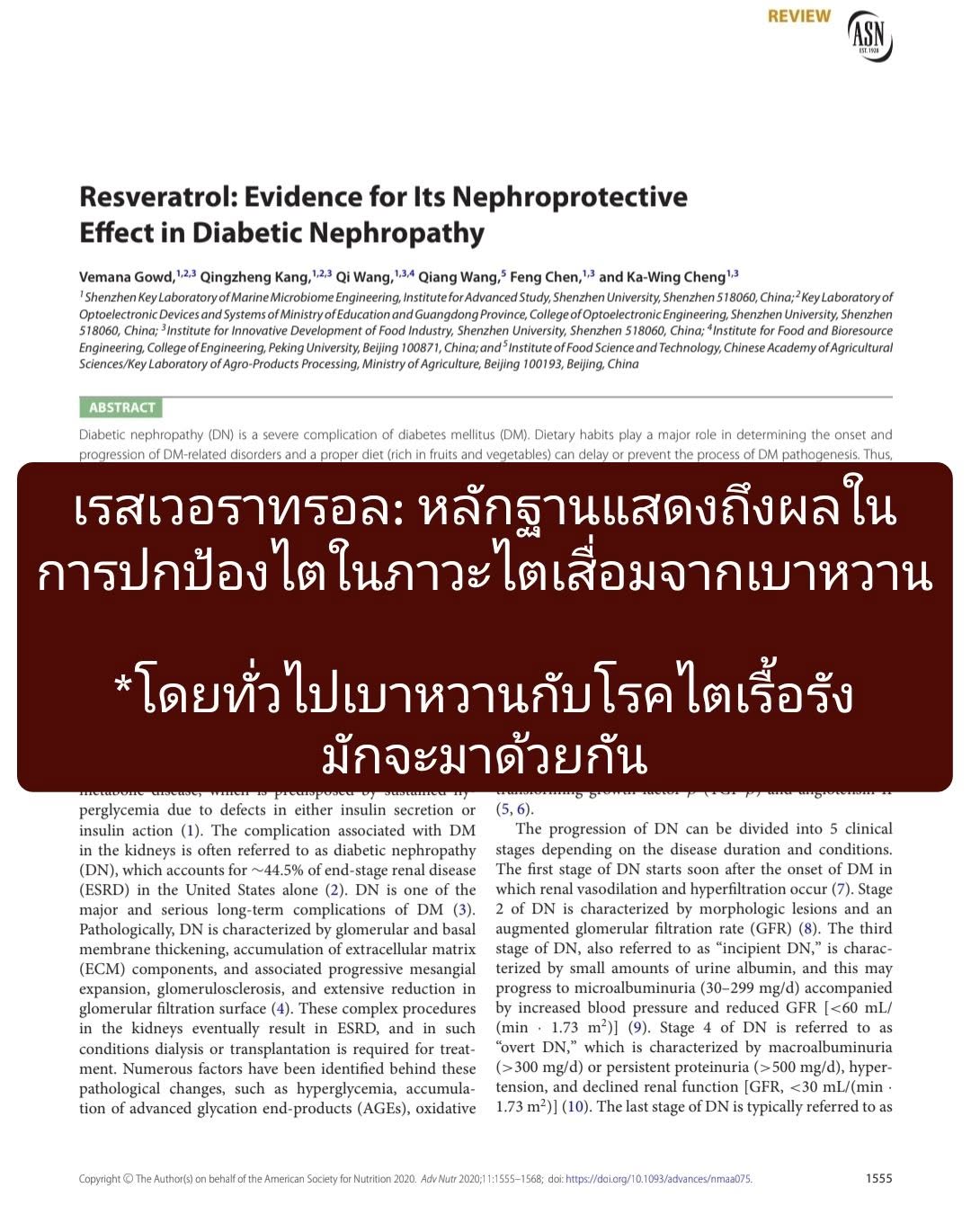
: Resveratrol: Evidence for Its Nephroprotective Effect in Diabetic Nephropathy
Article summary: Resveratrol: Evidence for Its Nephroprotective Effect in Diabetic Nephropathy
This article reviews research on Resveratrol and its role in protecting the kidneys in patients with Diabetic Nephropathy (DN), or kidney deterioration caused by diabetes. which is a serious complication of diabetes and is an important cause of end-stage renal disease (ESRD).
What is Diabetic Nephropathy?
Kidney impairment from diabetes It is a condition in which blood sugar levels are high for a long time. Resulting in damage to the kidney unit such as
Renal artery walls thicken
Accumulation of fibrosis in the kidneys
Protein leaks in the urine
Decreased glomerular filtration (lower GFR)
Risk of end-stage kidney failure
Important factors that cause DN include:
Chronic high blood sugar
Oxidative Stress
Advanced Glycation End-products (AGEs)
Inflammation
Abnormalities of AMPK/mTOR pathway
Endoplasmic Reticulum Stress (ER stress)
What is resveratrol?
Resveratrol is a natural polyphenol found in abundance in
Red grapes, mulberries and some plants
There are outstanding features:
Antioxidants
Reduce inflammation
Helps control sugar
Protect blood vessels
Helps slow down kidney deterioration.
Mechanisms by which resveratrol protects the kidneys
1. Reduce Oxidative Stress
Resveratrol reduces the creation of ROS (Reactive Oxygen Species).
help
Reduce kidney cell damage
Reduce inflammation
Reduce kidney deterioration
By inhibiting pathways such as
NOX/ROS
JNK
NF-κB
ERK1/2
2. Reduce the occurrence of AGEs
AGEs are substances made from sugars bonded with proteins. Makes the kidneys deteriorate faster.
Resveratrol helps
Reduce the accumulation of AGEs
Reduce inflammation
Reduce damage to kidney blood vessels.
3. Stimulate Autophagy
Autophagy is the system for eliminating waste within cells.
Resveratrol helps
Stimulates kidney cell repair
Reduce cell death
Slow down kidney deterioration
4. Stimulate AMPK pathway
AMPK is a cellular energy regulator.
Resveratrol helps
Activates AMPK
Inhibits mTOR
Reduce kidney thickening
Reduce kidney fibrosis
5. Reduce Lipotoxicity
Reduce fat accumulation in the kidneys
Help protect
Protein leak
Kidney impairment
Kidney Fibrosis
6. Reduce ER Stress and Inflammation
Helps reduce
TNF-α
IL-1β
TGF-β
inflammatory cytokines
Resulting in less kidney damage.
Clinical evidence in humans
Research has found that resveratrol
Helps reduce:
Serum Creatinine
and helps maintain GFR better
Helps reduce:
Creatinine
Blood Urea Nitrogen (BUN)
Total Protein Excretion
Helps reduce:
Albumin/Creatinine Ratio (ACR)
Especially when used in combination with ARBs (hypertensive drugs used to treat diabetic kidney disease).
Important conclusions of the article
Resveratrol has great potential to help prevent kidney deterioration from diabetes.
through many mechanisms such as
Antioxidants
Reduce inflammation
stimulate cell repair
Reduce fibrosis
Balancing cell energy
Brief summary
“Resveratrol Not just antioxidants But it is a substance that can help slow down kidney deterioration in diabetic patients with high potential.”
This is why resveratrol products have received so much attention among people with diabetes and the elderly.