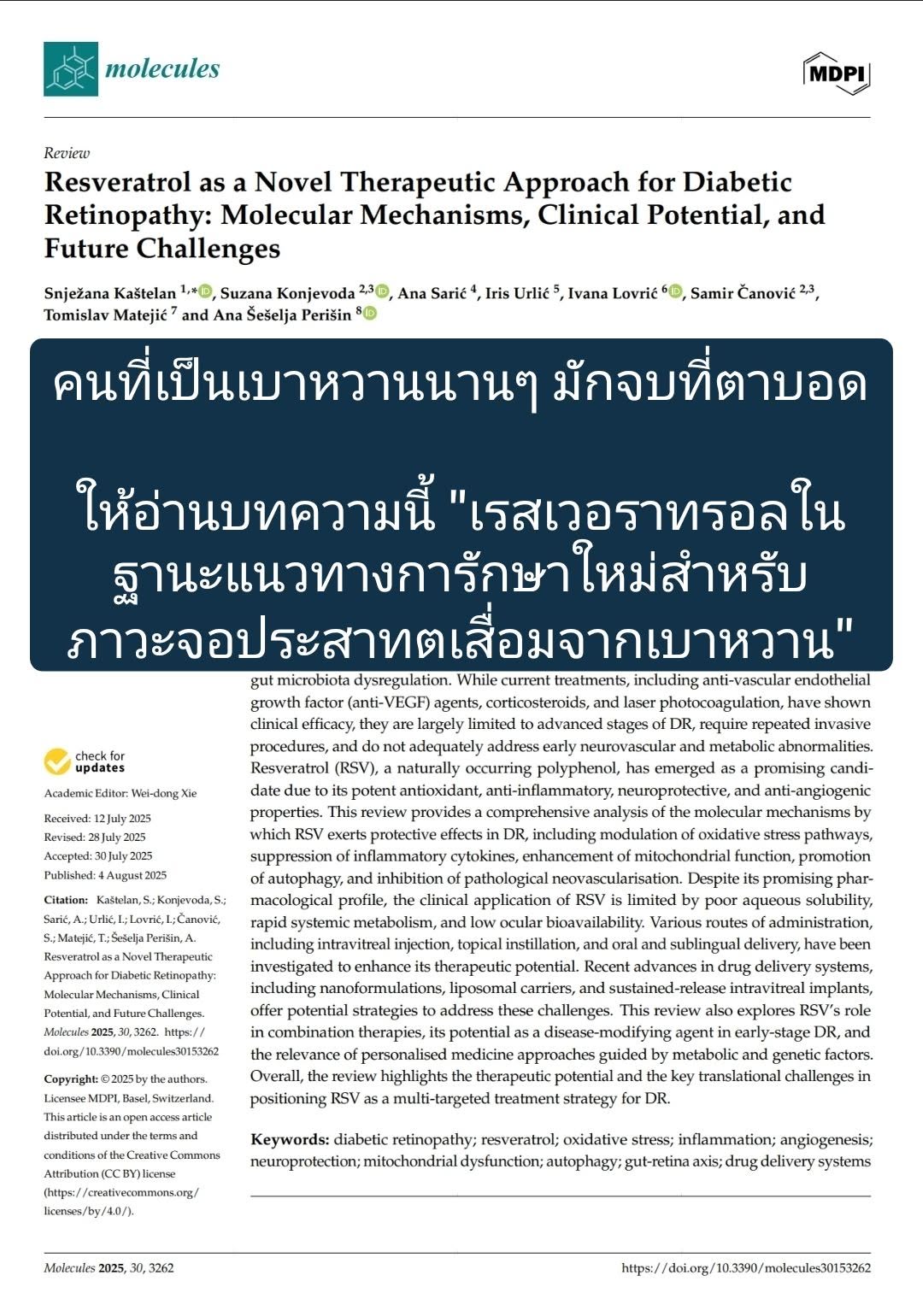
“Resveratrol as a Novel Therapeutic Approach for Diabetic Retinopathy: Molecular Mechanisms, Clinical Potential, and ...
Summary of the article “Resveratrol as a Novel Therapeutic Approach for Diabetic Retinopathy: Molecular Mechanisms, Clinical Potential, and Future Challenges” from the MDPI journal (Molecules, 2025) discusses the potential of resveratrol (Resveratrol, RSV) in helping prevent and delay diabetic retinopathy. Diabetic Retinopathy (DR), a major complication of diabetes and the leading cause of vision loss worldwide.
Summary of the article
1. Problems of Diabetic Retinopathy (diabetic retinopathy)
diabetic retinopathy Caused by chronically high blood sugar, causing
Oxidative Stress
Chronic Inflammation
Mitochondrial disorders
Degeneration of retinal nerve cells
abnormal blood vessel formation (Pathological Angiogenesis)
resulting in
Retinal swelling
Leaky blood vessels
Retinal hemorrhage
Retinal detachment
permanent vision loss
2. Limitations of current treatment
Current main treatments include:
Anti-VEGF injections
Corticosteroids
Laser photocoagulation
Vitrectomy surgery
The limitations are
It is only effective in severe stages.
Must repeat injections many times
It is an invasive treatment.
It does not solve early-stage problems such as oxidative stress and neurodegeneration.
3. Why is resveratrol interesting?
Resveratrol is a natural polyphenol found in red grapes.
Mulberry and some plants
has outstanding features
Antioxidants
anti-inflammatory
Protect nerve cells
Prevents abnormal blood vessel formation
Helps control the metabolism of glucose and fat.
4. Important molecular mechanisms of resveratrol
4.1 Reduce Oxidative Stress
Resveratrol stimulates the Nrf2/ARE pathway.
Helps increase the production of antioxidant enzymes such as
HO-1
NQO1
Reduces damage from ROS and protects retinal cells.
4.2 Reduce inflammation
Resveratrol inhibits and reduces the secretion of inflammatory substances such as
TNF-α
IL-1β
IL-6
MCP-1
Helps reduce destruction blood-retinal barrier and reduce retinal edema
4.3 Protect retinal nerve cells
Resveratrol increases SIRT1.
stimulate autophagy
Reduce apoptosis of retinal ganglion cells
Reduce glutamate excitotoxicity
Thus helping to delay neurodegeneration. which occurred from the first period of diabetic retinopathy
4.4 Reduce abnormal blood vessel formation
Resveratrol reduces the expression of
VEGF
HIF-1α
thus reducing neovascularization and proliferative DR.
Important conclusions
Resveratrol is not just a dietary supplement. But it has potential as a “therapeutic adjunct” for diabetic retinopathy.
Especially in the beginning Because it can manage the "root causes" of disease, including:
oxidative stress
inflammation
neurodegeneration
abnormal angiogenesis
which traditional treatments still do not manage well
Resveratrol will become an important treatment modality. Diabetic retinopathy in the future