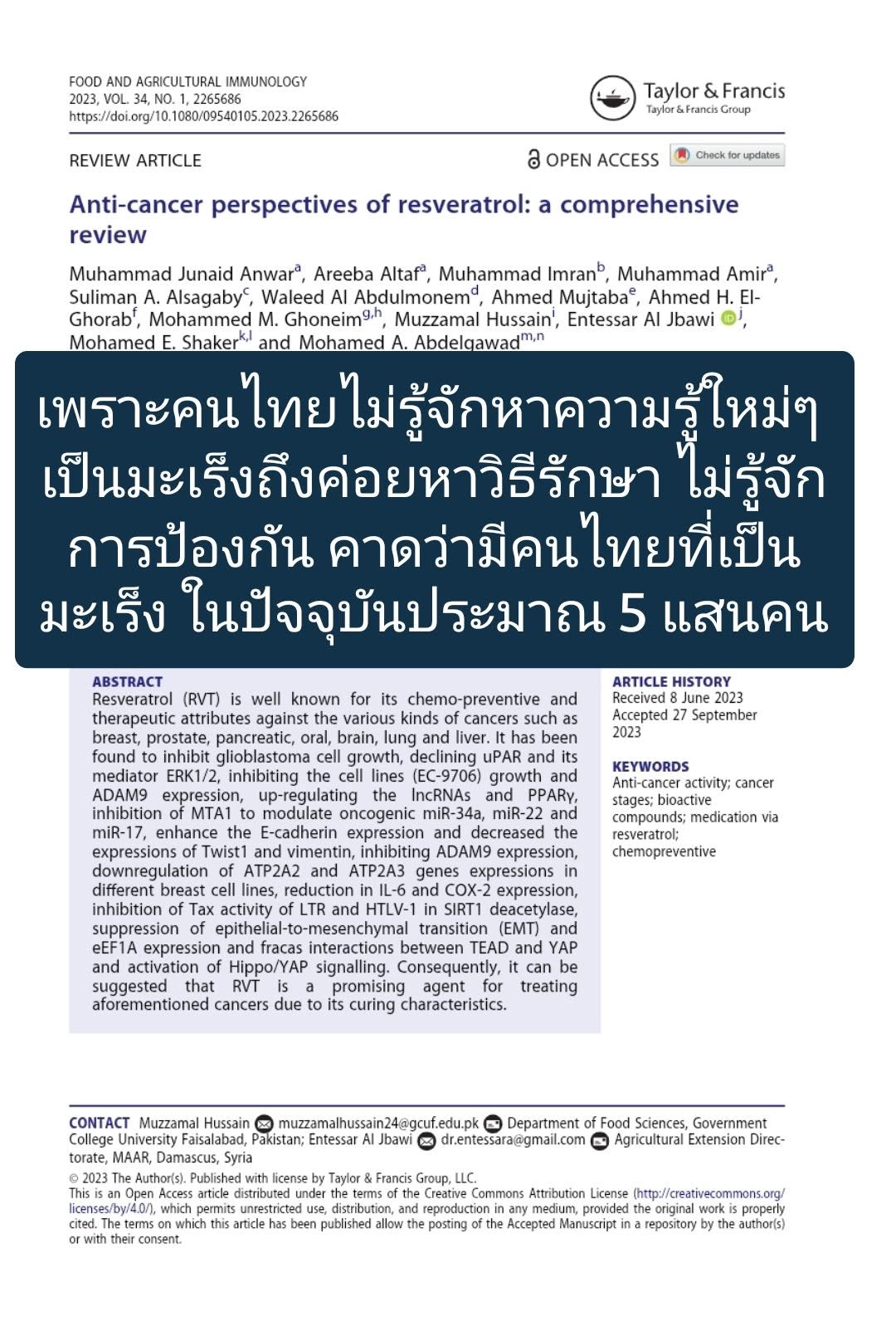
: Anti-cancer perspectives of resveratrol: a comprehensive review
Article summary: Anti-cancer perspectives of resveratrol: a comprehensive review
This article is a review of research on Resveratrol (Resveratrol), a natural polyphenol in the stilbene group found in red grape skins, mulberries, and some plants. By emphasizing the potential to Prevent and treat many types of cancer such as breast cancer, prostate cancer, liver cancer, lung cancer, pancreatic cancer, brain cancer, oral cancer. and ovarian cancer
The main points of the article
1. What is resveratrol?
Resveratrol has the chemical name 3,5,4-trihydroxystilbene It is a natural antioxidant. The most effective form is trans-resveratrol which has the ability to bind to receptors in cells and inhibit cancer-causing processes
2. Anti-cancer mechanism of resveratrol
Resveratrol works in several ways at the same time, including:
● Antioxidants (Antioxidant)
Helps reduce the occurrence of Reactive Oxygen Species (ROS), which is a stimulant of cell mutation and cancer.
Reduce lipid peroxidation
Increases the activity of antioxidant enzymes such as SOD, Catalase, Glutathione peroxidase.
● Stimulates the death of cancer cells (Apoptosis).
Helps cancer cells enter the natural death process.
Activate caspase-3, caspase-7, caspase-9
Reduce Bcl-2
Add Bax
As a result, cancer cells stop growing.
● Inhibits the division of cancer cells.
Inhibits Cell cycle and reduces the number of abnormal cells.
● Reduce the spread of cancer. (Anti-metastasis)
Helps inhibit the EMT (Epithelial-Mesenchymal Transition) process.
Increase E-cadherin
Reduce Twist1 and Vimentin
Thus reducing the progression and spread of cancer.
● Reduce inflammation.
Reduce inflammatory substances related to cancer, such as
IL-6
COX-2
STAT3
This reduces the environment that promotes cancer.
● Increase the efficiency of chemotherapy.
When used together with medicines such as
Cisplatin
5-Fluorouracil
It was found to have a synergistic effect, meaning the drug works better. and reduce drug resistance in cancer cells
3. Effects on each type of cancer
- Breast cancer
Reduced expression of genes involved in cancer growth
Effective against Triple-negative breast cancer (TNBC)
- Pancreatic cancer
Stimulate apoptosis and autophagy
Inhibits PI3K/Akt/mTOR pathway
- Liver cancer
Reduce the size of the cancer tumor
Reduce oxidative stress
- Ovarian cancer
Reduces glucose uptake and lactate production
Inhibits mTOR and Akt
- Brain cancer (Glioblastoma)
Reduced uPAR and ERK1/2
Inhibits the growth of cancer cells
Researcher's conclusion:
The researchers concluded that resveratrol is a natural substance with high potential to prevent and help treat cancer.
through multiple mechanisms simultaneously Both antioxidants reduce inflammation and stimulate the death of cancer cells. and reduce drug resistance
Therefore, it is considered a promising anti-cancer agent that is interesting for development into health supplements and treatments in the future.
Brief summary
“Resveratrol doesn't just kill cancer directly.
But it helps turn off many of the pathways that allow cancer to grow.”
Therefore suitable for both
>> Protection
>> Slowing down disease
>> Enhancing treatment efficiency