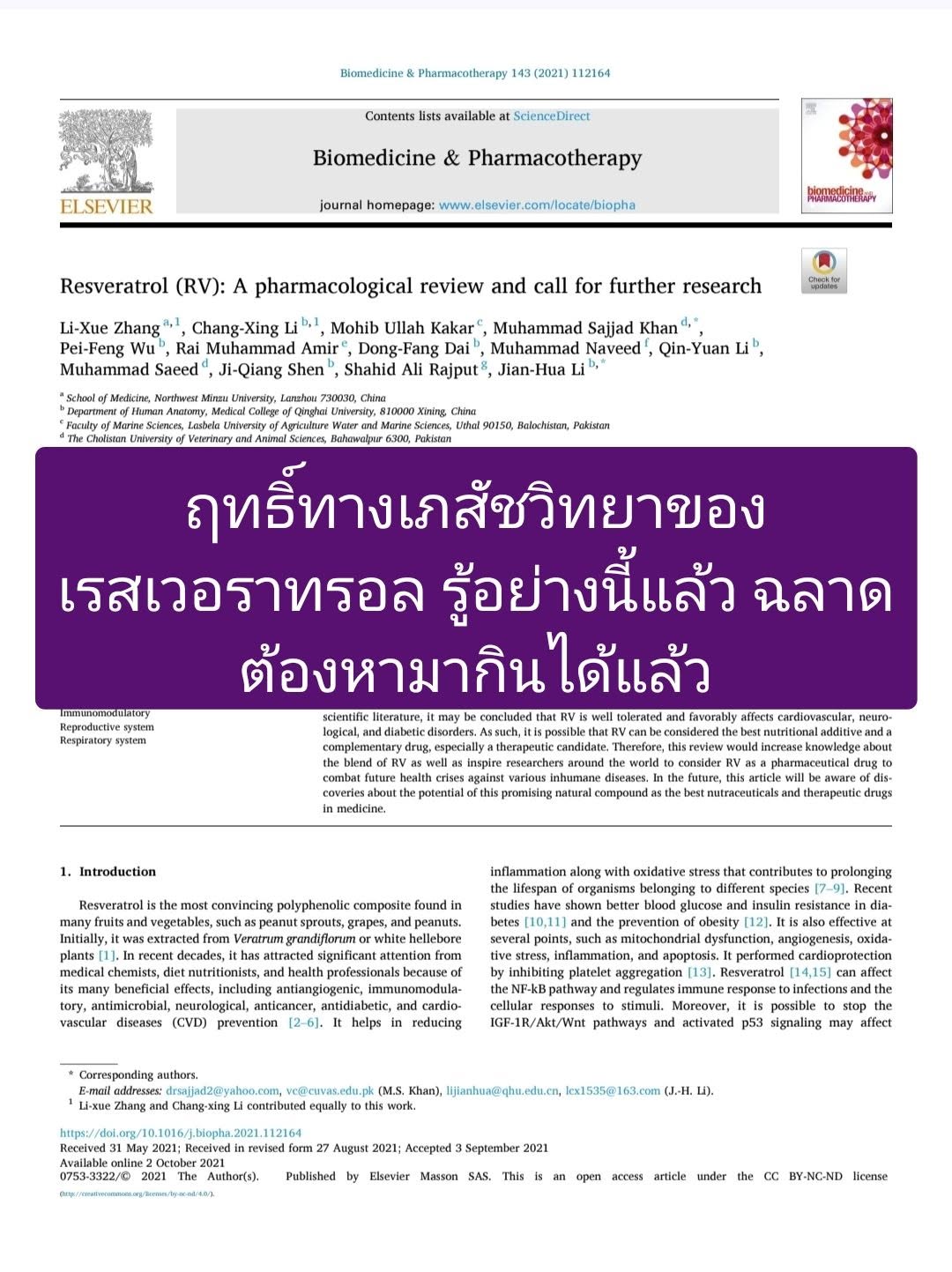
Content from the article
Summary of content from the article
“Resveratrol (RV): A pharmacological review and call for further research” from ScienceDirect
Overview of resveratrol (Resveratrol) is a polyphenol group substance found in red grapes and mulberries, etc.
It received attention because Various biological activities such as antioxidant, anti-inflammatory, and anti-aging.
Main pharmacological effects
This article compiles many studies and reveals that resveratrol has important properties including:
1. Against chronic diseases in many systems
Heart and blood vessels: Reduces platelet adhesion. Helps prevent hardened arteries
Brain and nervous system: has neuroprotective effects. Helps reduce the degeneration of nerve cells.
Diabetes: Helps control sugar levels and glucose metabolism.
2. Anticancer (Antitumor)
Inhibits the growth of cancer cells
Regulates the processes of apoptosis (cell death) and inflammation.
3. Anti-obesity
Reduce fat accumulation
Stimulates fat burning (lipolysis)
4. Antimicrobial
Inhibits pathogenic bacteria such as
E. coli, Staphylococcus aureus
Mechanism: Interferes with bacterial energy production systems (ETC and ATPase).
Mechanism of action
Resveratrol works through several pathways such as:
Reduce oxidative stress (oxidative stress)
Control inflammation (inflammation)
stimulate or inhibit cell death pathways
In summary, it is a substance that "works on many systems simultaneously" (multi-target compound).
Safety
Overall, it is considered safe and well tolerated.
It has the potential to be used as:
Supplements (nutraceutical)
Complementary drug
Brief summary
Resveratrol is a natural substance with great potential in preventing and treating many diseases (heart, brain, cancer, diabetes) through antioxidant and anti-inflammatory mechanisms.