Research on
Summary of research on
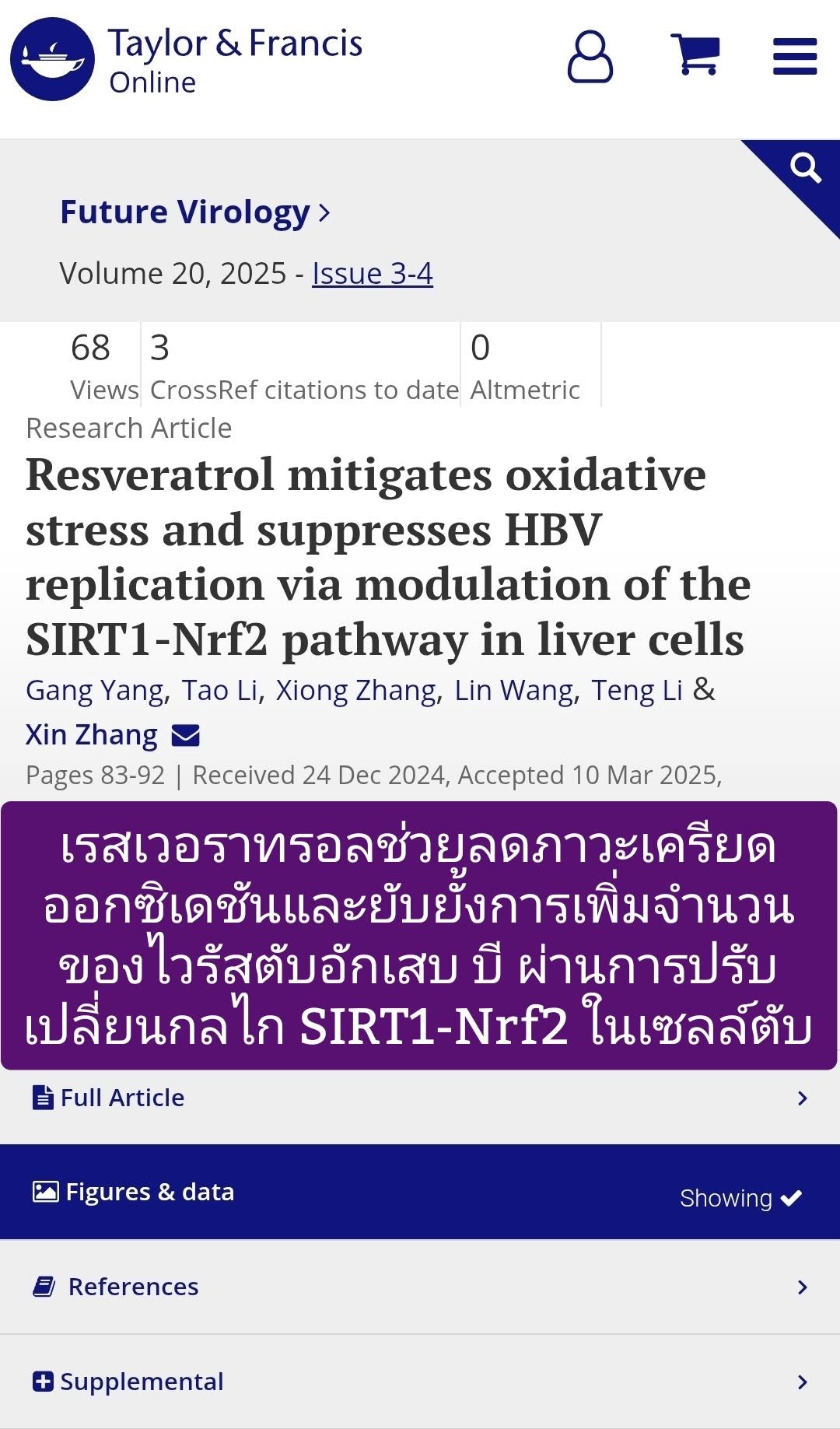
“Resveratrol mitigates oxidative stress and suppresses HBV replication via modulation of the SIRT1-Nrf2 pathway in liver cells” published in 2025
The main idea of the research
This work studied whether resveratrol, a natural antioxidant,
Can it reduce oxidative stress and inhibit the multiplication of hepatitis B virus (HBV) in liver cells?
Source (Background)
HBV infection causes high levels of Reactive Oxygen Species (ROS).
High ROS → damages liver cells + stimulates the virus to multiply.
The key mechanism is related to the path.
SIRT1 – Nrf2 (controls antioxidant balance in cells)
Method of study
Human liver cells (LO-2 and HepG2) were used.
Stimulate oxidative stress with H₂O₂
Give resveratrol Compare test results:
cell survival
ROS/MDA levels
Expression of SIRT1 and Nrf2
HBV indicators (HBV DNA, HBc protein)
Study results (Key Findings)
1. Reduce oxidative stress
Resveratrol ↓ ROS and MDA significantly
↑ Antioxidant system of cells
2. Stimulates the SIRT1–Nrf2 pathway.
↑ SIRT1
↑ Nrf2 activation (phosphorylation + entry into the nucleus)
As a result, cells create more antioxidants.
3. Protect liver cells
Increases cell survival under oxidative stress
4. Inhibits HBV virus
↓ HBV DNA
↓ HBc protein
Meaning: “The increase in the number of viruses decreases.”
Summary of mechanisms
Resveratrol works in a “2-layer” way:
Antioxidants → Reduce ROS
Adjust signaling pathway (SIRT1 → Nrf2) → stimulate cell defense system
→ Create an environment where it is difficult for viruses to grow.
Conclusion of the research
Resveratrol can:
Reduce oxidative stress
Protect liver cells
and “inhibit the proliferation of HBV”
The SIRT1–Nrf2 pathway is an important mechanism.
has the potential to be Guidelines for future treatment/complementary treatment of liver disease caused by HBV
Short summary, easy to understand
Resveratrol =
Reduce free radicals + adjust cell defense system
Makes “the environment not conducive to the HBV virus”
Thus reducing the number of viruses in liver cells.