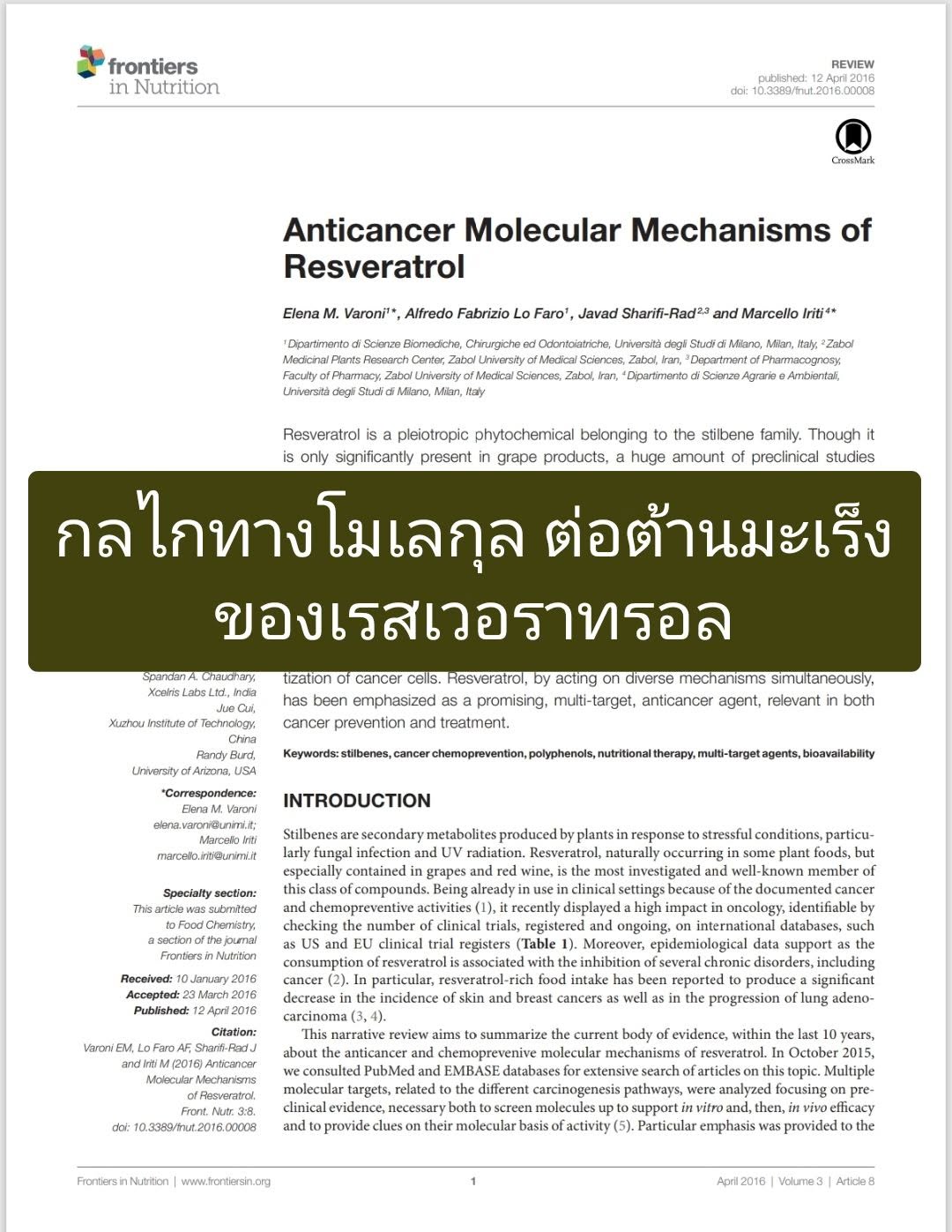
“Anticancer Molecular Mechanisms of Resveratrol”
Summary of the article “Anticancer Molecular Mechanisms of Resveratrol”
Overview of resveratrol (Resveratrol) is a polyphenol in the stilbene group, found mainly in red grapes and mulberries.
There are many studies. that points out that resveratrol
Has the potential to Prevent and fight cancer
Resveratrol's main anti-cancer mechanism has the advantage of acting on multiple targets. (multi-target) against cancer cells
1. Inhibits the growth of cancer cells
Reduces the activity of growth factors and various receptors
cause cancer cells Dividing slowly or stopping growth
2. Stimulate the death of cancer cells (Apoptosis)
Activate proteins that cause cell death (such as caspases)
Reduce proteins that help cancer cells survive.
Causes cancer cells to "kill themselves"
3. Anti-inflammatory and free radicals
Reduce inflammatory substances such as TNF-α, IL-6
act as Antioxidants
Helps reduce DNA damage that leads to cancer.
4. Inhibits the spread of cancer (Metastasis)
Reduce the creation of new blood vessels (angiogenesis)
Reduce the movement and invasion of cancer cells.
Reduce the chance of spread
5. Enhance the efficiency of chemotherapy drugs
Use with medications such as 5-fluorouracil or cisplatin.
It increases the sensitivity of cancer cells to drugs.
Reduce the problem of "drug resistance"
6. Control the cell cycle (Cell cycle)
Makes cancer cells stop at the G1 or G2/M stage.
Prevents abnormal division
Brief summary
Resveratrol is a natural substance with strong anti-cancer potential by:
>> Inhibits the growth of cancer cells
>> stimulate cell death
>> Reduce inflammation
>> Prevent the spread
>> Helps enhance drug treatment