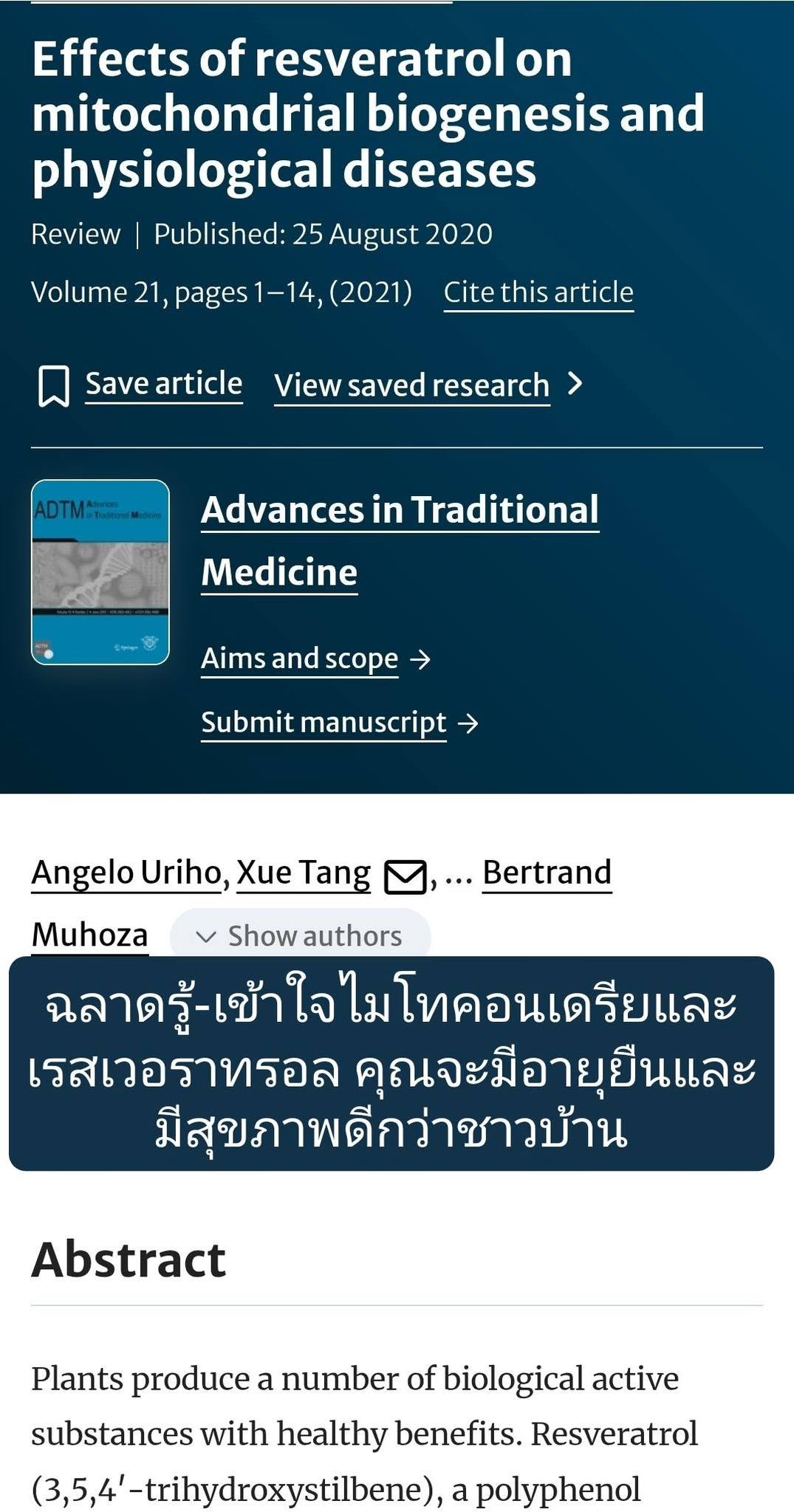
: “Effects of resveratrol on mitochondrial biogenesis and physiological diseases” (Springer Nature)
Article summary: “Effects of resveratrol on mitochondrial biogenesis and physiological diseases” (Springer Nature)
Overview of the article
This article is a review that explains
Resveratrol, a polyphenol from red grapes/mulberries. It plays an important role in:
>> Stimulates the creation of new mitochondria. (mitochondrial biogenesis)
>> Improve cell function
>> Helps prevent/relieve many chronic diseases.
Main mechanisms (Mechanisms)
Resveratrol affects mitochondria through key routes including:
1. Activate SIRT1 – a regulator of cell lifespan.
Stimulates the enzyme SIRT1
This results in an increase in the activity of PGC-1α (a key regulator of mitochondrial biogenesis)
2. Stimulate AMPK (cellular energy)
Helps increase energy metabolism
Stimulates the creation of new mitochondria.
3. Increase the expression of important genes
such as NRF-1, TFAM
This causes the number and efficiency of mitochondria to increase.
Total:
Cells have more energy + reduce oxidative stress
Effects on “mitochondrial biogenesis”
Resveratrol can:
Increase the number of mitochondria
Increased mitochondrial DNA
Increase protein in the electron transport chain system
Improves energy production (ATP)
Effects on disease (Physiological diseases)
>> 1.
Metabolic diseases
diabetes, obesity
Helps restore mitochondrial function and reduce insulin resistance.
>> 2.
cardiovascular disease
Improves endothelial function
Add nitric oxide (NO)
Reduce the risk of vascular deterioration
>> 3.
Neuropathy (Neurodegenerative diseases)
such as Alzheimer's, Parkinson's
Helps protect nerve cells through increasing mitochondrial function
>> 4.
Muscles and recovery
increase muscle building
Helps repair muscles
Through stimulation of AMPK + mitochondrial biogenesis
>> 5.
cancer
Regulate apoptosis (abnormal cell death)
But the effect also depends on the size and context of the cell.
Brief summary (Key takeaway)
Resveratrol = stimulant of the “cell energy factory”
Works through SIRT1 + AMPK + PGC-1α
Has the potential to help prevent chronic diseases such as diabetes, heart disease, and dementia.