Abstract of the article:
Abstract of the article:
State-of-the-art anticancer extraction technology from the traditional herbal mulberry (mulberry): a molecular review in cancer management.
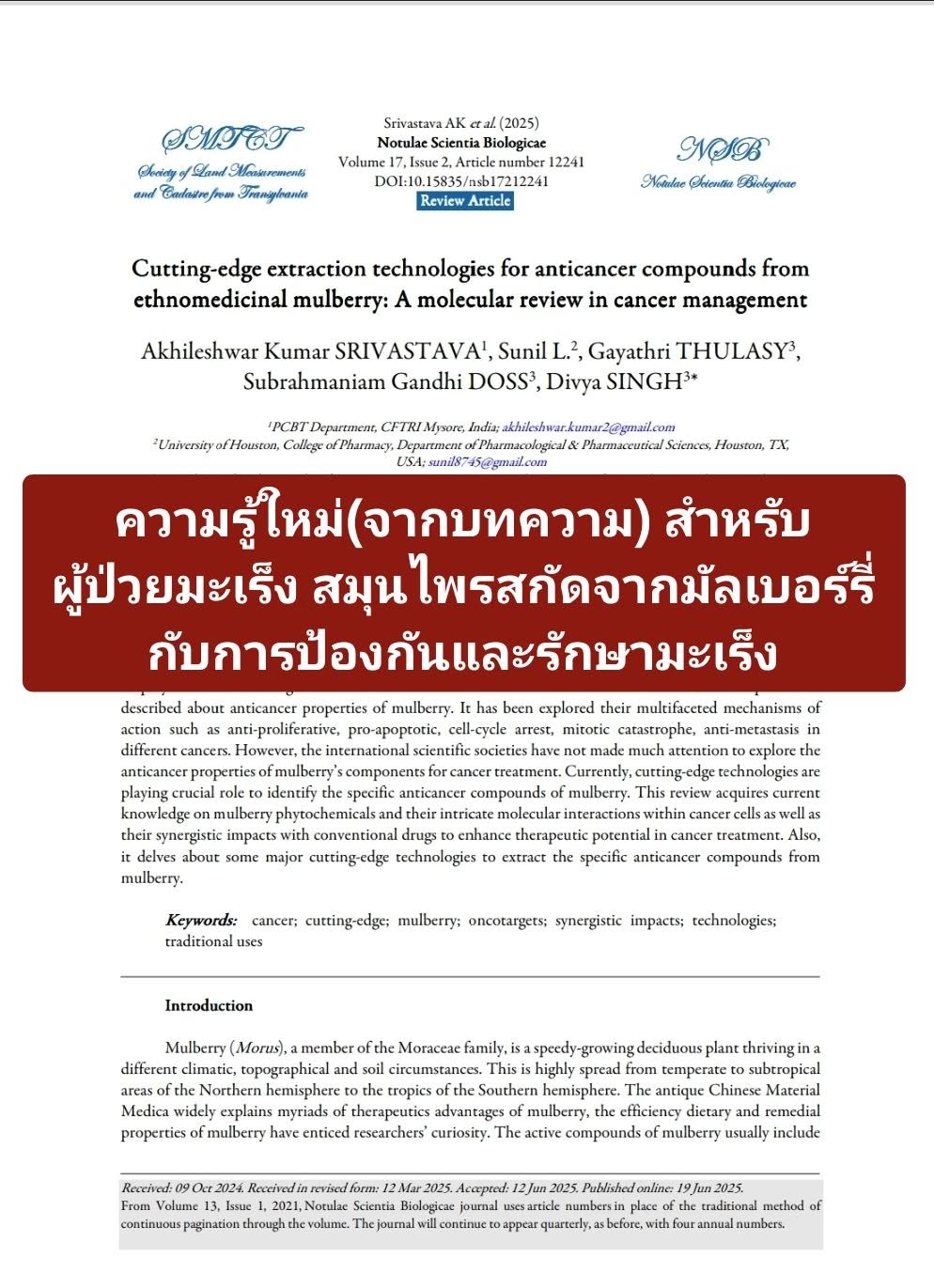
Cutting-edge extraction technologies for anticancer compounds from ethnomedicinal mulberry: A molecular review in cancer management
Cancer is one of the most challenging diseases in modern medicine. This requires new methods. In prevention and treatment, currently mulberry (mulberry), which belongs to the family Moraceae, has received special attention because it contains chemical compounds (flavonoids, polysaccharides, alkaloids, polyphenols, and anthocyanins) and has beneficial effects on human health, such as antioxidant, antidiabetic, and immune-modulating effects. Historically, parts (fruits, leaves, branches, roots) of the Morus mulberry have been used in traditional medicine to treat a variety of infections and internal diseases. There are many reports describing mulberry's anti-cancer properties. Various mechanisms of action of the substances in mulberry have been studied, such as inhibiting cell growth. stimulation of cell death stopping the cell cycle causing abnormalities in cell division and inhibiting cancer metastasis in various types of cancer. However, international scientific societies have not paid much attention to studying the anticancer properties of mulberry components for cancer treatment. Cutting-edge technology is now playing a key role in identifying mulberry's unique anti-cancer compounds. This article compiles current knowledge about the plant chemicals in mulberry and the complex molecular interactions within cancer cells. as well as their synergistic effects with modern medicine to enhance their potential in treating cancer. Additionally, some important state-of-the-art technologies for extracting specific anti-cancer compounds from mulberries are also discussed.