People who live in the northern region of Thailand Have to face the problem of high levels of fine dust PM2.5 every year. Especially during the dry season around...
People who live in the northern region of Thailand Have to face the problem of high levels of fine dust PM2.5 every year. Especially during the dry season, approximately 4–5 months per year, due to problems with open burning, forest fires, and basin-like terrain. This causes dust to accumulate in the air for a long time.
This level of fine dust is approximately 20–30 times smaller than a human hair, so it can enter the lungs' air sacs and be absorbed directly into the bloodstream. This results in chronic inflammation and damage to many organ systems of the body.
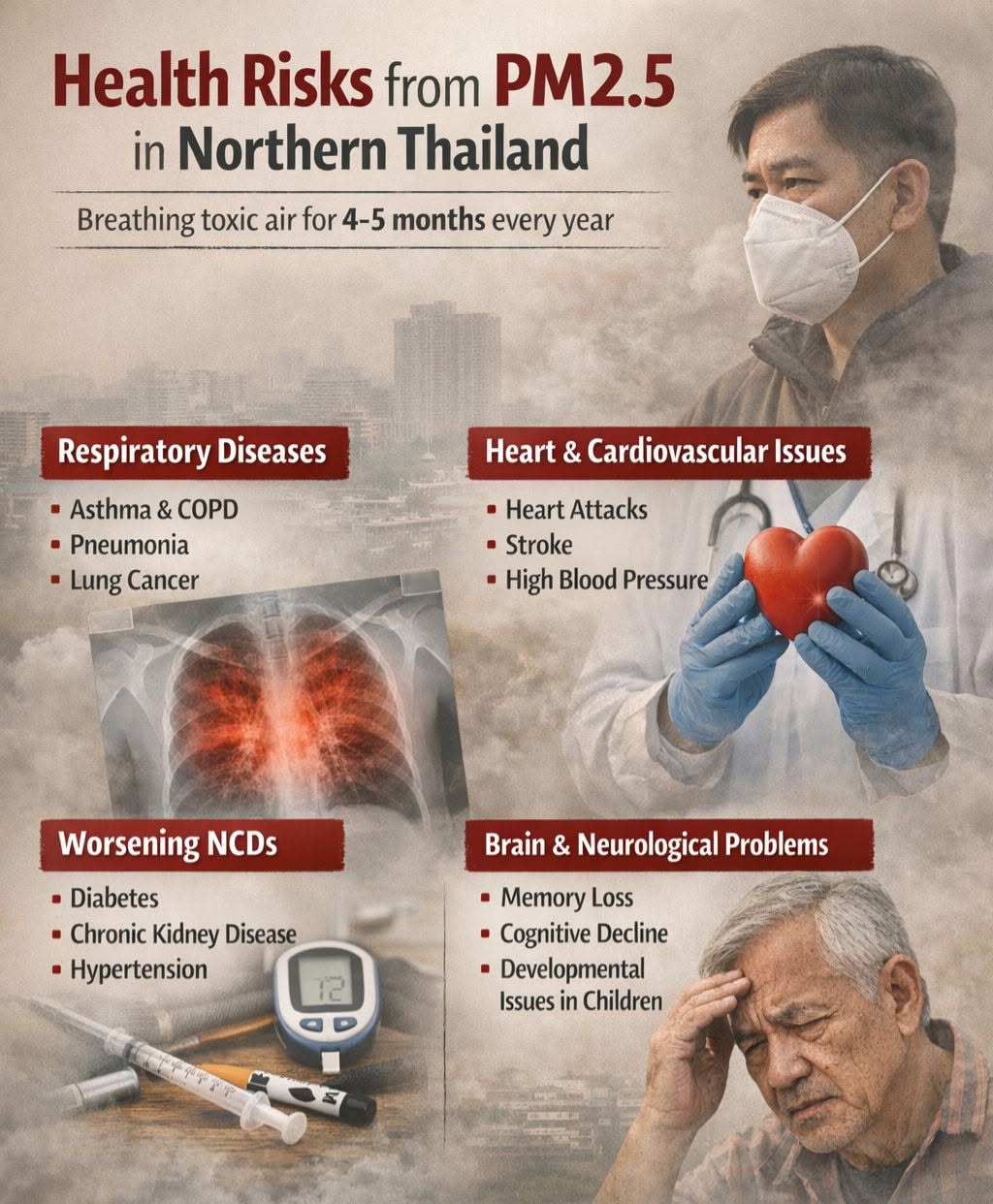
Diseases found from continuous exposure to PM2.5 dust for several months every year.
1. Respiratory system disease
PM2.5 dust is an important factor that increases the risk of diseases such as
Asthma
Chronic obstructive pulmonary disease (COPD)
pneumonia
lung cancer
People who breathe in accumulated dust every year have chronic inflammation in their lungs. It causes lung function to decrease. and has a chance of developing into serious disease in the long term
2. Cardiovascular disease
When dust enters the bloodstream It stimulates inflammation and causes blood vessels to narrow.
Increase the risk of diseases such as
Ischemic heart disease
Stroke
high blood pressure
Many studies have found that high PM2.5 levels are associated with a marked increase in death from heart disease.
3. More severe diseases in the NCDs group
People who already have chronic non-communicable diseases (NCDs), such as
Diabetes
Heart disease
chronic kidney disease
When continuously exposed to PM2.5 dust, inflammation and high oxidative stress in the body will occur. This causes these diseases to worsen faster. And there are more complications.
4. Effects on the brain and development
In children and the elderly, PM2.5 dust can affect the brain, for example.
Decreased concentration
Memory decline
Increases the risk of long-term neurological disease
The group that is most affected
The following groups are considered at very high risk if they have to breathe dust for several months a year.
Elderly people
small child
NCDs patients
People who work outdoors
Because the immune system and important organs of the body Fragile than normal people
The role of antioxidants
Many studies have found that exposure to PM2.5 dust causes
Oxidative Stress
Cellular inflammation
Antioxidants like Resveratrol, which is found in mulberries. There have been studies in many studies that it can help.
>> Reduce cell inflammation
>> Reduce damage from free radicals
>>Support cardiovascular health
Therefore, if people in northern Thailand are exposed to PM2.5 dust for several months in a row every year But there were no preventive measures at all, whether it be to reduce exposure to dust. wearing a mask or supplementing with antioxidants to protect cells The risk of lung disease, heart disease, cancer, and NCDs increases significantly over the long term.