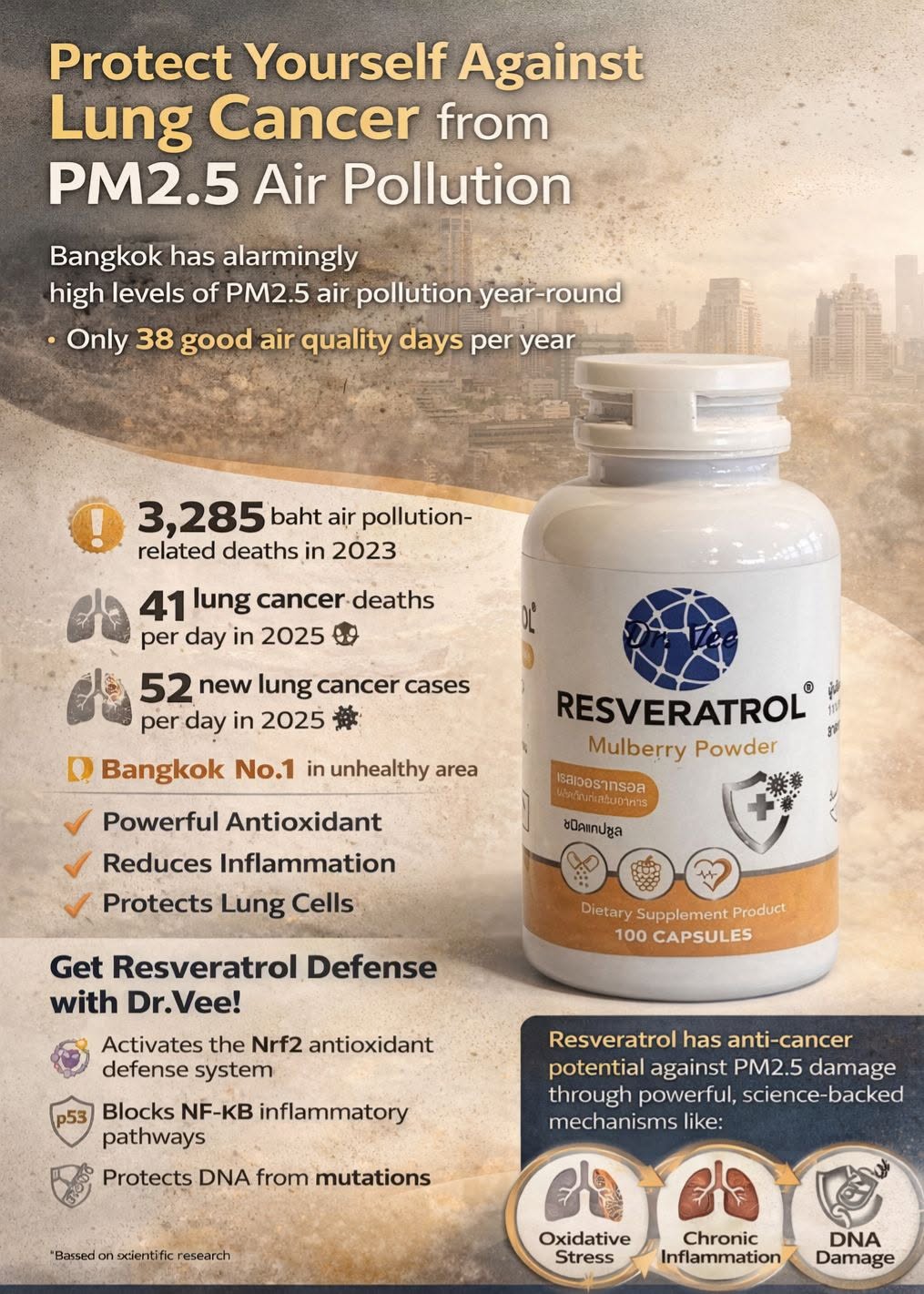
Bangkok and the PM2.5 dust problem: The risk of lung cancer increasing every year.
Bangkok and the PM2.5 dust problem: The risk of lung cancer increasing every year.
From the information it was found that Bangkok It is one of the areas in Thailand that have a problem with small dust PM2.5 accumulating in the air continuously each year. Until affecting the health of many people
Data shows that in some years Bangkok only has about 38 good weather days per year, which means that for most of the year people are exposed to environments where fine dust contaminates the air.
In addition, Health Zone 13, which covers the Bangkok area It was also found that there was a high rate of patients Lung cancer is higher in many areas of the country.
In 2025, there will be an average of 52 new lung cancer cases per day.
Up to 41 people die from the disease per day.
Environmental and health researchers point out that PM2.5 dust is one of the important factors that increase the risk of chronic diseases such as
respiratory disease
cardiovascular disease
Dementia
skin disease
and lung cancer
The mechanism by which PM2.5 dust causes lung cancer
PM2.5 dust is very small (smaller than 2.5 microns) so it can pass through the body's filtration system. and can go directly down to the lungs' air sacs
When entering the lungs, several biomolecular processes occur, including:
1. Occurrence of Oxidative Stress
PM2.5 dust contains heavy metals and various toxins. Causes the creation of a large amount of Reactive Oxygen Species (ROS).
The result is
Lung cells are damaged
Cell membranes are destroyed.
The cell's DNA is destroyed.
This process is called oxidative stress, which is one of the leading causes of cancer.
2. Chronic inflammation of the lungs (Chronic Inflammation)
PM2.5 stimulates the activity of proteins that control inflammation, such as
NF-κB pathway
MAPK pathway
Causes the body to secrete inflammatory cytokines such as
IL-6
TNF-α
When chronic inflammation occurs Lung cells are more likely to mutate and develop into cancer cells.
3. DNA damage and cell mutation
Toxins in PM2.5 can stimulate
DNA damage
epigenetic alteration
which increases the chance of cells becoming lung cancer cells
The role of Resveratrol in protecting lung cells
Resveratrol is a plant polyphenol found abundantly in mulberries. Many studies have found that it has important properties in protecting cells from pollution.
Dr.Vee resveratrol supplement is extracted from mulberry. Therefore, it has been studied in terms of reducing the risk from toxic dust.
Biomolecular mechanisms of resveratrol
1. Antioxidant Defense
Resveratrol can
Stimulate Nrf2 pathway
Increase antioxidant enzymes such as
Superoxide dismutase (SOD)
Catalase
Glutathione peroxidase
The result is
Reduce ROS caused by PM2.5 and protect the DNA of lung cells
2. Reduce inflammation of lung tissue
Resveratrol has properties
Inhibits NF-κB signaling pathway
Reduce the production of inflammatory cytokines
Thus helping to reduce
Inflammation of the lung air sacs
lung cell damage
3. Protect DNA and inhibit cancer cell growth.
Resveratrol has been reported to stimulate the p53 tumor suppressor gene.
Inhibits abnormal cell division
Stimulates apoptosis of abnormal cells
Thus reducing the chance of developing cancer cells.
Lung care options for urban people
Dr.Vee Resveratrol is extracted from concentrated mulberries.
In an era where Bangkok's weather Full of dust PM2.5
Taking care of your lung health shouldn't wait until you're sick.
Resveratrol Dr.Vee
Resveratrol extract from mulberry
Strengthen cell protection from free radicals
Reduce inflammation at the cellular level
Supports the body's natural anti-cancer mechanism.
suitable for
city worker
Elderly people
People who are regularly exposed to PM2.5 dust
Take care of your lungs from today.
Because there are only a few days of good weather in the year.
Resveratrol Dr.Vee — Urban health protection