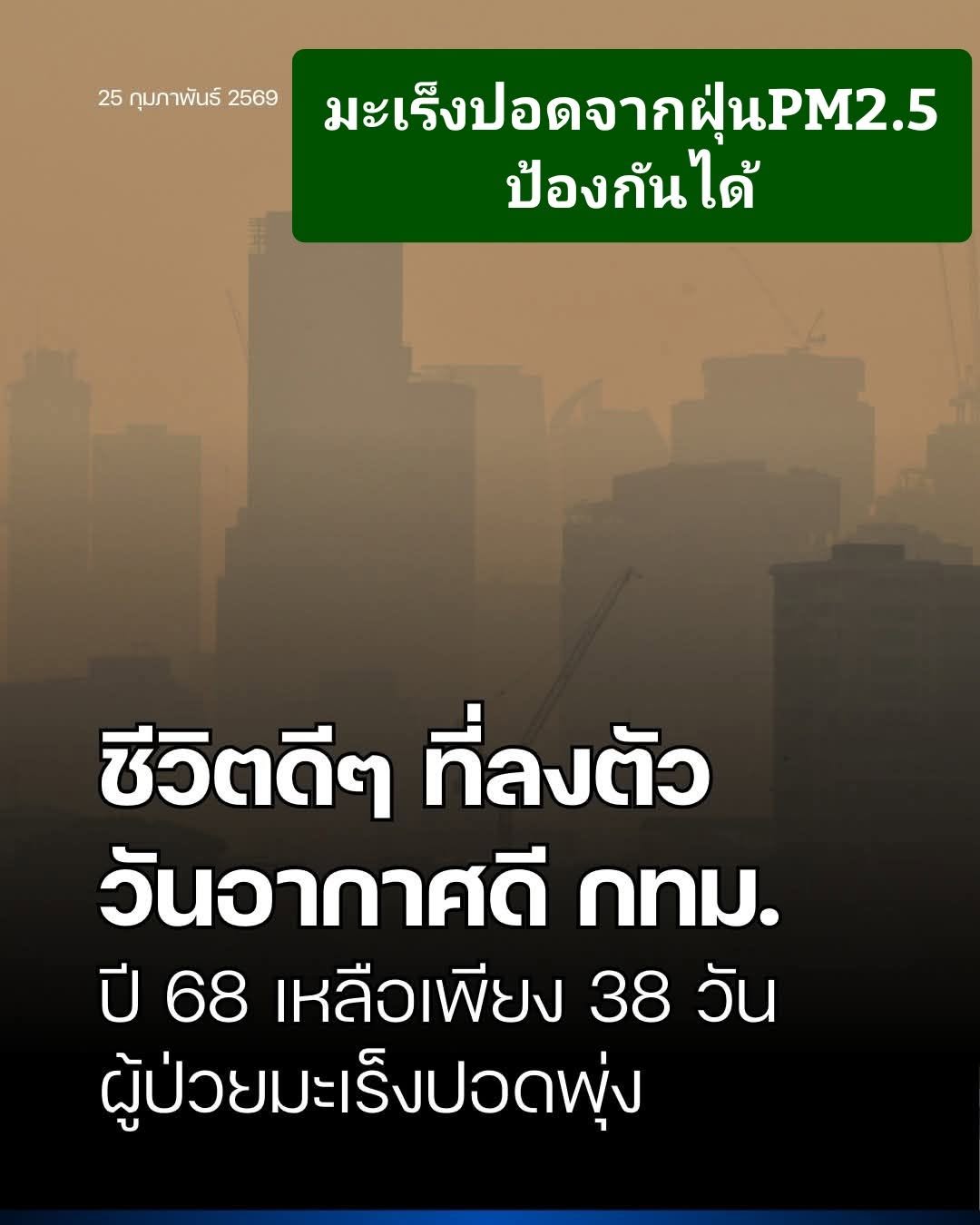
Resveratrol is extracted from the mulberry in the Resveratrol product. Dr.Vee has a lot of research explaining it. Biomolecular mechanisms (Molecula...
Resveratrol is extracted from the mulberry in the Resveratrol product. Dr.Vee has a lot of research explaining it. Biological molecular mechanisms (Molecular Mechanisms) that can help reduce the risk of lung cancer from PM2.5 dust can be explained in sequence as follows:
Biomolecular mechanism of resveratrol (Resveratrol) extracted from mulberry To prevent lung cancer from PM2.5
Inhibits the generation of free radicals (Oxidative Stress)
PM2.5 → enters the lungs' air sacs → stimulates the production of ROS (Reactive Oxygen Species)
ROS causes
damaged DNA
Inflammatory cells
stimulate cancer
Resveratrol is extracted from mulberry.
Stimulates the antioxidant system in cells
Increase the functionality of
SOD (Superoxide dismutase)
Catalase
Glutathione peroxidase
Results
Reduce ROS
Reduce DNA damage of lung cells
Reduce cell mutation
Stimulates the Nrf2 Pathway (cell defense system)
PM2.5 weakens the cell's defense system.
Resveratrol stimulates important proteins.
Nrf2 (Nuclear factor erythroid 2–related factor 2)
When Nrf2 is stimulated, it increases enzyme production.
HO-1
NQO1
GST
Results
Increase the Detox system of cells
Eliminate toxins from PM2.5
Prevent cancer
Inhibit inflammation at the cellular level (Anti-inflammatory)
PM2.5 dust causes chronic inflammation in the lungs.
stimulate
NF-κB pathway
cause
TNF-α
IL-6
IL-1β
which is a stimulant for cancer.
Resveratrol
inhibit
NF-κB signaling
Results
Reduce inflammation in the lungs
Reduce the microenvironment of cancer
Stimulates abnormal cell death (Apoptosis)
Cells that are destroyed by PM2.5 may become cancer cells.
Resveratrol stimulates
p53 tumor suppressor gene
and add
Bax
Caspase-3
Ready to reduce
Bcl-2
Result
Abnormal cells are eliminated.
Reduce the chance of cancer
Inhibits the creation of cancer blood vessels. (Anti-angiogenesis)
If cancer has already occurred
Resveratrol can
inhibit
VEGF
HIF-1α
make
Cancer tumors cannot form blood vessels.
Limit cancer growth
Adjust the function of SIRT1 (Longevity Gene)
Resveratrol Stimulant
SIRT1
make
DNA repair
Reduce inflammation
Slow down the degeneration of lung cells
Summary of important mechanisms
PM2.5 → ROS ↑ → DNA damage → inflammation → cancer
Resveratrol is extracted from mulberry.
Works on 6 main mechanisms
>> Antioxidants
>> Stimulates Nrf2 detox pathway
>> Inhibits NF-κB inflammation
>> stimulate apoptosis
>> Inhibits angiogenesis
>> Stimulates SIRT1 to repair cells
Thus helping to reduce the risk of lung cancer from PM2.5 dust.