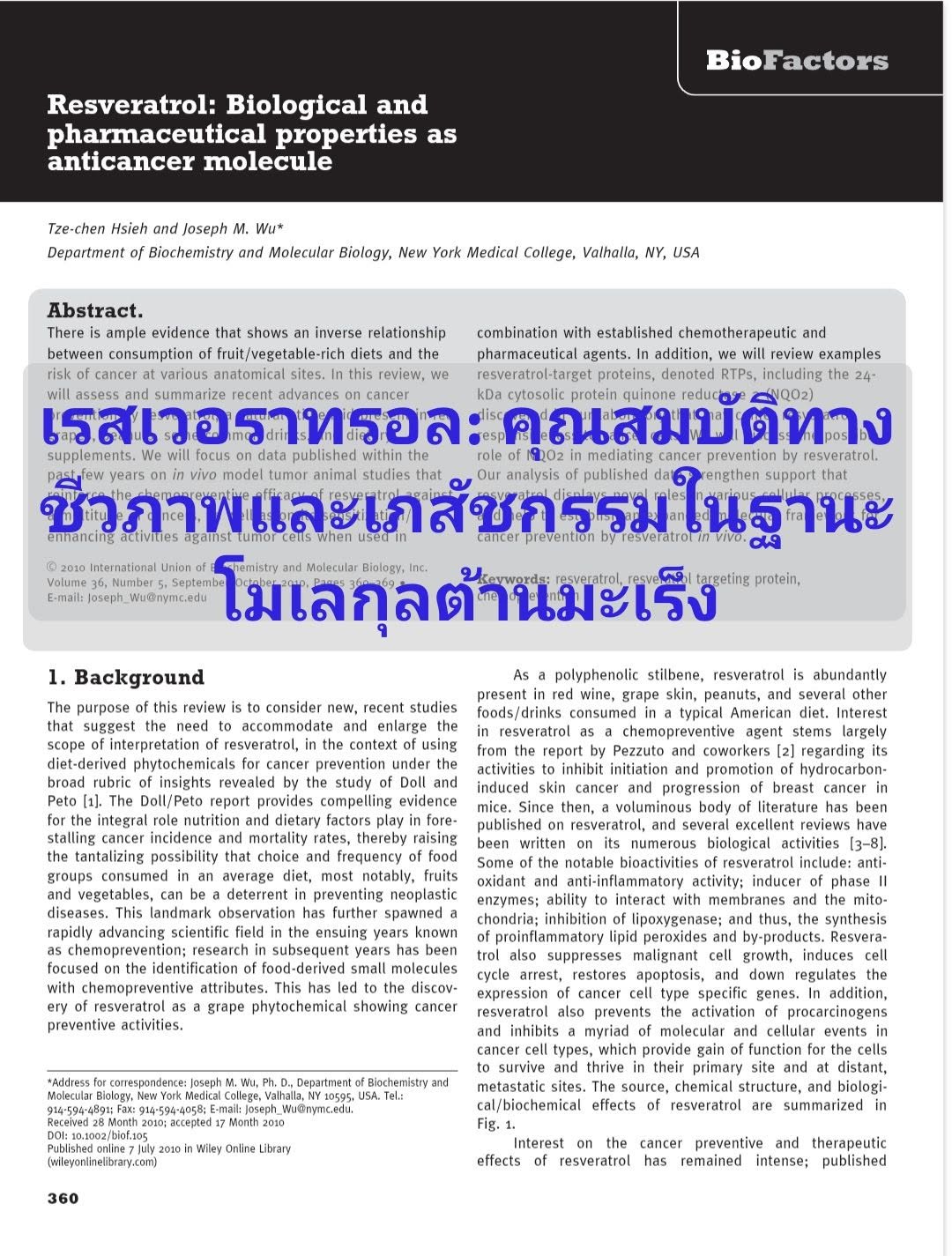
Resveratrol: Biological and pharmaceutical properties as an anticancer molecule.
Resveratrol: Biological and pharmaceutical properties as an anticancer molecule.
Resveratrol: Biological and
pharmaceutical properties as
anticancer molecule
Abstract: There is substantial evidence showing an inverse association between consuming a diet rich in fruits and vegetables and reducing the risk of cancer in various organs. In this article, we evaluate and summarize the latest advances in cancer prevention with resveratrol. It is a natural stilbenoid found in red grapes, mulberries, and some plants. We will highlight data published in recent years on studies in animal models of in vivo tumors. This confirms the cancer prevention efficacy of resveratrol against various types of cancer. Including stimulating/enhancing activities on cancer cells when used in combination with chemotherapy and other drugs. We will also review examples of resveratrol target proteins, or RTPs, including the 24 kDa cytosolic quinone reductase 2 (NQO2), discovered in our lab. This causes cancer cells to respond to resveratrol. We discuss the possible role of NQO2 in mediating resveratrol-mediated cancer protection. Our analysis of published data strengthens support that resveratrol exerts novel roles in various cellular processes and helps establish a broader molecular framework for resveratrol-mediated cancer prevention.