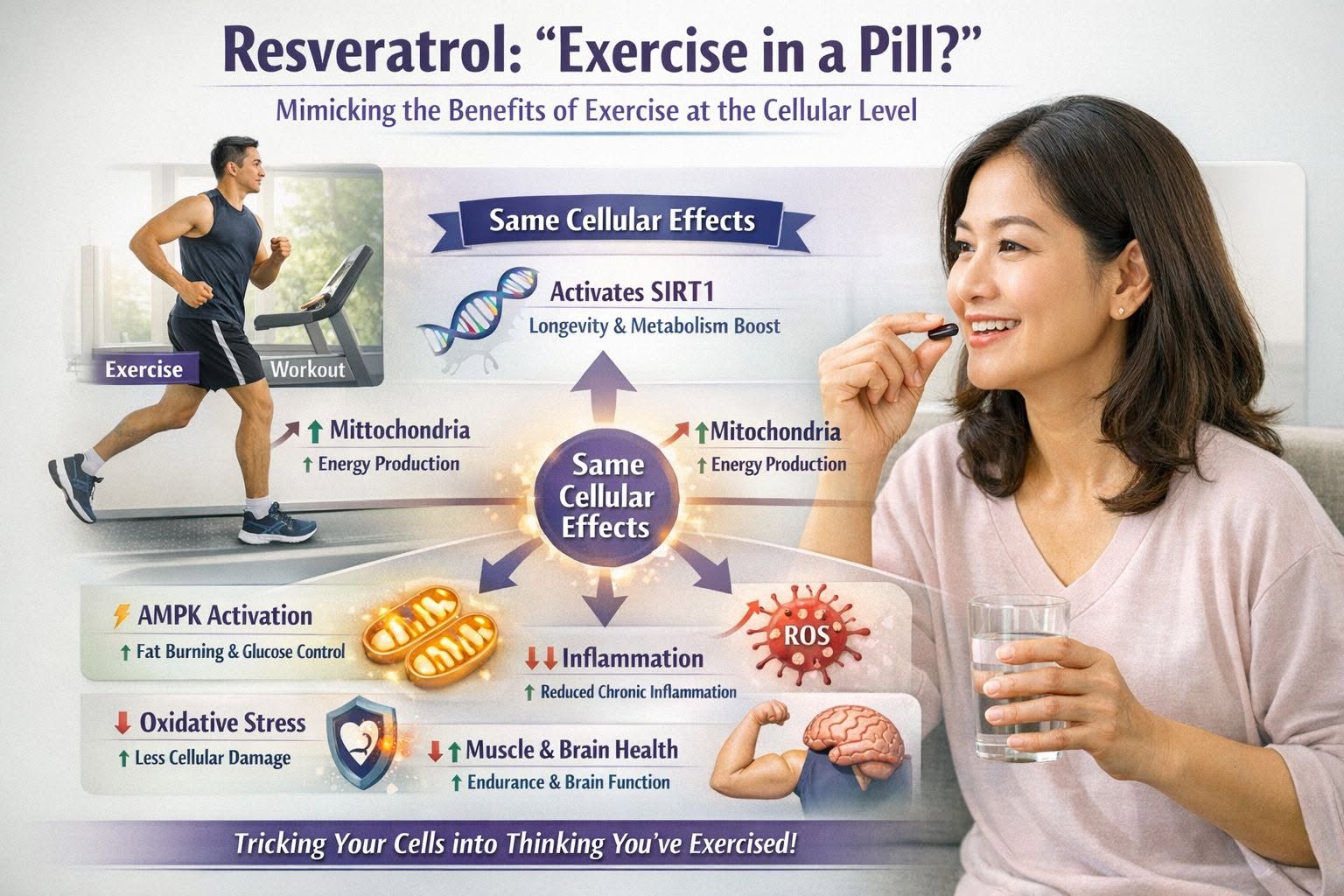
Explain in depth the biology of why resveratrol is extracted from mulberries. Therefore giving the effect of imitating exercise (exercise mimetic)
Explain in depth the biology of why resveratrol is extracted from mulberries. Therefore giving the effect of imitating exercise (exercise mimetic)
Key Ideas: What is “Exercise mimetic”?
Exercise makes the body Moderate cellular stress (mild stress) → stimulates signaling pathways that cause
Metabolism is better
Mitochondria become stronger
Reduce inflammation
Slow down cell degeneration
Resveratrol can Stimulates multiple same signal paths Without actually moving the muscles, it is called mimic exercise.
1. Stimulates SIRT1 (Sirtuin 1) — the core of exercise mimicry.
Resveratrol is an activator of the SIRT1 enzyme, a protein that controls cell aging and metabolism.
When SIRT1 is stimulated, it occurs:
↑ DNA repair
↑ Resistance to oxidative stress
↓ Cellular inflammation
↑ Energy efficiency
SIRT1 is the same enzyme that is activated during
Exercise + caloric restriction
2. Switch on PGC-1α → increase mitochondria. (Mitochondrial biogenesis) Stimulated SIRT1 deacetylates an important protein called PGC-1α.
Results:
↑ Number and quality of mitochondria.
↑ Metabolism of fat and glucose
↑ Durability of muscles and nerve cells.
This is the same mechanism that occurs when Cardio or endurance exercise
3. Activates AMPK — the cell's energy sensor.
Resveratrol stimulates AMP-activated protein kinase (AMPK)
which is an enzyme that is activated when cells are “low in energy”
When AMPK is running:
↑ Bringing glucose into cells (similar to improved insulin sensitivity)
↑ Burning fat
↓ Creating new fat
↓ mTOR (reduces cell aging)
AMPK is the same enzyme that is highly stimulated during exercise.
4. Reduces oxidative stress but does not “kill” good signs of stress.
Resveratrol from mulberry acts as
Modulator rather than a normal antioxidant.
Highlights:
Reduce ROS that destroy cells
but still maintains the low level of ROS required to
Mitochondrial adaptation
muscle signaling
This is different from some antioxidants that "clear out ROS completely" and may interfere with the beneficial effects of exercise.
5. Inhibit NF-κB → reduce chronic inflammation
Resveratrol inhibits transcription factor NF-κB
Results:
↓ Inflammatory cytokines (TNF-α, IL-6)
↓ inflammaging (inflammation that comes with age)
Support recovery after stress in the same way as post-exercise recovery.
6. Effects on muscles, brain, and blood vessels
When all pathways are combined, results are similar to exercise at the cellular level:
organ
The results
muscle
↑ insulin sensitivity, ↑ mitochondrial efficiency
brain
↑ BDNF, prevents neurodegeneration
Blood vessels
↑ nitric oxide → blood vessels expand well
Metabolism
↓ Insulin resistance, ↑ fat oxidation
Brief summary
Resveratrol is extracted from mulberry.
“Trick the cells into thinking the body is exercising.”
by stimulation
SIRT1 → AMPK → PGC-1α
which is the same axis as
exercise
Power Limitation
Anti-aging at the cellular level