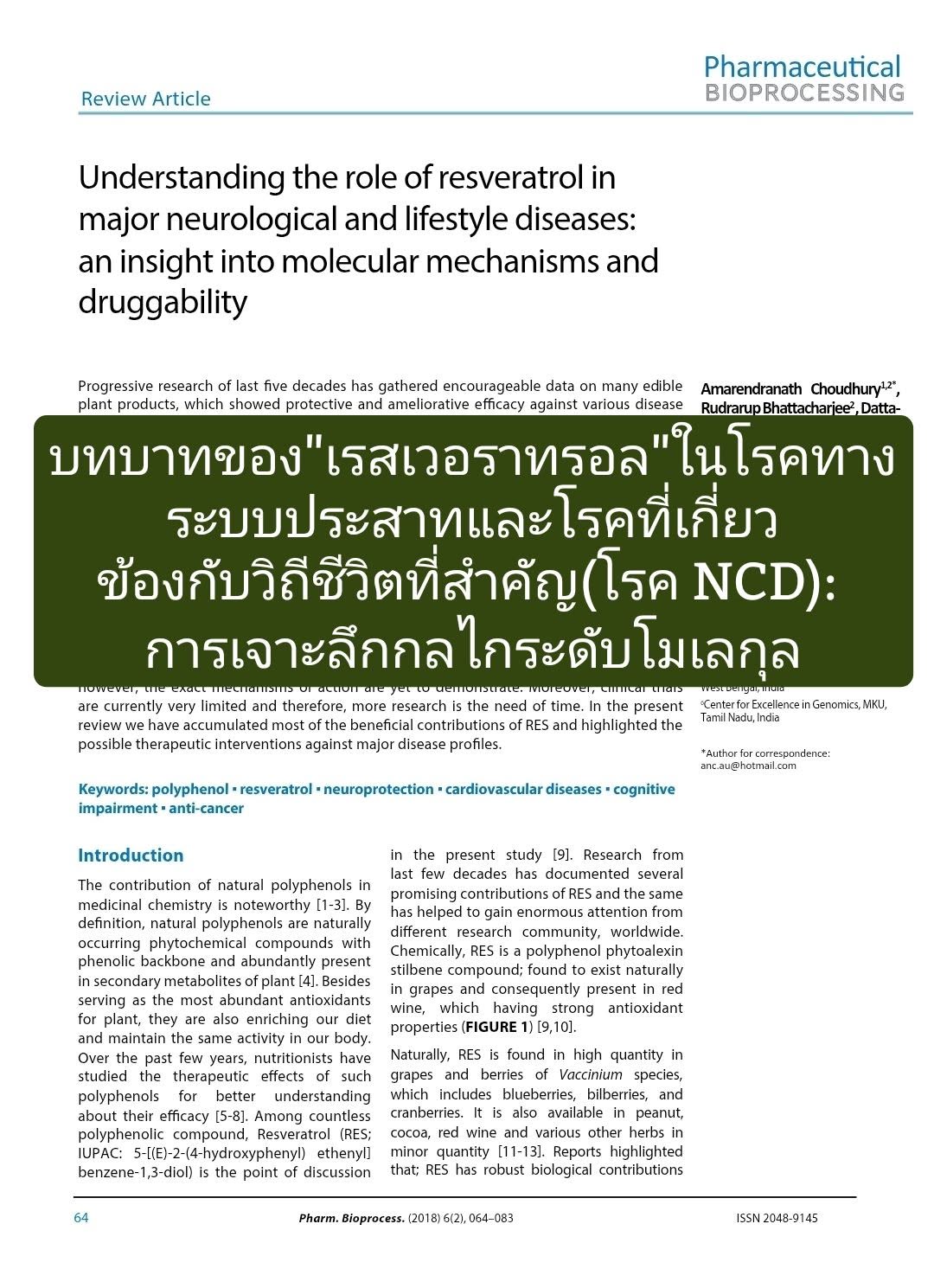
บทความ “Understanding the role of resveratrol in major neurological and lifestyle diseases: an insight into molecular...
The article “Understanding the role of resveratrol in major neurological and lifestyle diseases: an insight into molecular mechanisms and druggability” is a review of research on resveratrol, a natural polyphenol found abundantly in berries. Emphasis is placed on its role in the prevention and treatment of chronic diseases. including neurological diseases
Summary of important points
1. What is Resveratrol?
Resveratrol is an antioxidant. (Antioxidant) that has many important properties including:
● Anti-inflammatory. (Anti-inflammatory)
● Antioxidants (Antioxidant)
● Prevent cell death. (Anti-apoptotic)
● Helps regulate the activity of genes related to aging and energy metabolism.
● Can pass through the Blood-Brain Barrier, thus affecting the brain and nervous system.
2. Important molecular mechanisms
Resveratrol works through several biochemical routes, especially
SIRT1 Pathway SIRT1 stimulation helps:
● Reduce damage from free radicals.
● Increases mitochondrial efficiency.
● Slow down cell degeneration.
● Promotes DNA repair.
AMPK Pathway helps:
● Increase energy metabolism.
● Reduce insulin resistance.
● Reduce fat accumulation.
● Supports heart and brain health.
3. Effects on neurological diseases
Articles focus on dementia and neurological diseases such as:
● Alzheimer's disease Resveratrol helps:
▪︎ Reduce the accumulation of Amyloid-β plaque.
▪︎ Reduce inflammation in the brain
▪︎ Reduce damage from free radicals.
▪︎ Helps maintain the function of nerve cells.
Parkinson's Disease: Resveratrol has been reported to:
▪︎ Protects neurons that produce dopamine.
▪︎ Reduces mitochondrial abnormalities.
▪︎ Reduce inflammation of the nervous system.
4. Effects on chronic diseases (Lifestyle Diseases) Type 2 Diabetes (Type 2 Diabetes)
Resveratrol helps:
▪︎ Increased sensitivity to insulin
▪︎ Reduce blood sugar levels
▪︎ Improve fat burning.
▪︎ Reduce complications from diabetes.
cardiovascular disease (Cardiovascular disease)
Resveratrol helps:
▪︎ Reduce inflammation of blood vessels.
▪︎ Reduces oxidation of LDL.
▪︎ Promote the creation of Nitric Oxide
▪︎ Increases the flexibility of blood vessels.
Obesity and Metabolic Syndrome (Obesity)
Resveratrol helps:
▪︎ Reduce fat accumulation
▪︎ Increases cellular energy use.
▪︎ Controls inflammation from accumulated fat.
5. Cancer potential
Resveratrol is reported to be able to:
▪︎ Inhibits the division of cancer cells.
▪︎ Stimulates the death of cancer cells (Apoptosis).
▪︎ Reduce the creation of new blood vessels in cancer tumors.
▪︎ Reduce the spread of cancer cells.
Conclusion of the article The researchers concluded that Resveratrol is a natural substance with high potential to help prevent and reduce the severity of neurological diseases, heart disease, diabetes, obesity, and cancer through its antioxidant mechanism. anti-inflammatory and control of multiple cellular signaling pathways.